Results by title
25 books match the query 'Accounting'
A History of Accountancy in the United States
The Cultural Significance of Accounting. Revised EditionGary John Previts
The Ohio State University Press, 1998
A New Architecture for the U.S. National Accounts
Edited by Dale W. Jorgenson, J. Steven Landefeld, and William D. Nordhaus
University of Chicago Press, 2006
Since the United States economy accounts for almost thirty percent of the world economy, it is not surprising that accounting for this huge and diverse set of economic activities requires a decentralized statistical system. This volume outlines the major assignments among institutions that include the Bureau of Economic Analysis, the Bureau of Labor Statistics, the Department of Labor, the Census Bureau, and the Governors of the Federal Reserve System.
An important part of the motivation for the new architecture is to integrate the different components and make them consistent. This volume is the first step toward achieving that goal.

Brazil and South Korea
Economic Crisis and RestructuringEdited by Edmund Amann and Ha-Joon Chang
University of London Press, 2003
Contributors include Andre Averburg (United Nations Development Programme/ Banco Nacional de Desenvolvimento Economico e Social, Brazil), Fabio Giambiagi (Banco Nacional de Desenvolvimento Economico e Social), Andrea Goldstein (OECD Development Centre), Louise Haagh (Department of Politics, University of York, USA), Tat Yan Kong (School of Oriental and African Studies, University of London, UK), Jose Ricardo Ramalho (Federal University of Rio de Janeiro, Brazil), Ben Ross Schneider (Center for International and Comparative Studies, Northwestern University, USA), and Jaang-Sup Shin (Department of Economics, National University of Singapore).
Casino Accounting and Financial Management
Second EditionE. Malcolm Greenlees
University of Nevada Press, 2008

Comparative National Balance Sheets
A Study of Twenty Countries, 1688-1979Raymond W. Goldsmith
University of Chicago Press, 1985
The majority of the balance sheets were created especially for this project, their components gleaned from fragmentary and heterogeneous data. There are approximately 3,500 entries, each measuring the value of one type of tangible or financial asset or liability at a given date. Goldsmith's estimates are keyed to fifteen benchmark dates in the economic progress of the cited nations, and for twelve nations he was able to construct balance sheets dating back to the nineteenth century or earlier. Combined, worldwide balance sheet are included for 1950 and 1978.
Comparative National Balance Sheets will provide an essential basis for the quantitative analysis of the long-term financial development of these nations. In addition to national balance sheets for all large countries except Brazil and China, sectoral balance sheets for France, Germany, Great Britain, India, Japan, and the United States in the postwar period are also included.
Debt to Society
Accounting for Life under CapitalismMiranda Joseph
University of Minnesota Press, 2014
It is commonplace to say that criminals pay their debt to society by spending time in prison, but what is a “debt to society”? How is crime understood as a debt? How has time become the equivalent for crime? And how does criminal debt relate to the kind of debt held by consumers and university students?
In Debt to Society, Miranda Joseph explores modes of accounting as they are used to create, sustain, or transform social relations. Envisioning accounting broadly to include financial accounting, managerial accounting of costs and performance, and the calculation of “debts to society” owed by criminals, Joseph argues that accounting technologies have a powerful effect on social dynamics by attributing credits and debts. From sovereign bonds and securitized credit card debt to student debt and mortgages, there is no doubt that debt and accounting structure our lives.
Exploring central components of neoliberalism (and neoliberalism in crisis) from incarceration to personal finance and university management, Debt to Society exposes the uneven distribution of accountability within our society. Joseph demonstrates how ubiquitous the forces of accounting have become in shaping all aspects of our lives, proposing that we appropriate accounting and offer alternative accounts to turn the present toward a more widely shared well-being.
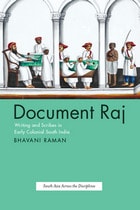
Document Raj
Writing and Scribes in Early Colonial South IndiaBhavani Raman
University of Chicago Press, 2012

Financial Management for Libraries
William W. Sannwald
American Library Association, 2018
Presenting financial management principles and best practices applicable to both public and academic libraries, this comprehensive text elucidates a broad array of issues crucial for those entering a managerial position. Both thorough and straightforward, Sannwald's treatment
- gives readers a solid grounding in the basics of accounting and finance, with an emphasis on applicability to library management and operations;
- ties budgets and strategic planning to library vision, mission, goals, and objectives;
- discusses the roles of stakeholders such as boards, governmental/municipal bodies, the university, and the community;
- looks at a variety of funding sources, from tax revenue to gifts and donations, and presents sound strategies for including them when projecting income and expenses;
- articulates and discusses the pros and cons of various budget strategies;
- includes sample budgets and forms that can be customized as needed;
- offers expert guidance on modifying budgets for windfalls and shortfalls;
- explains operating ratios, fiscal benchmarking, and metrics, demonstrating how to use these to effectively create and manage a budget and assess the fiscal health of the library; and
- advises on how to effectively prepare and present a budget and annual financial statements to a library's governing agency.
Fiscal Aspects of Aviation Management
Robert W. Kaps
Southern Illinois University Press, 2000
Although introductions to courses in finance exist for a variety of fields, Robert W. Kaps provides the first text to address the subject from an aviation viewpoint. Relying on his vast experience—twenty-plus years in the airline industry and more than thirty years in aviation—Kaps seeks not only to prepare students for careers in the aviation field but also to evoke in these students an excitement about the business. Specifically, he shows students how airlines, airports, and aviation are financed. Each chapter contains examples and illustrations and ends with suggested readings and references.
Following his discussion of financial management and accounting procedures, Kaps turns to financial management and sources of financial information. Here he discusses types of business organizations, corporate goals, business ethics, maximizing share price, and sources of financial information.
Kaps also covers debt markets, financial statements, air transport sector revenue generation, and air transport operating cost management, including cost administration and labor costs, fuel, and landing fees and rentals. He describes in depth air transport yield management systems and airport financing, including revenues, ownership, operations, revenue generation, funding, allocation of Air Improvement Program funds, bonds, and passenger facility charges.
Kaps concludes with a discussion of the preparation of a business plan, which includes advice about starting and running a business. He also provides two typical business plan outlines. While the elements of fiscal management in aviation follow generally accepted accounting principles, many nuances are germane only to the airline industry. Kaps provides a basic understanding of the principles that are applicable throughout the airline industry.

Forensic Accounting and Fraud Examination
Knowledge, Skills, and AbilitiesRichard Dull
MOOC Books, 2015
This book was written to provide a basic perspective of forensic accounting and fraud investigation. It includes topics such as the elements of fraud, the typical perpetrator of fraud (as well as predators), and the attributes of most fraudsters (such as the fraud triangle and diamond).There are also discussions of internal controls, and data analysis tools and techniques to help identify red flags that frequently exist long before a fraud is detected.
The authors also include a description of money laundering, including common schemes. The money laundering topic leads into the final topic of the book, which is whistleblowing. That topic includes best practices for effective anti-fraud hotlines. WorldCom is used as an example to demonstrate the outcome of a large fraud, and the impact on those involved, from the whistleblower to those who allegedly perpetrated the fraud.
Each of the book’s five chapters includes a fifteen-question quiz to facilitate knowledge proficiency.
While the book was initially designed to accompany a massive open online course (MOOC), it provides a reader with information to help understand the basics of fraud and forensic accounting, including anti-fraud tools and techniques.
Generational Accounting around the World
Edited by Alan J. Auerbach, Laurence J. Kotlikoff, and Willi Leibfritz
University of Chicago Press, 1999
Combining the latest and most extensive country-by-country generational analyses with a comprehensive review of generational accounting's innovative methodology, these papers are a consummate resource for economists, political scientists, and policy makers concerned with fiscal health and responsibility.
Geography and Ownership as Bases for Economic Accounting
Edited by Robert E. Baldwin, Robert E. Lipsey, and J. David Richardson
University of Chicago Press, 1998
This volume gives trade and international economists the data and resources to renew discussion of this timely issue.
Inspectors-General
Junkyard Dogs or Man's Best Friend?Mark Moore
Russell Sage Foundation, 1986
Measuring and Accounting for Environmental Public Goods
A National Accounts PerspectiveEdited by Nicholas Z. Muller, Eli P. Fenichel, and Mary Bohman
University of Chicago Press, 2025
Provides strategies and approaches for integrating natural capital into environmental statistics.
While the importance of natural resources and the contributions of the environment to welfare are apparent, traditional national income and wealth accounting practices do not measure or value environmental public goods. This volume examines the conceptual and empirical basis for integrating natural capital—forests, oceans, and air—into the economic and environmental statistics that inform public policy. It offers innovative approaches to valuing nonmarket environmental goods and services, including strategies for capturing heterogeneity in measurement across types of capital, geography, and individuals.
The chapters focus on measuring productivity with adjustments for pollution damage, developing a microdata infrastructure to advance our understanding of the distribution of environmental amenities and hazards, and estimating long-run sustainable development indicators. Case studies consider coastal assets, forests, and marine ecosystems, and develop strategies for implementing specific environmental-economic accounts such as environmental activity accounts and natural capital accounts for forests and the marine economy. As national income accounting standards are updated to incorporate expanded guidance on issues related to natural capital, this timely book will help inform decisions on the measurement and treatment of climate, air, water, and other public goods.

Narrative Threads
Accounting and Recounting in Andean KhipuEdited by Jeffrey Quilter and Gary Urton
University of Texas Press, 2002
The Inka Empire stretched over much of the length and breadth of the South American Andes, encompassed elaborately planned cities linked by a complex network of roads and messengers, and created astonishing works of architecture and artistry and a compelling mythology—all without the aid of a graphic writing system. Instead, the Inkas' records consisted of devices made of knotted and dyed strings—called khipu—on which they recorded information pertaining to the organization and history of their empire. Despite more than a century of research on these remarkable devices, the khipu remain largely undeciphered.
In this benchmark book, twelve international scholars tackle the most vexed question in khipu studies: how did the Inkas record and transmit narrative records by means of knotted strings? The authors approach the problem from a variety of angles. Several essays mine Spanish colonial sources for details about the kinds of narrative encoded in the khipu. Others look at the uses to which khipu were put before and after the Conquest, as well as their current use in some contemporary Andean communities. Still others analyze the formal characteristics of khipu and seek to explain how they encode various kinds of numerical and narrative data.
National Accounts and Environmentally Sustainable National Income
Roefie Hueting and Bart de Boer
Eburon Academic Publishers, 2019
Political Arithmetic
Simon Kuznets and the Empirical Tradition in EconomicsRobert William Fogel, Enid M. Fogel, Mark Guglielmo, and Nathaniel Grotte
University of Chicago Press, 2013
With Political Arithmetic, Nobel Prize–winning economist Robert Fogel and his collaborators tell the story of economist Simon Kuznets, the founding of the National Bureau of Economic Research, and the creation of the concept of GNP, which for the first time enabled us to measure the performance of entire economies. The book weaves together the many strands of political and economic thought and historical pressures that together created the demand for more detailed economic thinking—Progressive-era hopes for activist government, the production demands of World War I, Herbert Hoover’s interest in business cycles as President Harding’s commerce secretary, and the catastrophic economic failures of the Great Depression—and shows how, through trial and error, measurement and analysis, economists such as Kuznets rose to the occasion and in the process built a discipline whose knowledge could be put to practical use in everyday decision-making.
The product of a lifetime of studying the workings of economies and skillfully employing the tools of economics, Political Arithmetic is simultaneously a history of a key period of economic thought and a testament to the power of applied ideas.
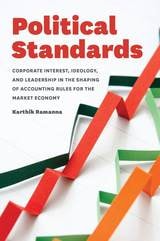
Political Standards
Corporate Interest, Ideology, and Leadership in the Shaping of Accounting Rules for the Market EconomyKarthik Ramanna
University of Chicago Press, 2015
With Political Standards, Karthik Ramanna develops the notion of “thin political markets” to describe a key problem facing technical rule-making in corporate accounting and beyond. When standard-setting boards attempt to regulate the accounting practices of corporations, they must draw on a small pool of qualified experts—but those experts almost always have strong commercial interests in the outcome. Meanwhile, standard setting rarely enjoys much attention from the general public. This absence of accountability, Ramanna argues, allows corporate managers to game the system. In the profit-maximization framework of modern capitalism, the only practicable solution is to reframe managerial norms when participating in thin political markets. Political Standards will be an essential resource for understanding how the rules of the game are set, whom they inevitably favor, and how the process can be changed for a better capitalism.

Product Design, Technology, and Social Change
A Short Cultural HistoryLaura Scherling
Intellect Books, 2024
This cultural history critically examines the development of product design, considering major milestones in the mass production of goods and services and aiming to incorporate a more inclusive worldview than traditional surveys of the topic.
The breadth and versatility of product design throughout history have been profound. Products have long supported the integration and interpretation of emerging technologies into our lives. These objects include everything from tools, accessories, furniture, and clothing to types of transportation, websites, and mobile applications. Products provide singular or multiple functions, are tangible and intangible, and in many instances have affected the quality of our lives by saving time or money or by increasing feelings of personal satisfaction. At the same time, many products have negatively affected people and the environment. For nearly every product that makes it into the hands of a consumer, there is also a designer who created it and someone who labored to make it.
An eye-opening survey of product design from preindustrial times to the present day, Product Design, Technology, and Social Change provides a thorough examination of the relationship between products, consumption, sustainability, politics, and social movements.
Prudential Supervision
What Works and What Doesn'tEdited by Frederic S. Mishkin
University of Chicago Press, 2001
The contributors to this thoughtful volume examine the current state of prudential supervision, focusing on fundamental issues and key pragmatic concerns. Why is prudential supervision so important? What kinds of excess must it guard against? What particular forms does it take? Which of these are the most effective deterrents against mismanagement and system overload in today's rapidly shifting financial climate? The contributors foresee a continued movement beyond simple regulatory rules in banking and toward a more active evaluation and supervision of a bank's risk management practices.
Studies in the Formation of the Nation-state in Latin America
Edited by James Dunkerley
University of London Press, 2002
Contributors include Miguel Angel Centeno (Princeton University), Malcolm Deas (St Antony's College, Oxford), James Dunkerley (Institute of Latin American Studies, University of London), Paul Gootenberg (State University of New York at Stony Brook), Alan Knight (St Antony's College, Oxford), Colin Lewis (London School of Economics), Fernando Lopez Alves (University of California, Santa Barbara), David McCreery (Georgia State University), Florencia Mallon (University of Wisconsin), Seemin Qayum (Goldsmiths College, University of London), Guy Thomson (University of Warwick), and Steven Topik (University of California, Irvine). James Dunkerley is director of the Institute of Latin American Studies, University of London, and also professor of politics at Queen Mary, University of London. He is coeditor of the Journal of Latin American Studies. His most recent books are Americana:The Americas in the World, around 1850 (or 'Seeing the Elephant' as the Theme for an Imaginary Western) (2000) and Warriors and Scribes: Essays in the History and Politics of Latin America (2000).
The National Balance Sheet of the United States, 1953-1980
Raymond W. Goldsmith
University of Chicago Press, 1982
The most comprehensive and extensive study of national wealth ever attempted, The National Balance Sheet will be a rich resource for researchers and users of national accounts.
The Total Incomes System of Accounts
Robert Eisner
University of Chicago Press, 1989
Eisner counts nonmarket as well as market production, including vast amounts of services produced by housewives and others in the home, capital formation by government and households as well as business, human and intangible capital invested in education, R&D, and health care, as well as tangible capital. He offers measures of net revaluations of tangible assets, redefines the critical boundaries between final and intermediate outputs, and presents separate sector accounts for business, nonprofit institutions, government, government enterprises and households, which make clear the major contributions of nonbusiness sectors to our total national income.
For these and other extensions, Eisner's TISA offers detailed and comprehensive income and product accounts in current dollars and product accounts in constant dollars for all of the years from 1946 to 1981, along with measures of capital stocks. Estimates of consumption, investment, and production functions with the new data sets, a review of other sets of extended accounts, and a detailed description of sources and methods are also provided.
The U.S. National Income and Product Accounts
Selected TopicsMurray F. Foss
University of Chicago Press, 1983

Wannabe U
Inside the Corporate UniversityGaye Tuchman
University of Chicago Press, 2009
Based on years of observation at a large state university, Wannabe U tracks the dispiriting consequences of trading in traditional educational values for loyalty to the market. Aping their boardroom idols, the new corporate administrators at such universities wander from job to job and reductively view the students there as future workers in need of training. Obsessed with measurable successes, they stress auditing and accountability, which leads to policies of surveillance and control dubiously cloaked in the guise of scientific administration. In this eye-opening exposé of the modern university, Tuchman paints a candid portrait of the corporatization of higher education and its impact on students and faculty.
Like the best campus novelists, Tuchman entertains with her acidly witty observations of backstage power dynamics and faculty politics, but ultimately Wannabe U is a hard-hitting account of how higher education’s misguided pursuit of success fails us all.