Results by title
10 books match the query 'Achievement'
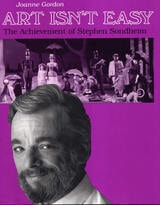
Art Isn't Easy
The Achievement of Stephen SondheimJoanne Gordon
Southern Illinois University Press, 1990
The new musical theatre of Stephen Sondheim shuns the traditional story of love triumphant, probing instead the more disturbing issues of contemporary life.
Confident that the musical is America’s greatest original contribution to theatre, Joanne Gordon explicates the works of Sondheim to repudiate the common perception of the genre as mere escapist entertainment.
Gordon notes that Sondheim tackles real themes, that he has no fear of introducing pain, trauma, and complex ideas onto the Broadway stage. Tracing Sondheim’s career from his initial success as lyricist for West Side Story and Gypsy to the opening of Into the Woods, Gordon demonstrates that the value of Sondheim’s work obviously lies in its seriousness of theme coupled with its disturbing content; less obvious, but equally important, is Sondheim’s innovative use of form.
From A Funny Thing Happened on the Way to the Forum through Anyone Can Whistle, Company, Follies, A Little Night Music, Pacific Overtures, Sweeney Todd, Merrily We Roll Along, Sunday in the Park with George, and Into the Woods, Sondheim’s music and lyrics prove to be inextricably woven into the fabric of the entire work. Both music and lyrics, Gordon stresses, "grow out of the dramatic idea inherent in the show’s concept and themselves become part of the drama that previous theatre songs would only reflect."
Sondheim, Gordon notes, asks much of an audience that may not want to be challenged. In short, to enjoy a Sondheim play, the audience must participate intellectually. The audience willing to expend the effort will not be cheated, Gordon insists, because Sondheim, throughout his career, has demonstrated that "musical theatre can be serious, poignant, and still exhilarating."
Catholic Modernism and the Irish "Avant-Garde
" The Achievement of Brian Coffey, Denis Devlin, and Thomas MacGreeveyJames Matthew Wilson
Catholic University of America Press, 2023
Continuing the Quest for Morality Truly Christian, Truly African
The Achievement of Paulinus Odozor, C,S,Sp.Maurice Ashley Agbaw-Ebai
St. Augustine's Press, 2025
Paulinus Ikechukwu Odozor is among the preeminent moral theologians of our time. He has reached the pinnacle of his profession after serving more than two decades as a professor of theology at the University of Notre Dame. Among African theologians, he stands at the forefront of the generation that came of age in the early postconciliar period. Fr. Odozor’s work in Morality Truly Christian, Truly African: Foundational, Methodological, and Theological Considerations (2014) has become a classic in the field of Catholic moral theology. His contribution to reuniting moral theology to dogmatics is a key element to processing the contention in theological scholarship in the wake of Vatican II and the shifting of the socio-economic global landscape. Understanding the influence of theologians such as Richard McCormick, Charles Curran, and Edward Schillebeeckx, Fr. Odozor, he is unable to ignore the work of John Paul II, Joseph Ratzinger, Joseph Boyle, and John Cavadini as essential to the age of renewal in the field of moral theology.
The essays in this volume highlight the fruits of Fr. Odozor's ability to move between the spheres of moral and dogmatic theology, and his particular treatment of the nature of God, ecclesiology, and interreligious dialogue. He is a theologian who is rightly positioned within a postconciliar moral theological context, and his thought is critical as we enter a new era in the Church that no longer takes Vatican II as its reference point––that is, the Church is reorienting toward the future, in continuity but seeking to discern what lies ahead. Claiming postconciliar theologians shared basic agreement regarding the mission of the Church, within the foggy contention among pre- and postconciliar moral theologians Odozor sees a legitimate albeit complex connection. Fr. Odozor's appreciation for Humanae Vitae and Veritatis Splendor is clear, and his fidelity to seeing issues like contraception as a "God question" and representing the concerns and voices of Africa make him an indispensable leader of the Church in this field of study. His mission to "bring Africa to the University of Notre Dame, and Notre Dame to Africa," has been more successful than former dean John Cavadini expected: African theology is no longer separated from the wider world thanks to this partnership and Fr. Odozor's acumen to establish moral theology's stature in the wider field.
Contributions include: Maurice Agbaw-Ebai, "Ratzinger's Theological Anthropology in Conversation with Aspects of Paulinus Odozor's Understanding of the Human Person in Christ"; Raymond Olusesan Aina, MSP, "Paulinus Ikechukwu Odozor’s Unfinished Quest for a Truly African and Christian Moral Theology of Marriage"; Anthony Akinwale, OP, "Politics, the Common Good and Holiness"; Melanie Susan Barrett, "Aquinas, Balthasar, and African Tradition: Christian Conversion of Individuals and Cultures"; Jana M. Bennett, "The Importance of Anamnesis for Moral Life"; John Berkman, "Abominations and Absolute Prohibitions: Killing the Innocent According to Anscombe and Odozor"; John C. Cavadini, "African Theology and a Classical Theory of Inculturation"; David A. Clairmont, "Catholic Comparative Theological Ethics: Elements of an Approach to Tradition, Ethics, and Dialogue (with Odozor and Clooney, in the Church)"; David Elliot, "The Legacy of the African Church Fathers to St. Thomas Aquinas’ Account of Virtue Growth and Spiritual Practice"; Dennis Kasule, "Facing Up to the Challenge of Moral Formation in African Catechumenates Today: Drawing on African Catechumenates of the Past and Paulinus Odozor’s Seven Guidelines for Inculteration"; Matthew Levering, "Natural Law in Bénézet Bujo, Paulinus Odozor, and Stephen L. Brock"; Tegha Afuhwi Nji, "Paulinus Odozor and Joseph Ratzinger on the Question of Moral Objectivity: A Morality Truly African and Truly Christian?"; Emmanuel Ojeifo, "African and Christian: Black Sanctity and the Future of African Catholicism"; Bede Ukwuije, C.S.Sp., "Trinitarian Conception of God as Basis for an African Christian Ethics"; Paulinus Odozor, C.S.Sp., "Continuing the Quest for a Morality Truly Christian and African."
Educated in Romance
Women, Achievement, and College CultureDorothy C. Holland and Margaret A. Eisenhart
University of Chicago Press, 1990
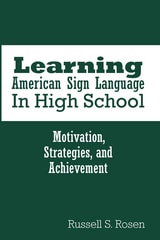
Learning American Sign Language in High School
Motivation, Strategies, and AchievementRussell S. Rosen
Gallaudet University Press, 2015
Author Russell S. Rosen begins with the history of ASL as a foreign language in high schools, including debates about the foreign language status of ASL, the situation of deaf and hard of hearing students in classes, and governmental recognition of ASL as a language. Based on his study of five high school ASL programs, he defines the factors that motivate students, including community and culture, and analyzes strategies for promoting language processing and learning. Learning American Sign Language in High School provides strategies for teaching ASL as a second language to students with learning disabilities as well. Its thorough approach ensures the best opportunity for high school students to attain high levels of achievement in learning ASL.
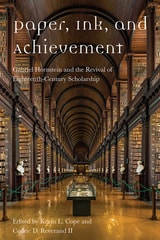
Paper, Ink, and Achievement
Gabriel Hornstein and the Revival of Eighteenth-Century ScholarshipKevin L. Cope
Bucknell University Press, 2021
Published by Bucknell University Press. Distributed worldwide by Rutgers University Press.

The Achievement of Hans Urs von Balthasar
Matthew Levering
Catholic University of America Press, 2019
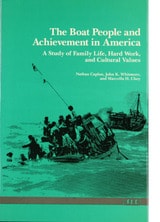
The Boat People and Achievement in America
A Study of Family Life, Hard Work, and Cultural ValuesNathan Caplan, John K. Whitmore, and Marcella H. Choy
University of Michigan Press, 1989
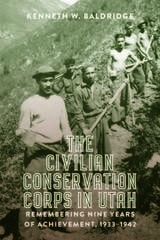
The Civilian Conservation Corps in Utah
Remembering Nine Years of Achievement, 1933-1942Kenneth W. Baldridge
University of Utah Press, 2018
Copublished with the Utah State Historical Society. Affiliated with the Utah Division of State History, Utah Department of Heritage & Arts
“There was a certain magic about sending young men into the woods. It was not so much man against nature as it was man in league with nature against the economic troubles that were then stalking the land.”—from the book
In 1932, unemployment in Utah was about 34 percent. Nearly every state west of the Mississippi River was struggling not only with unemployment but also with drought, erosion, and overgrazing. To solve these serious difficulties, President Franklin D. Roosevelt launched what would become arguably the most popular of his New Deal programs—the Civilian Conservation Corps (CCC). From 1933 to 1942, the CCC employed three million young men on land-improvement projects that are still used today.
In this book, Kenneth Baldridge chronicles the work of the 10,000 men who served at Utah’s 116 CCC camps. With facts and anecdotes drawn from camp newspapers, government files, interviews, letters written by enrollees, and other sources, he situates the CCC within the political climate and details not only the projects but also the day-to-day aspects of camp life. For thirty dollars a month—of which twenty-five was sent home to their folks—these young recruits planted trees; built roads, bridges, dams, and trails; fought fires; battled pests and noxious weeds; and erected cabins, campgrounds, amphitheaters, and reservoirs, and more.
Today the CCC is credited with creating greater public awareness and appreciation of the outdoors. It has also served as a model for the Student Conservation Corps and other youth programs. This volume documents the public good created by the CCC, provides an extensive bibliography, and is illustrated with numerous historic and modern photos.
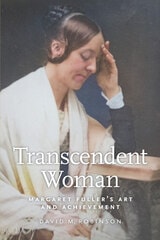
Transcendent Woman
Margaret Fuller’s Art and AchievementDavid M. Robinson
University of Massachusetts Press, 2025
Journalist, editor, critic, translator, and women’s rights advocate, Margaret Fuller was America’s first major female intellectual. Throughout much of the late-19th and 20th centuries, however, critics and scholars largely saw her as a minor figure in the transcendentalist movement with which she is associated, and her work was considered secondary to that of male figures like Emerson and Hawthorne. While her biography—including her marriage to an Italian noble and her dramatic death in a shipwreck—was often the focus, her skill as a writer was generally overlooked, and her intellectual development largely ignored.
In the early 1980s, David M. Robinson was one of the first scholars to publish an article that focused on Fuller’s mind and art. Now Transcendent Woman completes and extends this early work. Outlining the development of her philosophy, which Robinson defines as a “purpose-oriented form of thinking, tailored to the commitment and assets of each individual,” he traces Fuller’s intellectual journey, first in relation to her family and the people around her in New England and later in her travels in the midwestern United States and, more importantly, through Europe and her residency in Italy. He focuses first and foremost on what Fuller was reading (Goethe was key), what she was thinking as revealed in her letters and journals, and what she was writing, including seminal works such as Summer on the Lakes and Woman in the Nineteenth Century as well as lesser-known essays, translations, and short stories. Drawing extensively on primary sources, Robinson charts Fuller’s development and achievement as an original thinker and fearless advocate of democracy.