Results by title
4 books match the query 'Acholi (African people)'
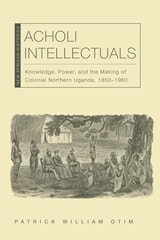
Acholi Intellectuals
Knowledge, Power, and the Making of Colonial Northern Uganda, 1850–1960Patrick William Otim
Ohio University Press, 2024
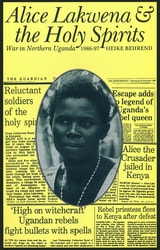
Alice Lakwena and the Holy Spirits
War in Northern Uganda, 1985–97Heike Behrend
Ohio University Press, 1999
In August 1986, Alice Auma, a young Acholi woman in northern Uganda, proclaiming herself under the orders of a Christian spirit named Lakwena, raised an army called the “Holy Spirit Mobile Forces.” With it she waged a war against perceived evil, not only an external enemy represented by the National Resistance Army of the government, but internal enemies in the form of “impure” soldiers, witches, and sorcerers. She came very close to her goal of overthrowing the government but was defeated and fled to Kenya.
This book provides a unique view of Alice’s movement, based on interviews with its members and including their own writings, examining their perceptions of the threat of external and internal evil. It concludes with an account of the successor movements into which Alice’s forces fragmented and which still are active in the civil wars of the Sudan and Uganda.
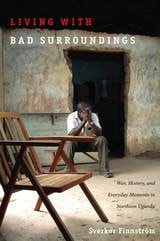
Living with Bad Surroundings
War, History, and Everyday Moments in Northern UgandaSverker Finnström
Duke University Press, 2008
Finnström draws on fieldwork conducted in northern Uganda between 1997 and 2006 to describe how the Acholi—especially the younger generation, those born into the era of civil strife—understand and attempt to control their moral universe and material circumstances. Structuring his argument around indigenous metaphors and images, notably the Acholi concepts of good and bad surroundings, he vividly renders struggles in war and the related ills of impoverishment, sickness, and marginalization. In this rich ethnography, Finnström provides a clear-eyed assessment of the historical, cultural, and political underpinnings of the civil war while maintaining his focus on Acholi efforts to achieve “good surroundings,” viable futures for themselves and their families.
Teller Tales
HistoriesJo Carson
Ohio University Press, 2007
“All my work fits in my mouth,” Jo Carson says. “I write performance material no matter what else the pieces get called, and whether they are for my voice or other characters’ voices … they are first to be spoken aloud.” Following an oral tradition that has strong roots in her native Tennessee, the author of Teller Tales invites the reader to participate in events in a way that no conventional history book can.
Both stories in this book are set in East Tennessee in the mid-eighteenth century and share certain characters. The first narrative, “What Sweet Lips Can Do,” recounts the story of the Overmountain Men and the battle of King’s Mountain, a tide-turning battle in the American Revolution. “Men of Their Time” is an exploration of white-Cherokee relationships from early contact through the time of the Revolution.
Although not well known to the outside world, the stories recounted in Teller Tales are cornerstones in the heritage of the Appalachian region and of American history. In ways that will appeal to young and old alike, Jo Carson’s irreverent telling will broaden the audience and the understanding for the stories of native Americans, settlers, explorers, and revolutionaries of early America.