Results by title
7 books match the query 'Adams, Henry'
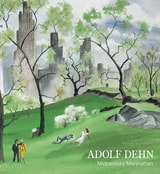
Adolf Dehn
Midcentury ManhattanAdolf Dehn
The Artist Book Foundation, 2017
Adolf Dehn (1895–1968), American painter in multimedia and acclaimed master lithographer, left his Minnesota hometown after formal training at the Minneapolis Art Institute to study at the Art Students League in New York. He toured Europe in the early 1920s, quickly acclimating to the continental lifestyle and adeptly depicting its nuances and idiosyncrasies with prolific lithographs and sketches. His critical and satirical renderings of the political movements, social conventions, and governmental policies in post-World War I Europe during "Le Crazy Years" gave the Midwestern artist ample material for his growing body of work.
Sailing back to the United States in 1929, Dehn survived the Great Depression with commercial artwork and contributions to popular magazines such as The New Yorker, Vogue, and Vanity Fair. His clever drawings that reflected the Jazz Age's culture and fashionable society made him a favorite of Frank Crowninshield, Vanity Fair's renowned editor.
During this time, while Dehn captured the heyday of Manhattan's burlesque theaters, lively Harlem nightclubs, impressive skyline, and busy harbor, he was continuously drawn to Central Park—his predilection for the city's magnificent green space was a sustaining source of inspiration and subject matter. Adolf Dehn: Midcentury Manhattan candidly examines the life and work of this exceptional, adventurous, and intrepid artist as he moved skillfully and capably between lithography, ink-wash drawings, gouache, casein painting, and watercolors. Combining numerous vintage photographs with newly discovered, Manhattan-inspired prints and drawings from the collections of, among others, the Whitney Museum of American Art, MoMA, and The Metropolitan Mesuem of Art, Adolf Dehn: Midcentury Manhattan traces how Dehn's art reflected the spirit, pulse, and uniquely American tonalities of The City of Dreams.

Henry Adams - American Writers 93
University of Minnesota Pamphlets on American WritersLouis Auchincloss
University of Minnesota Press, 1971
Henry Adams - American Writers 93 was first published in 1971. Minnesota Archive Editions uses digital technology to make long-unavailable books once again accessible, and are published unaltered from the original University of Minnesota Press editions.
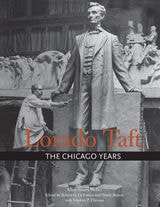
Lorado Taft
The Chicago YearsAllen Stuart Weller; Edited by Robert G. La France and Henry Adams with Stephen P. Thomas
University of Illinois Press, 2014
Returning to Chicago from France, Taft established a bustling studio and began a twenty-one-year career as an instructor at the Art Institute, succeeded by three decades as head of the Midway Studios at the University of Chicago. This triumphant era included ephemeral sculpture for the 1893 World's Columbian Exposition; a prolific turn-of-the-century period marked by the gold-medal-winning The Solitude of the Soul; the 1913 Fountain of the Great Lakes; the 1929 Alma Mater at the University of Illinois; and large-scale projects such as his ambitious program for Chicago's Midway with the monumental Fountain of Time. In addition, the book charts Taft's mentoring of women artists, including the so-called White Rabbits at the World's Fair, many of whom went on to achieve artistic success.
Lavishly illustrated with color images of Taft's most celebrated works, Lorado Taft: The Chicago Years completes the first major study of a great American artist.
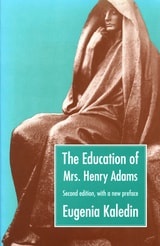
The Education of Mrs. Henry Adams
Eugenia Kaledin
University of Massachusetts Press, 1994
Marian Hooper Adams—Clover, as her friends called her—was an accomplished photographer and a witty, irreverent free spirit who moved easily within the cultural circles of nineteenth-century Boston. Why, then, in 1882, at the age of forty-two, did she swallow a lethal dose of potassium cyanide? And why did her husband of thirteen years fail even to mention her in his autobiography, The Education of Henry Adams?
These and other questions are explored in this first paperback edition of Eugenia Kaledin's pathbreaking biography. The book recreates the intense intellectual, cultural, and moral life of Boston and New England before, during, and after the Civil War and helps us to understand what could drive such a gifted, intelligent, and privileged woman to take her own life. Included is a portfolio of Adams's photographs of her husband and his famous circle.
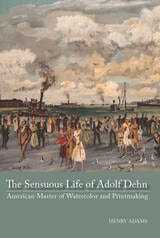
The Sensuous Life of Adolf Dehn
American Master of Watercolor and PrintmakingHenry Adams
University of Missouri Press, 2020
In this wide-ranging biography, Henry Adams explores how a once central figure can come to be forgotten. Noting that Dehn’s watercolor Spring in Central Park has been widely reproduced on calendars, postcards, and other Metropolitan Museum of Art souvenirs, Adams asks why it is that some artists are celebrated as key figures while others, even those who created images that form an integral part of our visual culture, are relatively unknown. With his account of the life of the prolific and influential Dehn, and a look at the circles of artists and writers in which Dehn moved, Adams helps to fill in what he calls the “secret or subterranean history of art.”
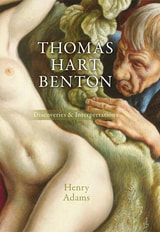
Thomas Hart Benton
Discoveries and InterpretationsHenry Adams
University of Missouri Press, 2027
Few American artists have incited more controversy than Thomas Hart Benton. Argumentative, brilliant, and enormously influential, Benton painted for nearly seventy years, inspiring acclaim and loathing among students, friends, fellow artists, and outraged critics.
Now, in a series of provocative essays, premier Benton scholar Henry Adams examines the many facets of the man as artist and the pitched battles of his long career, including the fight that raged over the subject matter of his murals, the real reasons for Benton’s feud with the radical left and his fall from grace in the New York art world, and his tumultuous, 36-year-long love-hate relationship with the student with whom he worked most closely, another iconic artist of the 20th century, Jackson Pollock. Adams ends with an account of his own twenty-five-year struggle to expose fakes of Benton’s work.
Universes without Us
Posthuman Cosmologies in American LiteratureMatthew A. Taylor
University of Minnesota Press, 2013
During the nineteenth and early twentieth centuries, a wide variety of American writers proposed the existence of energies connecting human beings to cosmic processes. From varying points of view—scientific, philosophical, religious, and literary—they suggested that such energies would eventually result in the perfection of individual and collective bodies, assuming that assimilation into larger networks of being meant the expansion of humanity’s powers and potentialities—a belief that continues to inform much posthumanist theory today.
Universes without Us explores a lesser-known countertradition in American literature. As Matthew A. Taylor’s incisive readings reveal, the heterodox cosmologies of Edgar Allan Poe, Henry Adams, Charles Chesnutt, and Zora Neale Hurston reject the anthropocentric fantasy that sees the universe as a kind of reservoir of self-realization. For these authors, the world can be made neither “other” nor “mirror.” Instead, humans are enmeshed with “alien” processes that are both constitutive and destructive of “us.” By envisioning universes no longer our own, these cosmologies picture a form of interconnectedness that denies any human ability to master it.
Universes without Us demonstrates how the questions, possibilities, and dangers raised by the posthuman appeared nearly two centuries ago. Taylor finds in these works an untimely engagement with posthumanism, particularly in their imagining of universes in which humans are only one category of heterogeneous thing in a vast array of species, objects, and forces. He shows how posthumanist theory can illuminate American literary texts and how those texts might, in turn, prompt a reassessment of posthumanist theory. By understanding the posthuman as a materialist cosmology rather than a technological innovation, Taylor extends the range of thinkers who can be included in contemporary conversations about the posthuman.