Results by title
38 books match the query 'Administrative Law & Regulatory Practice'
Administrative Law in Central and Eastern Europe
Denis J. Galligan
Central European University Press, 1998
Alabama Water-Resources Law
A Critical TreatiseHeather Elliott
University of Alabama Press, 2026
A compelling exploration of how Alabama’s aging water laws endanger its resources and why urgent, forward thinking reform is essential for the state’s future.
Alabama Water-Resources Law is the first truly comprehensive study examining the structure and shortcomings of Alabama’s water law. This prodigious treatise provides a necessary tool to help the state and its people understand and prepare for the wise use of its water resources. Part I provides a clear and critical statement of Alabama’s current water law in eleven chapters. Part II expands on the criticisms of existing Alabama law, recounts the history of previous efforts at addressing those criticisms, and makes recommendations for change, taking lessons from other southeastern states.
Throughout, University of Alabama law professor Heather Elliott underscores the flaws in Alabama’s current body of law, arguing that Alabama’s abundant water resources have fostered complacency that the state and its residents can no longer afford. As Alabama’s water supply is strained by population growth, economic development, and global climate change, the deficiencies in the archaic legal framework will become crippling. Investments made on the assumption of plenty will fail as water becomes less available, Alabama’s world-class aquatic biodiversity will become even more endangered, and Alabama’s courts will suffer a glut of new litigation as parties fight over rights to a finite resource. Elliott demonstrates how Alabama can avoid the worst of these consequences through the adoption of a regulated riparian statute.
Ample illustrations provide an extensive inventory of the state’s surface and groundwater resources and a technical primer on instream flow. This is a must-read for all Alabama policymakers, attorneys, and concerned citizens to answer water-law questions and to make proactive laws to bring Alabama into twenty-first-century practices.
Alternative Dispute Resolution in the Regulatory Process
Deirdre McCarthy Gallagher
Michigan State University Press, 2020
Bending the Law
The Story of the Dalkon Shield BankruptcyRichard B. Sobol
University of Chicago Press, 1991
"Mr. Sobol has produced a readable yet fully researched and detailed study of the operation of the bankruptcy and its effects upon all concerned—the women who were injured, the swarms of lawyers who represented parties in the bankruptcy, and the court which oversaw the bankruptcy in Richmond. . . . This book adds greatly to the current debate about how strong a managerial federal judge our system should have."—Paul D. Rheingold, New York Law Journal
"Bending the Law is polemical and relentless. It is also minutely researched, fluidly written, and persuasive."—Paul Reidinger, ABA Journal
"Bending the Law is a must read for bankruptcy practitioners, and for anyone else concerned about the use of bankruptcy law to deal with mass torts. Although its author is a civil rights lawyer, he details the subtle art of practicing bankruptcy law with a discerning eye, and is a gifted storyteller as well."—Joryn Jenkins, Federal Bar News and Journal
"This is an accessible history of the case by a veteran civil-rights lawyer."—Washington Post Book World
Bending the Rules
Procedural Politicking in the BureaucracyRachel Augustine Potter
University of Chicago Press, 2019
With Bending the Rules, Rachel Augustine Potter shows that rulemaking is not the rote administrative activity it is commonly imagined to be but rather an intensely political activity in its own right. Because rulemaking occurs in a separation of powers system, bureaucrats are not free to implement their preferred policies unimpeded: the president, Congress, and the courts can all get involved in the process, often at the bidding of affected interest groups. However, rather than capitulating to demands, bureaucrats routinely employ “procedural politicking,” using their deep knowledge of the process to strategically insulate their proposals from political scrutiny and interference. Tracing the rulemaking process from when an agency first begins working on a rule to when it completes that regulatory action, Potter shows how bureaucrats use procedures to resist interference from Congress, the President, and the courts at each stage of the process. This exercise reveals that unelected bureaucrats wield considerable influence over the direction of public policy in the United States.

Black Lawyers, White Courts
The Soul of South African LawKenneth S. Broun
Ohio University Press, 2000
In the struggle against apartheid, one often overlooked group of crusaders was the coterie of black lawyers who overcame the Byzantine system that the government established oftentimes explicitly to block the paths of its black citizens from achieving justice.
Now, in their own voices, we have the narratives of many of those lawyers as recounted in a series of oral interviews. Black Lawyers, White Courts is their story and the anti-apartheid story that has before now gone untold.
Professor Kenneth Broun conducted interviews with twenty-seven black South African lawyers. They were asked to tell about their lives, including their family backgrounds, education, careers, and their visions for the future. In many instances they also discussed their years in prison or exile, or under house arrest. Most told of both education and careers interrupted because of the ongoing struggle.
The story of the professional achievements of black lawyers in South Africa—indeed their very survival—provides an example of the triumph of individuals and, ultimately, of the law. Black Lawyers, White Courts is about South Africa, and about black professionals in that country, but the lessons its protagonists teach extend far beyond circumstances, geography, or race.

Braking the Special Interests
Trucking Deregulation and the Politics of Policy ReformDorothy Robyn
University of Chicago Press, 1987
Robyn focuses her analysis on four elements of strategy responsible for the deregulator's victory—elements that are essential, she argues, to any successful policy battle against entrenched special interests: the effective use of economic data and analysis to make a strong case for the merits of reform; the formation and management of a diverse lobbying coalition of firms and interest groups; presidential bargaining to gain political leverage; and transition schemes to reduce uncertainty and cushion the blow to losers.
Drawing on political and economic theory, Braking the Special Interests is an immensely rich and readable study of political strategy and skill, with general insights relevant to current political battles surrounding trade, agriculture, and tax policies. Robyn's interdisciplinary work will be of great value to scholars and practitioners of politics, economics, and public policy.

Brexit and the UK Constitution
John Springford, Catherine Barnard, Joël Reland, and Jonathan Thomas
Haus Publishing, 2026
Essays on Brexit's impact on the UK economy.
With a foreword by renowned political sociologist Katy Hayward, Brexit and the UK Constitution offers a grounded, factual, and authoritative contribution to understanding Brexit’s implications ten years on from the referendum. John Springford considers significant developments in trade, investment, the labor market and immigration, and productivity, and offers a refreshing evidence-based account of how the UK economy has changed outside the EU. Catherine Barnard and Joel Reland examine the legal and regulatory landscape post-Brexit and assess what “taking back control” has meant in practice for the United Kingdom's legal landscape. Finally, Jonathan Thomas looks at immigration since 2016, examining policy and trends since the referendum and considering the impact that Brexit has had on both immigration to, and emigration from, the United Kingdom. He focuses on what has really happened, moving beyond rhetoric and soundbites to provide an unbiased and non-partisan account.
Building a Legislative-Centered Public Administration
Congress and the Administrative State, 1946-1999David Rosenbloom
University of Alabama Press, 2002
2001 Louis Brownlow Award from the National Academy of Public Administration
Reimagining public administration through the lens of constitutional governance and legislative intent.
Before 1946 the congressional role in public administration had been limited to authorization, funding, and review of federal administrative operations, which had grown rapidly as a result of the New Deal and the Second World War. But in passing the Administrative Procedure Act and the Legislative Reorganization Act that pivotal year, Congress self-consciously created for itself a comprehensive role in public administration. Reluctant to delegate legislative authority to federal agencies, Congress decided to treat the agencies as extensions of itself and established a framework for comprehensive regulation of the agencies' procedures. Additionally, Congress reorganized itself so it could provide continuous supervision of federal agencies.
Rosenbloom shows how these 1946 changes in the congressional role in public administration laid the groundwork for future major legislative acts, including the Freedom of Information Act (1966), Privacy Act (1974), Government in the Sunshine Act (1976), Paperwork Reduction Acts (1980, 1995), Chief Financial Officers Act (1990), and Small Business Regulatory Fairness Enforcement Act (1996). Each of these acts, and many others, has contributed to the legislative-centered public administration that Congress has formed over the past 50 years.
This first book-length study of the subject provides a comprehensive explanation of the institutional interests, values, and logic behind the contemporary role of Congress in federal administration and attempts to move the public administration field beyond condemning legislative "micromanagement" to understanding why Congress values it.
Commentaries on the Laws of England, Volume 1
A Facsimile of the First Edition of 1765-1769William Blackstone
University of Chicago Press, 1979
Previously available only in an expensive hardcover set, Commentaries on the Laws of England is published here in four separate volumes, each one affordably priced in a paperback edition. These works are facsimiles of the eighteenth-century first edition and are undistorted by later interpolations. Each volume deals with a particular field of law and carries with it an introduction by a leading contemporary scholar.
In his introduction to this first volume, Of the Rights of Persons, Stanley N. Katz presents a brief history of Blackstone's academic and legal career and his purposes in writing the Commentaries. Katz discusses Blackstone's treatment of the structure of the English legal system, his attempts to justify it as the best form of government, and some of the problems he encountered in doing so.
Commentaries on the Laws of England, Volume 2
A Facsimile of the First Edition of 1765-1769William Blackstone
University of Chicago Press, 1979
Previously available only in an expensive hardcover set, Commentaries on the Laws of England is published here in four separate volumes, each one affordably priced in a paperback edition. These works are facsimiles of the eighteenth-century first edition and are undistorted by later interpolations. Each volume deals with a particular field of law and carries with it an introduction by a leading contemporary scholar.
Introducing this second volume, Of the Rights of Things, A. W. Brian Simpson discusses the history of Blackstone's theory of various aspects of property rights—real property, feudalism, estates, titles, personal property, and contracts—and the work of his predecessors.
Commentaries on the Laws of England, Volume 3
A Facsimile of the First Edition of 1765-1769William Blackstone
University of Chicago Press, 1979
Previously available only in an expensive hardcover set, Commentaries on the Laws of England is published here in four separate volumes, each one affordably priced in a paperback edition. These works are facsimiles of the eighteenth-century first edition and are undistorted by later interpolations. Each volume deals with a particular field of law and carries with it an introduction by a leading contemporary scholar.
Introducing this third volume, Of Private Wrongs, John H. Langbein discusses Blackstone's account of procedure and jurisdiction, jury trial, and equity. He also examines Blackstone's uneasy attitude toward the celebrated legal frictions of English civil procedure.
Commentaries on the Laws of England, Volume 4
A Facsimile of the First Edition of 1765-1769William Blackstone
University of Chicago Press, 1979
Previously available only in an expensive hardcover set, Commentaries on the Laws of England is published here in four separate volumes, each one affordably priced in a paperback edition. These works are facsimiles of the eighteenth-century first edition and are undistorted by later interpolations. Each volume deals with a particular field of law and carries with it an introduction by a leading contemporary scholar.
Introducing this fourth and final volume, Of Public Wrongs, Thomas A. Green examines Blackstone's attempt to rationalize the severity of the law with what he saw as the essentially humane inspiration of English law. Green discusses Blackstone's ideas on criminal law, criminal procedure, and sentencing.
Constitution-Making in the Region of Former Soviet Dominance
Rett R. Ludwikowski
Duke University Press, 1996
Beginning with a review of the constitutional traditions of Eastern and Central Europe, Ludwikowski goes on to offer analysis of the recent process of political change in the region. A second section focuses specifically on the the new constitutions and such issues as the selection of the form of government, concepts of divisions of power, unicameralism vs. bicameralism, the flexibility or rigidity of constitutions as working documents, and the process of reviewing the constitutionality of laws. Individual states as framed in these documents are analyzed in economic, political, and cultural terms. Although it is too soon to fully consider the implementation of these constitutions, special attention is devoted to the effect of reform on human rights protection, a notorious problem of continuing concern in the region. A final section offers an insightful comparative study of constitutional law by reviewing the post-Soviet process of constitution-making against the backdrop of Western constitutional traditions.
Constitution-Making in the Region of Former Soviet Dominance is both a comprehensive study of constitutional developments in the former Soviet bloc and a primary reference tool for scholars of constitutional law, and Eastern European and post-Soviet studies.

Defence and the UK Constitution
Nigel D. White
Haus Publishing, 2025
Defense and security policy lies at the heart of the British state but can appear entirely untrammeled by the constitution. In fact, when political and military leaders exercise their executive powers, the UK Parliament and the judiciary have limited oversight, let alone control, over their actions. Defence and the UK Constitution introduces key constitutional issues to a general audience and pinpoints the differences between the “legal constitution” and the “political constitution,” with reference to the lack of accountability within modern British security structures. Nigel White traces this imbalance back to the 1680 Bill of Rights and examines the evolution of war and emergency powers, placing them within the context of international law.
Advocating for a rebalancing of the efficient and democratic, as well as the legal and political, elements of the constitution, this short work aims to address the inherent “defense paradox” in the UK constitution and to indicate which constitutional changes are needed to safeguard Britain’s democratic principles and limit excessive uses of discretionary power.
Distorting the Law
Politics, Media, and the Litigation CrisisWilliam Haltom and Michael McCann
University of Chicago Press, 2004
Scholars have argued for years that this common view of the depraved ruin of our civil legal system is a myth, but their research and statistics rarely make the news. William Haltom and Michael McCann here persuasively show how popularized distorted understandings of tort litigation (or tort tales) have been perpetuated by the mass media and reform proponents. Distorting the Law lays bare how media coverage has sensationalized lawsuits and sympathetically portrayed corporate interests, supporting big business and reinforcing negative stereotypes of law practices.
Based on extensive interviews, nearly two decades of newspaper coverage, and in-depth studies of the McDonald's coffee case and tobacco litigation, Distorting the Law offers a compelling analysis of the presumed litigation crisis, the campaign for tort law reform, and the crucial role the media play in this process.
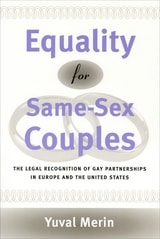
Equality for Same-Sex Couples
The Legal Recognition of Gay Partnerships in Europe and the United StatesYuval Merin
University of Chicago Press, 2002
Merin begins by providing a historical overview of the transformation of marriage from antiquity to the present. He then identifies and critically compares four principal models for the legal regulation and recognition of same-sex partnerships: civil marriage, registered partnership, domestic partnership, and cohabitation. Merin concludes that all of the models except civil marriage discriminate against gays and lesbians just as the "separate but equal" doctrine discriminated against African Americans; thus, so-called alternatives to marriage, even if they provide the same rights and benefits as marriage, are inherently unequal and therefore unconstitutional.
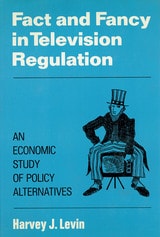
Fact and Fancy in Television Regulation
An Economic Study of Policy AlternativesHarvey J. Levin
Russell Sage Foundation, 1980
Is Administrative Law Unlawful?
Philip Hamburger
University of Chicago Press, 2014
With Is Administrative Law Unlawful?, Philip Hamburger answers this question in the affirmative, offering a revisionist account of administrative law. Rather than accepting it as a novel power necessitated by modern society, he locates its origins in the medieval and early modern English tradition of royal prerogative. Then he traces resistance to administrative law from the Middle Ages to the present. Medieval parliaments periodically tried to confine the Crown to governing through regular law, but the most effective response was the seventeenth-century development of English constitutional law, which concluded that the government could rule only through the law of the land and the courts, not through administrative edicts. Although the US Constitution pursued this conclusion even more vigorously, administrative power reemerged in the Progressive and New Deal Eras. Since then, Hamburger argues, administrative law has returned American government and society to precisely the sort of consolidated or absolute power that the US Constitution—and constitutions in general—were designed to prevent.
With a clear yet many-layered argument that draws on history, law, and legal thought, Is Administrative Law Unlawful? reveals administrative law to be not a benign, natural outgrowth of contemporary government but a pernicious—and profoundly unlawful—return to dangerous pre-constitutional absolutism.

Japanese Law
An Economic ApproachJ. Mark Ramseyer and Minoru Nakazato
University of Chicago Press, 1998
"A compelling economic analysis. . . . This book remains one of the few concerning Japanese law that successfully brings to life the legal culture of Japan." —Bonnie L. Dixon, New York Law Journal

Justice and Public Administration
Charles F. Abel and Arthur J. Sementelli
University of Alabama Press, 2007
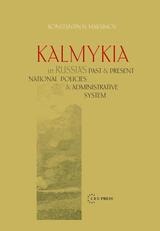
Kalmykia in Russia's Past and Present National Policies and Administrative System
Konstantin N. Maksimov
Central European University Press, 2008

Law, Sex, and Christian Society in Medieval Europe
James A. Brundage
University of Chicago Press, 1990
"Brundage's book is consistently learned, enormously useful, and frequently entertaining. It is the best we have on the relationships between theological norms, legal principles, and sexual practice."—Peter Iver Kaufman, Church History
Making Fathers Pay
The Enforcement of Child SupportDavid L. Chambers
University of Chicago Press, 1979
Making Fathers Pay is David L. Chambers's study of the child-support collection process in Michigan, the state most successful in inducing fathers to pay. He begins by reporting the perilous financial problems of divorced mothers with children, problems faced even by mothers who work full time and receive child support. The study then examines the characteristics of fathers who do and do not pay support and the characteristics of collections systems that work.
Chambers's findings are based largely on records of fathers' support payments in twenty-eight Michigan counties, some of which jail hundreds of men for nonpayment every year. Chambers finds that in places well organized to collect support, jailing nonpayers seems to produce higher payments from men jailed and from men not jailed, but only at a high social cost. He also raises grave doubts about the fairness of the judicial process that leads to jail. While Chambers's total sample includes 12,000 men, he interweaves through his text moving interviews with members of one family caught in the painful predicaments that men, women, and children face upon separation.
To increase support for children at lower social costs, Chambers advocates a national system of compulsory deductions from the wages of non-custodial parents who earn more than enough for their own subsistence.

Outbreak
Foodborne Illness and the Struggle for Food SafetyTimothy D. Lytton
University of Chicago Press, 2019
With Outbreak, Timothy D. Lytton provides an up-to-date history and analysis of the US food safety system. He pays particular attention to important but frequently overlooked elements of the system, including private audits and liability insurance.
Lytton chronicles efforts dating back to the 1800s to combat widespread contamination by pathogens such as E. coli and salmonella that have become frighteningly familiar to consumers. Over time, deadly foodborne illness outbreaks caused by infected milk, poison hamburgers, and tainted spinach have spurred steady scientific and technological advances in food safety. Nevertheless, problems persist. Inadequate agency budgets restrict the reach of government regulation. Pressure from consumers to keep prices down constrains industry investments in safety. The limits of scientific knowledge leave experts unable to assess policies’ effectiveness and whether measures designed to reduce contamination have actually improved public health. Outbreak offers practical reforms that will strengthen the food safety system’s capacity to learn from its mistakes and identify cost-effective food safety efforts capable of producing measurable public health benefits.
Regulatory Justice
Implementing a Wage-Price FreezeRobert A. Kagan
Russell Sage Foundation, 1978
The Constitution of the Federal Republic of Germany
David P. Currie
University of Chicago Press, 1994
Beginning with an overview of the essential features of the Basic Law of Germany, Currie then elucidates those features by analyzing a number of decisions of the German Constitutional Court. Contrasting German constitutional law with the American model, Currie further illuminates the German system and provides an invaluable comparative perspective on American institutions, judicial methods, and constitutional principles.
The German constitutional court recently has become the object of international attention as it has grappled with controversies involving abortion, ratification of the Maastricht Treaty, and the reunification of East and West. Currie examines these issues and their impact on the German constitution.
An appendix includes (in English translation) the complete Basic Law for the Federal Republic of Germany of May 23, 1949 as amended to December 1, 1993.

The Constitutional Jurisprudence of the Federal Republic of Germany, 2nd ed.
Donald P. Kommers
Duke University Press, 0
The Constitutional Jurisprudence of the Federal Republic of Germany, 2nd ed.
Donald P. Kommers
Duke University Press, 0
The History of the Common Law of England
Sir Matthew Hale
University of Chicago Press, 1973

The Hunters or the Hunted?
An Introduction to African Cave TaphonomyC. K. Brain
University of Chicago Press, 1981
The Illusion of Equality
The Rhetoric and Reality of Divorce ReformMartha Albertson Fineman
University of Chicago Press, 1991
The Law under the Swastika
Studies on Legal History in Nazi GermanyMichael Stolleis
University of Chicago Press, 1997
Stolleis studies a wide range of legal fields—constitutional, judicial, agrarian, administrative, civil, and business—arguing that all types of law were affected by the political realities of National Socialism. Moreover, he shows that legal traditions were not relinquished immediately with the onset of a new regime. For the first time we can see clearly the continuities between the Nazi period and the postwar period. The law under National Socialism did not make a complete break with the law during the Weimar Republic, nor did the law of the Federal Republic nullify all of the laws under National Socialism. Through a rich and subtle investigation, Stolleis shows how the legal profession and the political regime both reacted to the conditions of the period and molded the judicial system accordingly.
Breaking the conspiracy of silence held by the justices in the postwar period, Stolleis stresses the importance of researching Nazi law in order to confront ethical problems in today's legal profession.
The Lecherous Professor
Sexual Harassment on CampusBillie Wright Dziech and Linda Weiner
University of Illinois Press, 1990
The Making of Environmental Law
Richard J. Lazarus
University of Chicago Press, 2004
In The Making of Environmental Law, Richard J. Lazarus offers a new interpretation of the past three decades of this area of the law, examining the legal, political, cultural, and scientific factors that have shaped—and sometimes hindered—the creation of pollution controls and natural resource management laws. He argues that in the future, environmental law must forge a more nuanced understanding of the uncertainties and trade-offs, as well as the better-organized political opposition that currently dominates the federal government. Lazarus is especially well equipped to tell this story, given his active involvement in many of the most significant moments in the history of environmental law as a litigator for the Justice Department's Environment and Natural Resources Division, an assistant to the Solicitor General, and a member of advisory boards of the U.S. Environmental Protection Agency, the World Wildlife Fund, and the Environmental Defense Fund.
Ranging widely in his analysis, Lazarus not only explains why modern environmental law emerged when it did and how it has evolved, but also points to the ambiguities in our current situation. As the field of environmental law "grays" with middle age, Lazarus's discussions of its history, the lessons learned from past legal reforms, and the challenges facing future lawmakers are both timely and invigorating.

The Marriage Exchange
Property, Social Place, and Gender in Cities of the Low Countries, 1300-1550Martha C. Howell
University of Chicago Press, 1998
Based on extensive research in this archive, this book reveals how these documents were produced in a centuries-long effort to regulate—and ultimately to redefine—property and gender relations. At the center of the transformation was a shift from a marital property regime based on custom to one based on contract. In the former, a widow typically inherited her husband's property; in the latter, she shared it with or simply held it for his family or offspring. Howell asks why the law changed as it did and assesses the law's effects on both social and gender meanings but she insists that the reform did not originate in general dissatisfaction with custom or a desire to disempower widows. Instead, it was born in a complex economic, social and cultural history during which Douaisiens gradually came to think about both property and gender in new ways.
The Regulatory Process
With Illustrations from Commercial AviationBy Emmette S. Redford
University of Texas Press, 1969
The subject of regulation is one of the most vital and troublesome in our system of government. In this detailed study of early and mid-twentieth-century regulation of commercial aviation Emmette S. Redford illustrates what happens when government regulates a particular industry.
He first sets forth the perspectives for a study of an area of regulation and develops an argument for eclectic perspectives in the study of selected systems, or universes, of social action, such as the performance of an economic function under government regulation.
These perspectives are illustrated in the following series of case studies on regulation of commercial aviation:
- The significance of belief patterns on the content of the Civil Aeronautics Act of 1938.
- The role of Congress in the regulation of commercial aviation in a two-year period.
- The interactions of Congress, the president, and the regulated industry in strengthening safety regulation through passage of the Federal Aviation Act of 1958.
- The actions of the Civil Aeronautics Board on a set of complicated economic issues in the General Passenger Fare Investigation.
- The position of the Air Transport Association in the regulatory pattern.
In "An Essay on Evaluation" Redford summarizes what is revealed in the case studies that is significant with respect to the system of government regulation. He searches for standards for evaluating a system of social control, or for evaluating parts of it, and relates his conclusions to issues regarding the beneficence of a system of regulated private supply of a service.
The Regulatory Process is a study of interest to the aviation industry, to students of regulation of the economy, and to those who seek an understanding of social systems.
When Formality Works
Authority and Abstraction in Law and OrganizationsArthur L. Stinchcombe
University of Chicago Press, 2001
We have come to assume that governing our social activities by advance planning—by creating abstract descriptions of what ought to happen and adjusting these descriptions as situations change—is not as efficient and responsive as dealing directly with the real substance of the situation at hand. Stinchcombe argues the opposite. When a plan is designed to correct itself and keep up with the reality it is meant to govern, it can be remarkably successful. He points out a wide range of examples where this is the case, including architectural blueprints, immigration law, the construction of common law by appeals courts, Fannie Mae's secondary mortgage market, and scientific paradigms and programs.
Arguing that formality has been misconceived as consisting mainly of its defects, Stinchcombe shows how formality, at its best, can serve us much better than ritual obedience to poorly laid plans or a romantic appeal to "real life."