Results by title
11 books match the query 'Adolescent'

Child's Play
Sport in Kids' WorldsMessner, Michael A
Rutgers University Press, 2016
Community Service and Social Responsibility in Youth
James Youniss and Miranda Yates
University of Chicago Press, 1997
Using a case study from a predominantly Black, urban high school in Washington, D.C., Youniss and Yates build on the insights of Erik Erikson on the social and historical nature of identity development. They show that service at a soup kitchen as part of a course on social justice gives youth the opportunity to reflect on their status in society, on how society is organized, on how government should use its power, and on moral principles related to homelessness and poverty. Developing a sense of social responsibility and a civic commitment, youth come to see themselves as active agents in society.
The most authoritative work to date on the subject, this book challenges negative stereotypes of contemporary adolescents and illustrates how youth, when given the opportunity, can use their talents for social good. It will interest readers concerned with the development of today's youth and tomorrow's society.

Grow Up, Will You?
Maturity, Development, and Behavior through LifeMichael Rocque
Temple University Press, 2027
Maturation is a way we evaluate others and ourselves. It serves as a guidepost for our own behavior, often starting in adolescence. In Grow Up, Will You? Michael Rocque considers maturation across the life-course, providing a cultural and scholarly history of maturation before demonstrating how components of maturation develop, how they can be influenced, and their consequences for behavior and other life outcomes. He shows how biology and psychology propel us towards adulthood, but also how milestones, like graduating or getting married, produce a point of maturation.
Looking at examples from pop cultural movies, such as Juno, where a pregnant teenager faces numerous challenges and is forced to grow up quickly, Rocque explains how maturity has been defined and how it evolves. Such examples address key issues related to maturation, including timing and social expectations. He also introduces scientific conceptualizations and breaks down ways of measuring.
Ultimately, Grow Up, Will You? offers practical knowledge, programs, and approaches that can positively influence human development while also protecting a sense of childhood. Now grow up, will you?
In a Queer Voice
Journeys of Resilience from Adolescence to AdulthoodMichael Sadowski
Temple University Press, 2013
Educator Michael Sadowski deftly brings the voices of LGBTQ youth out into the open in his poignant and important book, In a Queer Voice. Drawing on two waves of interviews conducted six years apart, Sadowski chronicles how queer youth, who were often “silenced” in school and elsewhere, now can approach adulthood with a strong, queer voice.
In a Queer Voice continues the critical conversation about LGBTQ youth issues—from bullying and suicide to other risks involving drug and alcohol abuse—by focusing on the factors that help young people develop positive, self-affirming identities. Using the participants’ heartfelt, impassioned voices, we hear what schools, families, and communities can do to help LGBTQ youth become resilient, confident adults.

Not Under My Roof
Parents, Teens, and the Culture of SexAmy T. Schalet
University of Chicago Press, 2011
Winner of the Healthy Teen Network’s Carol Mendez Cassell Award for Excellence in Sexuality Education and the American Sociological Association's Children and Youth Section's 2012 Distinguished Scholarly Research Award
For American parents, teenage sex is something to be feared and forbidden: most would never consider allowing their children to have sex at home, and sex is a frequent source of family conflict. In the Netherlands, where teenage pregnancies are far less frequent than in the United States, parents aim above all for family cohesiveness, often permitting young couples to sleep together and providing them with contraceptives. Drawing on extensive interviews with parents and teens, Not Under My Roof offers an unprecedented, intimate account of the different ways that girls and boys in both countries negotiate love, lust, and growing up.
Tracing the roots of the parents’ divergent attitudes, Amy T. Schalet reveals how they grow out of their respective conceptions of the self, relationships, gender, autonomy, and authority. She provides a probing analysis of the way family culture shapes not just sex but also alcohol consumption and parent-teen relationships. Avoiding caricatures of permissive Europeans and puritanical Americans, Schalet shows that the Dutch require self-control from teens and parents, while Americans guide their children toward autonomous adulthood at the expense of the family bond.

On the Frontier of Adulthood
Theory, Research, and Public PolicyEdited by Richard A. Settersten Jr., Frank F. Furstenberg, and Rubén G. Rumbaut
University of Chicago Press, 2005
This volume considers the nature and consequences of changes in early adulthood by drawing upon a wide variety of historical and contemporary data from the United States, Canada, and Western Europe. Especially dramatic shifts have occurred in the conventional markers of adulthood—leaving home, finishing school, getting a job, getting married, and having children—and in how these experiences are configured as a set. These accounts reveal how the process of becoming an adult has changed over the past century, the challenges faced by young people today, and what societies can do to smooth the transition to adulthood.
"This book is the most thorough, wide-reaching, and insightful analysis of the new life stage of early adulthood."—Andrew Cherlin, Johns Hopkins University
"From West to East, young people today enter adulthood in widely diverse ways that affect their life chances. This book provides a rich portrait of this journey-an essential font of knowledge for all who care about the younger generation."—Glen H. Elder Jr., University of North Carolina at Chapel Hill
"On the Frontier of Adulthood adds considerably to our knowledge about the transition from adolescence to adulthood. . . . It will indeed be the definitive resource for researchers for years to come. Anyone working in the area—whether in demography, sociology, economics, or developmental psychology—will wish to make use of what is gathered here."—John Modell, Brown University
"This is a must-read for scholars and policymakers who are concerned with the future of today's youth and will become a touchpoint for an emerging field of inquiry focused on adult transitions."—Jeanne Brooks-Gunn, Columbia University
Positive Youth Development and Spirituality
From Theory to ResearchRichard M. Lerner
Templeton Press, 2008
<p>Bringing together a never-before-assembled network of biologists, psychologists, and sociologists, <em>Positive Youth Development and Spirituality</em> scientifically examines how spirituality and its cultivation may affect the positive development of adolescents. </p>
<p>Chapters provide groundbreaking new discussions of conceptual, theoretical, definitional, and methodological issues that need to be addressed when exploring the relationships between spirituality and development. Throughout the book, contributors recommend ways in which the research on the spirituality/positive youth development connection may be integral in building the larger field of spiritual development as a legitimate and active domain of developmental science. This volume, which is sure to be seen as a seminal contribution to a field in need of theoretical underpinnings, will be of interest to scholars and scientists in the fields of biology and the social and behavioral sciences.</p>
<p>Contributors include: Mona Abo-Zena, Jeffrey Jensen Arnnett, Peter L. Benson, Marina Umaschi Bers, Aerika Brittian, William Damon, Angela M. DeSilva, Jacquelynne S. Eccles, David Henry Feldman, Simon Gächter, Elena L. Grigorenko, Sonia S. Isaac, Lene Arnett Jensen, Carl N. Johnson, Linda Juang, Pamela Ebstyne King, Richard M. Lerner, Jennifer Menon, Na'ilah Sued Nasir, Guerda Nicolas, Toma´š Paus, Stephen C. Peck, Erin Phelps, Alan P. Poey, Robert W. Roeser, W. George Scarlett, Lonnie R. Sherrod, Gabriel S. Spiewak, Chris Starmer, Moin Syed, Janice L. Templeton, Heather L. Urry, and Richard Wilkinson.</p>
Social Awakening
Adolescent Behavior as Adulthood ApproachesRobert T. Michael
Russell Sage Foundation, 2001

The Fear of Child Sexuality
Young People, Sex, and AgencySteven Angelides
University of Chicago Press, 2019

The Future of Youth Violence Prevention
A Mixtape for Practice, Policy, and ResearchPaul Boxer
Rutgers University Press, 2025
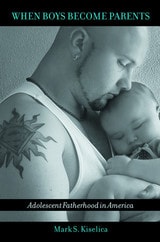
When Boys Become Parents
Adolescent Fatherhood in AmericaMark S. Kiselica
Rutgers University Press, 2011
In this informative book, Mark S. Kiselica draws on his many years of counseling teenage fathers to offer a compassionate look at the difficult life circumstances and the complicated hardships these young men experience. He dispels many of the myths surrounding teenage fatherhood and shows that, contrary to popular belief, these young men are often emotionally and physically involved in relationships with their partner and their child. But without support and guidance from adults, these relationships often deteriorate in the first year of the child-'s life. Kiselica offers advice for how professionals and policy makers can assist these young men and improve services for them.
When Boys Become Parents provides a moving portrait of teenage fathers to any reader who wants to understand and help these young men to become more competent and loving parents during their journey to adulthood.