Results by title
11 books match the query 'Adopted children'
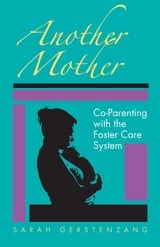
Another Mother
Co-Parenting with the Foster Care SystemSarah Gerstenzang
Vanderbilt University Press, 2007
One night after midnight social workers brought a baby girl to the author's home, and her life as a foster mother began. A social worker herself, Gerstenzang discovered that raising Cecilia, despite all the personal joys, would be a complex and frustrating process of "co-parenting" with the foster care system in New York City. Foster parents are in great demand, but they are not necessarily treated well. We follow the author through the home visits, the Early Intervention evaluation, the WIC program that (with much bureaucratic hassle) provides free formula and cereal, and the mandatory parenting training sessions. She comments, "When Michael and I became foster parents, we learned how stigmatizing, demoralizing, and just plain inconvenient and time-consuming being part of the 'unentitled' population can be. With the exception of Early Intervention, we often felt that the programs were more concerned with regulating our behavior than with providing services."
Regular meetings with the birth family were also part of the process. Not only were they awkward for all concerned, but each visit involved a commute of several hours. One social worker admitted that she preferred a foster parent who didn't work because that person could more easily comply with the time-consuming regulations. Sarah and her husband Michael also agonize over complying with special regulations about hiring babysitters or traveling ("anytime we left New York State we needed to ask the agency's permission, which in turn had to get the signed consent from the birth mother").
Central to Another Mother is the issue of transracial placement. Sarah remembers, "That first day the contrast between my pale skin and Cecilia's brown skin seemed glaring. Not only did I feel that I had someone else's child, I felt that I had a child from another culture. Would I owe someone an explanation?" (Gerstenzang is recalling the 1972 opposition of the National Association of Black Social Workers.) Her account is full of anecdotes and reflections about race: acceptance and prejudice from others; the feelings of her two children about having a sibling of a different race; and culture keeping, beginning with skin and hair care.
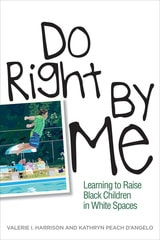
Do Right by Me
Learning to Raise Black Children in White SpacesValerie I. Harrison and Kathryn Peach D'Angelo
Temple University Press, 2021
For decades, Katie D’Angelo and Valerie Harrison engaged in conversations about race and racism. However, when Katie and her husband, who are white, adopted Gabriel, a biracial child, Katie’s conversations with Val, who is black, were no longer theoretical and academic. The stakes grew from the two friends trying to understand each other’s perspectives to a mother navigating, with input from her friend, how to equip a child with the tools that will best serve him as he grows up in a white family.
Through lively and intimate back-and-forth exchanges, the authors share information, research, and resources that orient parents and other community members to the ways race and racism will affect a black child’s life—and despite that, how to raise and nurture healthy and happy children. These friendly dialogues about guarding a child’s confidence and nurturing positive racial identity form the basis for Do Right by Me. Harrison and D’Angelo share information on transracial adoption, understanding racism, developing a child’s positive racial identity, racial disparities in healthcare and education, and the violence of racism.
Do Right by Me also is a story about friendship and kindness, and how both can be effective in the fight for a more just and equitable society.
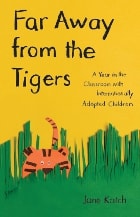
Far Away from the Tigers
A Year in the Classroom with Internationally Adopted ChildrenJane Katch
University of Chicago Press, 2011
Over the past three decades, more than a quarter of a million children have become citizens of the United States through international adoption. Kindergarten teacher Jane Katch recently found herself with three such children in her class: Katya, born in Russia, Jasper, from Cambodia, and Caleb, from Romania. Each child had spent early years in an orphanage, and each had unique educational and emotional needs. How Katch came to recognize and respond to those needs makes up the journey of discovery in this moving and insightful book.
Interspersing vignettes from the classroom and conversations with the children’s parents, Far Away from the Tigers first explores Katch’s misunderstandings and mistakes as she struggles to help the children adjust to school. As Katch learns more about each child’s preadoption past, she gradually realizes that they were deprived of some basic learning experiences and she needs to find ways to fill those gaps. Before Caleb can learn to read or write, he must improve his verbal skills by learning nursery rhymes, stories, and songs. Katya, who came from an overcrowded orphanage, now needs to be the center of attention; before learning how to form real friendships, she first must gain control over more basic functions such as eating and sleeping. And the youngest, Jasper, needs steady encouragement to play with classmates instead of sitting alone practicing his handwriting.
Slowly, through trial and error and by drawing on the deep understanding and intense commitment of the children’s parents, Katch discovers the importance—and joy—of allowing each child time to develop in his or her own way. Beautifully told, wise, and candid, Far Away from the Tigers is a gift for parents, teachers, and anyone who cares for children growing up in a new home.
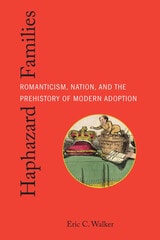
Haphazard Families
Romanticism, Nation, and the Prehistory of Modern AdoptionEric C. Walker
The Ohio State University Press, 2024
There are no provisions for adoption in English common law, and adoption wasn't legally formalized in England and Wales until 1926. But a century earlier, untimely adoptions navigated the new exceptionalism of childhood in Romanticism. In Haphazard Families, Eric C. Walker explores the history of the adopted child in Romantic-era England. Taking up the stories of both fictional and historical adoptees, he demonstrates how these children, diminished to nonpersons, shouldered the burden of social constructs of nation, family, gender, and class. Walker further demonstrates how Rousseau’s infamous failure to follow his own ideals of parenthood shaped British reactions in famous texts such as Frankenstein and Emma. Incorporating perspectives from Romantic scholarship and critical adoption studies and examining the stories of adopted children associated with Queen Caroline, Anna Letitia Barbauld, Jane Austen, the Wordsworth siblings, Mary Shelley, Charles and Mary Lamb, Letitia Landon, and others, Haphazard Families considers how Romantic constructions of childhood supply foundational structures of modern adoptee subjectivity.
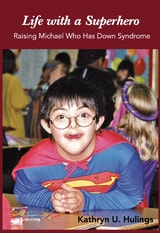
Life with a Superhero
Raising Michael Who Has Down SyndromeKathryn U. Hulings
University of North Texas Press, 2013
Lost and Found
The Adoption ExperienceBetty Jean Lifton
University of Michigan Press, 2009
"[Looks] at adoption from all sides of the triangle: adoptee, birth mother, adoptive parents . . . A provocative, comprehensive inquiry."
---Kirkus Reviews
"Honest and moving."
---New York Times
"Important and powerful . . . [the author] is concerned not just with adoptees but with the experience of adoptive parents and birth parents."
---Psychology Today
"A moving and powerful plea for open discourse instead of secrecy among the participants in the adoption process."
---Public Welfare, American Public Welfare Association
The first edition of Betty Jean Lifton's Lost and Found advanced the adoption rights movement in this country in 1979, challenging many states' policies of maintaining closed birth records. For nearly three decades the book has topped recommended reading lists for those who seek to understand the effects of adoption---including adoptees, adoptive parents, birth parents, and their friends and families.
This expanded and updated edition, with new material on the controversies concerning adoption, artificial insemination, and newer reproductive technologies, continues to add to the discussion on this important topic. A new preface and afterword by the author have been added, as well as a greatly expanded resources section that in addition to relevant organizations now lists useful Web sites.
Betty Jean Lifton, Ph.D., is a writer, psychotherapist, and leading advocate for adoption reform. Her many books include Journey of the Adopted Self and The King of Children, a New York Times Notable Book. She regularly makes appearances as a lecturer on adoption and has an adoption counseling practice in Cambridge, Massachusetts, and New York City.
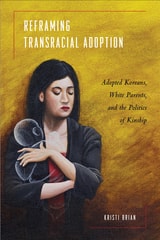
Reframing Transracial Adoption
Adopted Koreans, White Parents, and the Politics of KinshipKristi Brian
Temple University Press, 2012
Until the late twentieth century, the majority of foreign-born children adopted in the United States came from Korea. In the absorbing book Reframing Transracial Adoption, Kristi Brian investigates the power dynamics at work between the white families, the Korean adoptees, and the unknown birth mothers. Brian conducts interviews with adult adopted Koreans, adoptive parents, and adoption agency facilitators in the United States to explore the conflicting interpretations of race, culture, multiculturalism, and family.
Brian argues for broad changes as she critiques the so-called "colorblind" adoption policy in the United States. Analyzing the process of kinship formation, the racial aspects of these adoptions, and the experience of adoptees, she reveals the stifling impact of dominant nuclear-family ideologies and the crowded intersections of competing racial discourses.
Brian finds a resolution in the efforts of adult adoptees to form coherent identities and launch powerful adoption reform movements.
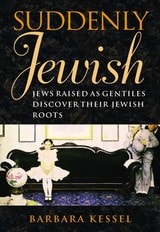
Suddenly Jewish
Jews Raised as Gentiles Discover Their Jewish RootsBarbara Kessel
Brandeis University Press, 2007
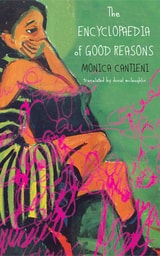
The Encyclopaedia of Good Reasons
Monica Cantieni
Seagull Books, 2014
Set in the time of the crucial 1970 Swiss referendum on immigration, Monica Cantieni introduces us to a host of colorful characters who struggle to make Switzerland their home: Eli, the Spanish bricklayer; Toni, the Italian factory worker with movie star looks; Madame Jelisaweta, the Yugoslav hairdresser; and Milena, the mysterious girl in the wardrobe. This is a book with a very warm heart, and rarely has a young girl’s narrative been at once so uproariously hilarious and so deeply moving.
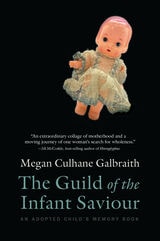
The Guild of the Infant Saviour
An Adopted Child's Memory BookMegan Culhane Galbraith
The Ohio State University Press, 2021
Shortly before Roe v. Wade legalized abortion, adoptee Megan Culhane Galbraith was born in a Catholic charity hospital in New York City to a teenaged resident of the Guild of the Infant Saviour, a home for unwed mothers. Decades later, on the eve of becoming a mother herself, she would travel to the former guild site; to her birth mother’s home in Scotland; and to Cornell University, where she discovered the startling history of its Domestic Economics program. There, from 1919 to 1969, coeds applied scientific principles to domesticity as they collectively mothered a rotating cast of babies awaiting adoption. The babies shared the last name Domecon and provided the inspiration for Galbraith’s art project, The Dollhouse.
The Guild of the Infant Saviour is a dizzyingly inventive hybrid memoir of one adoptee’s quest for her past. Galbraith pairs narrative with images from The Dollhouse as she weaves a personal and cultural history of adoption as it relates to guilt, shame, grief, identity, and memory itself. Ultimately, she connects her experiences to those of generations of adoptees, to the larger stories America tells about sex and motherhood, and to the shadows those stories cast on us all.
We Carry Smoke and Paper
Essays on the Grief and Hope of ConversionMelody S. Gee
University of Iowa Press, 2024
In essays that explore the parallels between conversion and language acquisition, isolated liturgies, cultural inheritances, stalled initiations, disrupted storytelling, and adoption, Gee examines conversion’s grief and hope, losses and gains, hauntings and promises. We Carry Smoke and Paper is a memoir about what we owe to those who sacrifice everything for us, and it is about the many conversions in a lifetime that turn our heads via whispers and shouts, calling us to ourselves.