Results by title
16 books match the query 'Adulthood'

Adulthood in Britain and the United States from 1350 to Generation Z
Edited by Maria Cannon and Laura Tisdall
University of London Press, 2024
Who gets to be an adult—and who decides? This book argues that consideration of age is a crucial element in scholarship that addresses power and inequality. Exploring how concepts of adulthood have changed over time in Britain and the United States from 1350 to the present day, the essays collected here engage with the intersectional identities of gender, race, class, sexuality, and disability, and ask how these affect understandings of adulthood.
Beyond Dreamers
Transitions to Adulthood in an Uncertain AgeSofya Aptekar
Russell Sage Foundation, 2026
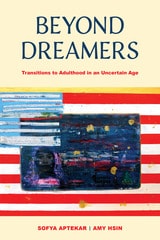
The typical image of a Dreamer is an undocumented Latinx youth—brought to the U.S. through no choice of their own—who excels academically and aspires to contribute to the U.S. economy. This image has engendered political good will and helped push through an executive order that created Deferred Action for Childhood Arrivals, but it is limited. It fails to account for the full spectrum of diversity among undocumented youth. It also leaves the Dreamer figure stuck in a stage of youth and innocence waiting for immigration reform to allow them to finally transition to adulthood. There is little room in the Dreamer narrative for navigating complex family obligations, employment, entering adult relationships, or other markers of adulthood. In Beyond Dreamers, sociologists Sofya Aptekar and Amy Hsin examine how undocumented young adults navigate the transition to adulthood.
Drawing on more than one hundred interviews with a racially and ethnically diverse group of undocumented college students in New York City, with and without DACA authorization, Aptekar and Hsin show that there is no single undocumented experience. They find that while legal status matters enormously, its impacts are influenced by race, national origin, gender, class, sexuality, family resources, educational institutions, neighborhood contexts, and access to local and transnational co-ethnic communities and labor markets. These forces not only shape the kinds of opportunities available to undocumented young adults, but how they choose to approach disclosing their undocumented status and interact with family, peers, employers, professors, and police.
Aptekar and Hsin pay particular attention to the effect of one’s mode of entry into the United States, highlighting the distinction between visa overstayers and those who entered the country without inspection. This highly consequential divide shapes early experiences of illegality, labor market options, exposure to surveillance and precarity, and the possibility of adjusting status. Individuals who overstay their visas have more avenues to adjust their undocumented status, including family sponsorship and marriage to U.S. citizens. Opportunities for legalization are much more restricted for those who made unauthorized border crossings. If these immigrant youth want to adjust their status, they are required to leave the country and remain abroad for at least ten years to do so. Other methods of adjusting their status, such as claiming extreme hardship on their American families or trying to obtain visas for victims of crime or parental abuse or neglect, are extremely difficult to obtain, costly, and can lead to division in families, making legalization all but impossible and, therefore, limiting youths’ opportunities. Thus, mode of entry strongly influences how some young adults imagine their future lives in the U.S. and beyond.
Beyond Dreamers deftly underscores how deeply legal uncertainty continues to structure the lives of undocumented young adults.
Brotherhood University
Black Men's Friendships and the Transition to AdulthoodBrandon A. Jackson
Rutgers University Press, 2024
Defining Girlhood in India
A Transnational History of Sexual Maturity LawsAshwini Tambe
University of Illinois Press, 2019
In a Queer Voice
Journeys of Resilience from Adolescence to AdulthoodMichael Sadowski
Temple University Press, 2013
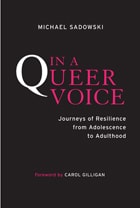
Educator Michael Sadowski deftly brings the voices of LGBTQ youth out into the open in his poignant and important book, In a Queer Voice. Drawing on two waves of interviews conducted six years apart, Sadowski chronicles how queer youth, who were often “silenced” in school and elsewhere, now can approach adulthood with a strong, queer voice.
In a Queer Voice continues the critical conversation about LGBTQ youth issues—from bullying and suicide to other risks involving drug and alcohol abuse—by focusing on the factors that help young people develop positive, self-affirming identities. Using the participants’ heartfelt, impassioned voices, we hear what schools, families, and communities can do to help LGBTQ youth become resilient, confident adults.

On the Frontier of Adulthood
Theory, Research, and Public PolicyEdited by Richard A. Settersten Jr., Frank F. Furstenberg, and Rubén G. Rumbaut
University of Chicago Press, 2005
This volume considers the nature and consequences of changes in early adulthood by drawing upon a wide variety of historical and contemporary data from the United States, Canada, and Western Europe. Especially dramatic shifts have occurred in the conventional markers of adulthood—leaving home, finishing school, getting a job, getting married, and having children—and in how these experiences are configured as a set. These accounts reveal how the process of becoming an adult has changed over the past century, the challenges faced by young people today, and what societies can do to smooth the transition to adulthood.
"This book is the most thorough, wide-reaching, and insightful analysis of the new life stage of early adulthood."—Andrew Cherlin, Johns Hopkins University
"From West to East, young people today enter adulthood in widely diverse ways that affect their life chances. This book provides a rich portrait of this journey-an essential font of knowledge for all who care about the younger generation."—Glen H. Elder Jr., University of North Carolina at Chapel Hill
"On the Frontier of Adulthood adds considerably to our knowledge about the transition from adolescence to adulthood. . . . It will indeed be the definitive resource for researchers for years to come. Anyone working in the area—whether in demography, sociology, economics, or developmental psychology—will wish to make use of what is gathered here."—John Modell, Brown University
"This is a must-read for scholars and policymakers who are concerned with the future of today's youth and will become a touchpoint for an emerging field of inquiry focused on adult transitions."—Jeanne Brooks-Gunn, Columbia University

Once I Was Cool
Personal EssaysMegan Stielstra
Northwestern University Press, 2021
With conversational flourishes and on-the-mark descriptions, Stielstra’s essays evoke the richness of her everyday life and the memories that are never far away. She remembers learning how to shoot a gun, a cancer scare, and—in a piece that was anthologized in The Best American Essays 2013—the time she eavesdropped on another new mother using her son’s baby monitor. “I shouldn’t have listened,” she writes. “But it was the first time since my son was born that I didn’t feel alone.” Combining footnotes, electric sentences, and uproariously funny anecdotes (have you ever run into an ex while rolling on ecstasy?), Stielstra shows us that maturity is demanding, but its rewards are a gift.
Persona
Social Role and PersonalityHelen Harris Perlman
University of Chicago Press, 1986

Political Learning in Adulthood
A Sourcebook of Theory and ResearchEdited by Roberta S. Sigel
University of Chicago Press, 1989
In Political Learning in Adulthood, social scientists for the first time examine the changes in political outlook and behavior that take place during the adult years, providing an invaluable overview of the problems, theories, and methodological approaches that characterize the field of political socialization. They consider which political values remain constant and which are subject to change, and they explore the ways in which both ordinary and extraordinary life events affect adults' political worldviews. Among specific topics considered are the effects of age and aging, the relation between participation in the work force and the development and expression of political views, continuity and change in the wake of revolutionary social and political movements, and the effects of such traumatic and life-threatening situations as war and terrorist activity.
The Company We Keep
Interracial Friendships and Romantic Relationships from Adolescence to AdulthoodGrace Kao
Russell Sage Foundation, 2019
While research on interracial social ties has often focused on whites and blacks, Hispanics are the largest minority group and Asian Americans are the fastest growing racial group in the United States. The Company We Keep examines friendships and romantic relationships among blacks, whites, Hispanics, and Asian Americans to better understand the full spectrum of contemporary race relations. Using data from the National Longitudinal Study of Adolescent to Adult Health, the authors explore the social ties of more than 15,000 individuals from their first survey responses as middle and high school students in the mid-1990s through young adulthood nearly fifteen years later. They find that while approval for interracial marriages has increased and is nearly universal among young people, interracial friendships and romantic relationships remain relatively rare, especially for whites and blacks. Black women are particularly disadvantaged in forming interracial romantic relationships, while Asian men are disadvantaged in the formation of any romantic relationships, both as adolescents and as young adults. They also find that people in same-sex romantic relationships are more likely to have partners from a different racial group than are people in different-sex relationships. The authors pay close attention to how the formation of interracial friendships and romantic relationships depends on opportunities for interracial contact. They find that the number of students choosing different-race friends and romantic partners is greater in schools that are more racially diverse, indicating that school segregation has a profound impact on young people’s social ties.
Kao, Joyner, and Balistreri analyze the ways school diversity and adolescent interracial contact intersect to lay the groundwork for interracial relationships in young adulthood. The Company We Keep provides compelling insights and hope for the future of living and loving across racial divides.
The Journey into Adulthood in Uncertain Times
Robert Crosnoe
Russell Sage Foundation, 2025
Drawing on both quantitative and qualitative survey data over five decades, Crosnoe and Cavanagh find that young adults are, in fact, waiting longer to take on “real” adult roles, such as worker or parent. However, this is not out of a reluctance to grow up. Instead, increased inequality and changes in the economy have forced young people to adapt their lives in new ways. Young adults are now spending more time in school, have more trouble finding their footing in the labor force, and consequently postpone getting married and having children. They also mix and match roles in more complicated ways now than in the past—going back and forth between school and work over longer periods of time or disconnecting parenthood from their romantic relationships. While the period from late teens to mid-twenties does look different now than in the past, the change has been slow and steady rather than a dramatic shift due to social crises. The Great Recession, for example, had a more muted effect on young people’s social and economic attainment and family formation than fears of a lost generation would suggest.
Crosnoe and Cavanagh find that while the panic over young adults today may be somewhat overblown, this conclusion should not obscure some clear concerns. Young adults do struggle with their social and emotional wellbeing. They are more depressed than their counterparts in previous generations, drink less alcohol in ways that suggest less engagement with social life, and express deep distrust of social institutions and the idea of the American Dream. The authors argue that worries about the state of young adulthood today should trigger more reflection about how to support young people rather than how to fix them.
The Journey into Adulthood in Uncertain Times is a comprehensive and illuminating examination of the challenges faced by contemporary young adults.
The Long Shadow
Family Background, Disadvantaged Urban Youth, and the Transition to AdulthoodKarl Alexander
Russell Sage Foundation, 2014
The Price of Independence
The Economics of Early AdulthoodSheldon Danziger
Russell Sage Foundation, 2007
The Script of Life in Modern Society
Entry into Adulthood in a Changing WorldMarlis Buchmann
University of Chicago Press, 1989

The Victorian Novel of Adulthood
Plot and Purgatory in Fictions of MaturityRebecca Rainof
Ohio University Press, 2015
In The Victorian Novel of Adulthood, Rebecca Rainof confronts the conventional deference accorded the bildungsroman as the ultimate plot model and quintessential expression of Victorian nation building. The novel of maturity, she contends, is no less important to our understanding of narrative, Victorian culture, and the possibilities of fiction.
Reading works by Charles Dickens, George Eliot, Henry James, John Henry Newman, and Virginia Woolf, Rainof exposes the little-discussed theological underpinnings of plot and situates the novel of maturity in intellectual and religious history, notably the Oxford Movement. Purgatory, a subject hotly debated in the period, becomes a guiding metaphor for midlife adventure in secular fiction. Rainof discusses theological models of gradual maturation, thus directing readers’ attention away from evolutionary theory and geology, and offers a new historical framework for understanding Victorian interest in slow and deliberate change.
Their Time Has Come
Youth with Disabilities on the Cusp of AdulthoodLeiter, Valerie
Rutgers University Press, 2012
In Their Time Has Come, Valerie Leiter argues that there are crucial missing links between federal disability policies and the lives of young people. Youth and their parents struggle to gather information about the resources that disability policies have created, and youth are not typically prepared to use their disability rights effectively. Her argument is based on thorough examination of federal disability policy and interviews with young people with disabilities, their parents, and rehabilitation professionals. Attention is given to the diversity of expectations, the resources available to them, and the impact of federal policy and public and private attitudes on their transition to adulthood.