Results by title
8 books match the query 'Adversity'

Allies In Adversity
The Frontline States In SouthernGilbert M. Khadiagala
Ohio University Press, 1994
[more]
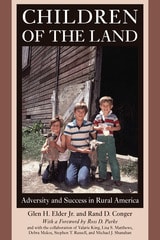
Children of the Land
Adversity and Success in Rural AmericaGlen H. Elder Jr. and Rand D. Conger
University of Chicago Press, 2000
A century ago, most Americans had ties to the land. Now only one in fifty is engaged in farming and little more than a fourth live in rural communities. Though not new, this exodus from the land represents one of the great social movements of our age and is also symptomatic of an unparalleled transformation of our society.
In Children of the Land, the authors ask whether traditional observations about farm families—strong intergenerational ties, productive roles for youth in work and social leadership, dedicated parents and a network of positive engagement in church, school, and community life—apply to three hundred Iowa children who have grown up with some tie to the land. The answer, as this study shows, is a resounding yes. In spite of the hardships they faced during the agricultural crisis of the 1980s, these children, whose lives we follow from the seventh grade to after high school graduation, proved to be remarkably successful, both academically and socially.
A moving testament to the distinctly positive lifestyle of Iowa families with connections to the land, this uplifting book also suggests important routes to success for youths in other high risk settings.
[more]

Economic Behaviour in Adversity
Jack Hirshleifer
University of Chicago Press, 1988
Conflict, disaster, and destruction—despite their historical and current significance—have not yet been adequately studied from the economic point of view. Economic Behaviour in Adversity brings together ten important essays, several previously unpublished, dealing with the choices people make in times of disaster and conflict. These essays help explain the possibilities and limits of human cooperation under severe environmental pressure.
Part I, "Disaster and Recovery," contains previously unpublished studies of major historical catastrophes, among them the Black Death of the fourteenth century, the Civil War in Russia that followed the Bolshevik revolution, and the mass bombing of Germany and of Japan during World War II. Accompanying the historical studies are several analytical papers that interpret the disaster experience.
The essays in Part II, "Cooperation and Conflict," represent innovative theoretical analyses based on a common theme—that cooperation and conflict are alternative strategies whereby individuals, groups, and different forms of social organization struggle with one another for evolutionary survival. Ultimately, these essays indicate, the political economy of the human species is an instance of Darwin's "economy of nature."
[more]
In the Face of Adversity
Translating Difference and DissentEdited by Thomas Nolden
University College London, 2023
A study of the role of translation in bringing accounts of difficult circumstances to broader audiences.
In the Face of Adversity explores the dynamics of translating texts that articulate particular notions of adverse circumstances. The contributors show how literary records of painful experiences and dissenting voices are at risk of being stripped of their authenticity when not carefully handled by the translator, how cultural moments in which the translation of a text that would have otherwise fallen into oblivion instead gave rise to a translator who enabled its preservation while ultimately coming into their own as an author as a result, and how the difficulties the translator faces in intercultural or transnational constellations in which prejudice plays a role endangers projects meant to facilitate mutual understanding. The authors address translation as a project of making available and preserving a corpus of texts that would otherwise be in danger of becoming censored, misperceived, or ignored. They look at translation and adaptation as a project of curating textual models of personal, communal, or collective perseverance, and they offer insights into the dynamics of cultural inclusion and exclusion through a series of theoretical frameworks, as well as through a set of concrete case studies drawn from different cultural and historical contexts.
In the Face of Adversity explores the dynamics of translating texts that articulate particular notions of adverse circumstances. The contributors show how literary records of painful experiences and dissenting voices are at risk of being stripped of their authenticity when not carefully handled by the translator, how cultural moments in which the translation of a text that would have otherwise fallen into oblivion instead gave rise to a translator who enabled its preservation while ultimately coming into their own as an author as a result, and how the difficulties the translator faces in intercultural or transnational constellations in which prejudice plays a role endangers projects meant to facilitate mutual understanding. The authors address translation as a project of making available and preserving a corpus of texts that would otherwise be in danger of becoming censored, misperceived, or ignored. They look at translation and adaptation as a project of curating textual models of personal, communal, or collective perseverance, and they offer insights into the dynamics of cultural inclusion and exclusion through a series of theoretical frameworks, as well as through a set of concrete case studies drawn from different cultural and historical contexts.
[more]
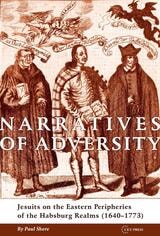
Narratives of Adversity
Jesuits on the Eastern Peripheries of the Habsburg Realms (1640–1773)Paul J. Shore
Central European University Press, 2012
Addresses the experience of Jesuit missionaries, teachers and writers along the peripheries of the Habsburg lands, which stretched to Moldavia, Ukraine, Serbia and Wallachia, and which were continually torn with ethnic tensions. The time scale of the study is from the "high tide" of the Society (often labeled "the first multinational corporation") in the fourth decade of the seventeenth century, until its suppression in 1773 by Pope Clement XIV. The book examines several of the communities situated along the periphery and the records that they left behind about their interactions with the local populations. It constructs a vivid picture of Jesuit life on the frontier that is built up in mosaic fashion and livened by compelling anecdotes. The Jesuits of Royal Hungary exercised a baroque expression modeled after the larger western cities of the Habsburg lands, which was a fragile splendor in part defined by the need to defend Catholicism from the hostility of Orthodox, Lutherans, Calvinists, and others.
[more]
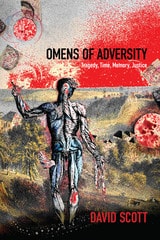
Omens of Adversity
Tragedy, Time, Memory, JusticeDavid Scott
Duke University Press, 2014
Omens of Adversity is a profound critique of the experience of postcolonial, postsocialist temporality. The case study at its core is the demise of the Grenada Revolution (1979–1983), and the repercussions of its collapse. In the Anglophone Caribbean, the Grenada Revolution represented both the possibility of a break from colonial and neocolonial oppression, and hope for egalitarian change and social and political justice. The Revolution's collapse in 1983 was devastating to a revolutionary generation. In hindsight, its demise signaled the end of an era of revolutionary socialist possibility. Omens of Adversity is not a history of the Revolution or its fallout. Instead, by examining related texts and phenomena, David Scott engages with broader, enduring issues of political action and tragedy, generations and memory, liberalism and transitional justice, and the possibility of forgiveness. Ultimately, Scott argues that the palpable sense of the neoliberal present as time stalled, without hope for emancipatory futures, has had far-reaching effects on how we think about the nature of political action and justice.
[more]

St. Austin Review, Verse in Adversity
Poetry & Modernity, May/June 2016, Vol. 16, No. 3Joseph Pearce
St. Augustine's Press, 2016
[more]

The Solitary Self
Jean-Jacques Rousseau in Exile and AdversityMaurice Cranston
University of Chicago Press, 1997
A monumental achievement, Maurice Cranston's trilogy provides the definitive account of Jean-Jacques Rousseau's turbulent life. Now available in paperback, this final volume completes a masterful biography of one of the most important philosophers of all time. The Solitary Self traces the last tempestuous years of Rousseau's life.
"The Solitary Self is a fitting coda to a magisterial work. Cranston . . . is a compelling stylist who narrates Rousseau's tribulations with a mixture of compassion and dry humor."—Thomas Pavel, Wall Street Journal
"Cranston not only recreates for his readers a rounded view of Rousseau himself, he sets it firmly in the social and political context of Europe's ancien regime. . . . An engrossing work of history."—John Gray, New Statesman
"Cranston's painstaking archival research and lucid style yield the most detailed and thoroughly documented biography of Rousseau written in English. His epilogue masterfully sums up Rousseau's importance as political philosopher and initiator of romantic sensibilities."—Choice
"Anyone curious about the paradoxes of a most paradoxical man will not go wrong by starting with this invaluable biography."—James Miller, Washington Post Book World
"As absorbing as a picaresque novel."—Naomi Bliven, New Yorker
"A monument of scholarship. . . . This amazing biography, like Boswell's account of Johnson, recreates the daily life of Rousseau: what he did, who he saw, what he said, what he wrote. . . . We may be quite confident that we hold in our hands the authoritative account of this life. The definitive Rousseau."—Isaac Kramnick, New Republic
Maurice Cranston (1920-1993), a distinguished scholar and recipient of the James Tait Black Memorial Prize for his biography of John Locke, was professor of political science at the London School of Economics. His numerous books include The Romantic Movement and Philosophers and Pamphleteers, and translations of Rousseau's The Social Contract and Discourse on the Origins of Inequality.
[more]