Results by title
4 books match the query 'Aeronautics, Commercial'
Fiscal Aspects of Aviation Management
Robert W. Kaps
Southern Illinois University Press, 2000
Although introductions to courses in finance exist for a variety of fields, Robert W. Kaps provides the first text to address the subject from an aviation viewpoint. Relying on his vast experience—twenty-plus years in the airline industry and more than thirty years in aviation—Kaps seeks not only to prepare students for careers in the aviation field but also to evoke in these students an excitement about the business. Specifically, he shows students how airlines, airports, and aviation are financed. Each chapter contains examples and illustrations and ends with suggested readings and references.
Following his discussion of financial management and accounting procedures, Kaps turns to financial management and sources of financial information. Here he discusses types of business organizations, corporate goals, business ethics, maximizing share price, and sources of financial information.
Kaps also covers debt markets, financial statements, air transport sector revenue generation, and air transport operating cost management, including cost administration and labor costs, fuel, and landing fees and rentals. He describes in depth air transport yield management systems and airport financing, including revenues, ownership, operations, revenue generation, funding, allocation of Air Improvement Program funds, bonds, and passenger facility charges.
Kaps concludes with a discussion of the preparation of a business plan, which includes advice about starting and running a business. He also provides two typical business plan outlines. While the elements of fiscal management in aviation follow generally accepted accounting principles, many nuances are germane only to the airline industry. Kaps provides a basic understanding of the principles that are applicable throughout the airline industry.
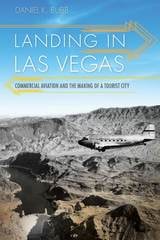
Landing in Las Vegas
Commercial Aviation and the Making of a Tourist CityDaniel K. Bubb
University of Nevada Press, 2017
At the beginning of the twentieth century, Las Vegas was a dusty, isolated desert town. By century’s end, it was the country’s fastest-growing city, a world-class travel destination with a lucrative tourist industry hosting millions of visitors a year. This transformation came about in large part because of a symbiotic relationship between airlines, the city, and the airport, facilitated by the economic democratization and deregulation of the airline industry, the development of faster and more comfortable aircraft, and the ambitious vision of Las Vegas city leaders and casino owners. Landing in Las Vegas is a compelling study of the role of fast, affordable transportation in overcoming the vast distances of the American West and binding western urban centers to the national and international tourism, business, and entertainment industries.

Plane Truth
Aviation's Real Impact on People and the EnvironmentRose Bridger
Pluto Press, 2013
As aviation charges ahead to become one of the world's fastest growing industries, with passenger numbers and cargo volumes projected to double in the next 20 years, Plane Truth sounds a highly informed note of scepticism.
Rose Bridger provides a comprehensive account of aviation's impact, including how new airports are gobbling up farmland and wildlife habitats and inflicting noise and air pollution on communities. She reveals the extraordinary level of subsidy for the industry, from government expenditure on infrastructure to tax breaks, which helps to support the industry in the face of rising oil prices and the global economic downturn.
Plane Truth demolishes industry claims that fuel-efficient aircraft and alternative fuels can enable growth without increasing climate change and reveals the symbiotic relationship between aviation and the wider socio-economic problems facing humanity.
The Transparent Traveler
The Performance and Culture of Airport SecurityRachel Hall
Duke University Press, 2015