Results by title
3 books match the query 'Aestheticism (Literature)'

Life-Destroying Diagrams
Eugenie Brinkema
Duke University Press, 2021

The Sanitary Arts
Aesthetic Culture and the Victorian Cleanliness CampaignsEileen Cleere
The Ohio State University Press, 2014
The Sanitary Arts covers the mid-forties controversy over cleaning the dirt from the pictures in the National Gallery, the debate over decorative “dust traps” in the overstuffed Victorian home, and the late-century proliferation of hygienic breeding principles as a program of aesthetic perfectibility, to demonstrate the unintentionally collaborative work of seemingly unrelated events and discourses. Bringing figures like Edwin Chadwick and John Ruskin into close conversation about the sanitary status of beauty in a variety of forms and environments, Cleere forcefully demonstrates that aesthetic development and scientific discovery can no longer be understood as separate or discrete forces of cultural change.
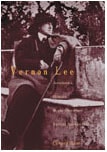
Vernon Lee
Aesthetics, History, and the Victorian Female IntellectualChrista Zorn
Ohio University Press, 2003
The subject of renewed interest among literary and cultural scholars, Vernon Lee wrote more than forty books, in a broad range of genres, including fiction, history, aesthetics, and travel literature. Early on, Lee established her reputation as a public critic whose unconventional viewpoints stood out among those of her contemporaries.
To feminist and cultural critics, she is a fascinating model of the independent female intellectual who, as Desmond MacCarthy once put it, provides a rare combination of intellectual curiosity and imaginative sensibility.
A startlingly original critical study, Vernon Lee adds new dimensions to the legacy of this woman of letters whose career spans the transition from the late Victorian to the modernist period. Zorn draws on archival materials to discuss Lee’s work in terms of British aestheticism and in the context of the Western European history of ideas.
Zorn contends that Lee’s fiction and nonfiction represent a literary position that bridges and surpasses both the Victorian sage and the modernist aesthetic critic.
Through Professor Zorn’s approach, which combines theoretical framings of texts in terms of recent feminist and cultural criticism with passages of close reading, Vernon Lee emerges as an influential figure in late-nineteenth-century British and continental European thinking on history, art, culture, and gender.