Results by title
6 books match the query 'Aesthetics, Ancient'
Aesthetic Revelation
Reading Ancient and Medieval Texts after Hans Urs von BalthasarOleg Bychkov
Catholic University of America Press, 2010
Aristotle's Poetics
Stephen Halliwell
University of Chicago Press, 1998
The core of the book is a fresh appraisal of Aristotle's view of tragic drama, in which Halliwell contends that at the heart of the Poetics lies a philosophical urge to instill a secularized understanding of Greek tragedy.
"Essential reading not only for all serious students of the Poetics . . . but also for those—the great majority—who have prudently fought shy of it altogether."—B. R. Rees, Classical Review
"A splendid work of scholarship and analysis . . . a brilliant interpretation."—Alexander Nehamas, Times Literary Supplement
Hellenistic Aesthetic
Barbara Hughes Fowler
University of Wisconsin Press, 1989
“Fowler’s . . . own insights are apparent throughout, and they seem to distill the personal appreciation and understanding of a scholar who has devoted much of her career to both contemplating and enjoying Hellenistic poetry. . . . [This book] would make an excellent background text for courses in later Greek and Roman art, and it can be read with profit by anyone interested in exploring the character of Hellenistic culture.”—J. J. Pollitt, American Journal of Archaeology
“Outstanding is the range of examples discussed both in poetry and art. Theocritus, Callimachus, Appolonius, the epigrammatists, and others—that is, the major figures of the time—are considered at length and in several different contexts. Passages are quoted in the original Greek, translated, and analyzed. Fowler’s sensitivity to poetic forms, evident in her other published writings, is again evident here. In addition, however, the philosophical context is not overlooked. . . . Also highly commendable are the liberal references to works of art. Sculpture in the round and in relief, portraits, terracotta figurines, original paintings (grave stelai) and Campanian murals, mosaics, gold and silver vessels, and jewelry are introduced at various points. Every work of art discussed is illustrated in astonishingly clear photographs, which are interspersed in the body of the text.”—Christine Mitchell Havelock
“The Hellenistic Aesthetic provides classicists with their first thorough discussion of the aesthetic unity found in Hellenistic art and literature. . . . Fowler examines parallels both in subject matter and in artistic approach among a diverse group of literary genres and artistic forms. In twelve chapters, The Hellenistic Aesthetic surveys Alexandrian epigrams, pastorals, epics, sculptural groups, mosaics, paintings, and jewelry to supply a convincing, and frequently unexpected, picture of a unified aesthetic vision.”—Jeffrey Buller, Classical Outlook
PLOTINUS
Ennead I.6: On Beauty: Translation, with an Introduction and CommentaryAndrew Smith
Parmenides Publishing, 2016
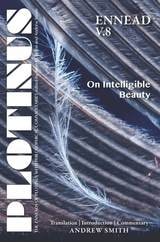
Plotinus Ennead V.8
On Intelligible Beauty: Translation with an Introduction and CommentaryAndrew Smith
Parmenides Publishing, 2017
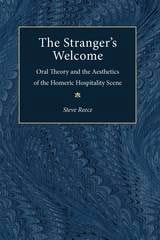
The Stranger's Welcome
Oral Theory and the Aesthetics of the Homeric Hospitality SceneSteve Reece
University of Michigan Press, 1993