Results by title
4 books match the query 'Affliction'
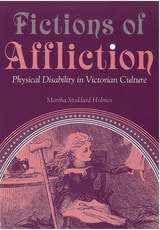
Fictions of Affliction
Physical Disability in Victorian CultureMartha Stoddard Holmes
University of Michigan Press, 2010
Tiny Tim, Clym Yeobright, Long John Silver---what underlies nineteenth-century British literature's fixation with disability? Melodramatic representations of disability pervaded not only novels by Dickens, but also doctors' treatises on blindness, educators' arguments for "special" education, and even the writing of disabled people themselves. Drawing on extensive primary research, Martha Stoddard Holmes introduces readers to popular literary and dramatic works that explored culturally risky questions like "can disabled men work?" and "should disabled women have babies?" and makes connections between literary plots and medical, social, and educational debates of the day. The first book of its kind, Fictions of Affliction contributes a new emphasis to Victorian literary and cultural studies and offers new readings of works by canonic and becoming-canonic writers like Dickens, Wilkie Collins, and others.
[more]

The Affliction
A Novel in StoriesC. Dale Young
Four Way Books, 2018
A novel told in short stories, The Affliction is an astounding fiction debut by an award-winning poet full of memorable characters across America and the Caribbean. Young beautifully weaves together the elaborate stories of many while holding together a clear focus: people are not always as they seem.
[more]
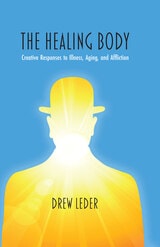
The Healing Body
Creative Responses to Illness, Aging, and AfflictionDrew Leder
Northwestern University Press, 2024
A philosophically and medically informed response to the physical vulnerabilities of our existence
As we grapple with the impacts of an aging population, the millions who struggle with chronic pain and illness, and the unknown number of COVID survivors dealing with long-term impairment, our individual and collective trust in our bodies is shaken. How to adapt? And how to live well, even when medical cure is unavailable? In The Healing Body: Creative Responses to Illness, Aging, and Affliction, philosopher and medical doctor Drew Leder shows how the phenomenology of lived embodiment makes available a variety of existential healing responses to bodily breakdown. Leder also turns to socially marginalized groups—people who have been incarcerated and those deemed “elderly”—to explore how individuals creatively cope with societal as well as physical challenges.
This book forwards current phenomenological research on the body, pain and suffering, disability, and aging. It deeply engages with the legacies of continental philosophy while also drawing insights from the traditions of Hinduism, Buddhism, and Taoism. The Healing Body is a uniquely creative and refreshingly innovative contribution to contemporary philosophy, demonstrating the importance of the philosophical method to the wider culture.
[more]
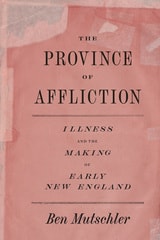
The Province of Affliction
Illness and the Making of Early New EnglandBen Mutschler
University of Chicago Press, 2020
In The Province of Affliction, Ben Mutschler explores the surprising roles that illness played in shaping the foundations of New England society and government from the late seventeenth century through the early nineteenth century. Considered healthier than people in many other regions of early America, and yet still riddled with disease, New Englanders grappled steadily with what could be expected of the sick and what allowances were made to them and their providers. Mutschler integrates the history of disease into the narrative of early American social and political development, illuminating the fragility of autonomy, individualism, and advancement . Each sickness in early New England created its own web of interdependent social relations that could both enable survival and set off a long bureaucratic struggle to determine responsibility for the misfortune. From families and households to townships, colonies, and states, illness both defined and strained the institutions of the day, bringing people together in the face of calamity, yet also driving them apart when the cost of persevering grew overwhelming. In the process, domestic turmoil circulated through the social and political world to permeate the very bedrock of early American civic life.
[more]