Results by title
16 books match the query 'African American athletes'
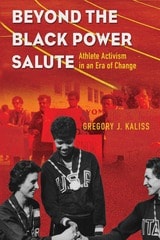
Beyond the Black Power Salute
Athlete Activism in an Era of ChangeGregory J. Kaliss
University of Illinois Press, 2023
Globetrotting
African American Athletes and Cold War PoliticsDamion L. Thomas
University of Illinois Press, 2012
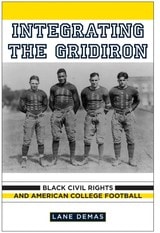
Integrating the Gridiron
Black Civil Rights and American College FootballDemas, Lane
Rutgers University Press, 2011
Integrating the Gridiron, the first book devoted to exploring the racial politics of college athletics, examines the history of African Americans on predominantly white college football teams from the nineteenth century through today. Lane Demas compares the acceptance and treatment of black student athletes by presenting compelling stories of those who integrated teams nationwide, and illuminates race relations in a number of regions, including the South, Midwest, West Coast, and Northeast. Focused case studies examine the University of California, Los Angeles in the late 1930s; integrated football in the Midwest and the 1951 Johnny Bright incident; the southern response to black players and the 1955 integration of the Sugar Bowl; and black protest in college football and the 1969 University of Wyoming "Black 14." Each of these issues drew national media attention and transcended the world of sports, revealing how fans—and non-fans—used college football to shape their understanding of the larger civil rights movement.
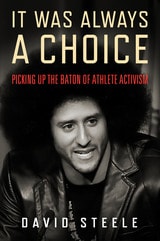
It Was Always a Choice
Picking Up the Baton of Athlete ActivismDavid Steele
Temple University Press, 2022
The recent flashpoint of Colin Kaepernick taking a knee renews a long tradition of athlete-activists speaking out against racism, injustice, and oppression. Like Kaepernick, Jackie Robinson, Paul Robeson, Muhammad Ali, Bill Russell, Tommie Smith, and John Carlos—among many others, of all races, male and female, pro and amateur—all made the choice to take a side to command public awareness and attention rather than “shut up and play,” as O. J. Simpson, Michael Jordan, and Tiger Woods did. Using their celebrity to demand change, these activists inspired fans but faced great personal and professional risks in doing so. It Was Always a Choice traces the history and impact of these decisive moments throughout the history of U.S. sports.
David Steele identifies the resonances and antecedents throughout the twentieth century of the choices faced by athletes in the post-Kaepernick era, including the advance of athletes’ political organizing in the era of activism following the death of George Floyd. He shows which athletes chose silence instead of action—“dropping the baton,” as it were—in the movement to end racial inequities and violence against Black Americans. The examples of courageous athletes multiply as LeBron James, Megan Rapinoe and the activist-athletes of the NBA, WNBA, and NFL remain committed to fighting daily and vibrantly for social change.
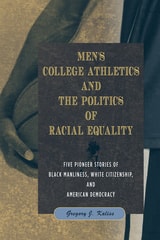
Men's College Athletics and the Politics of Racial Equality
Five Pioneer Stories of Black Manliness, White Citizenship, and American DemocracyGregory J Kaliss
Temple University Press, 2014
College sports have provided a compelling means to discuss issues regarding racial equality and fairness in American life. As previously-white institutions of higher learning gradually (and grudgingly) opened their playing fields to African-American athletes in men's basketball and football, black and white spectators interpreted mixed-race team sports in often contradictory ways. In Men's College Athletics and the Politics of Racial Equality, Gregory Kaliss offers stunning insights into Americans' contested visions of equality, fairness, black manhood, citizenship, and an equal opportunity society.
Kaliss looks at Paul Robeson, Jackie Robinson, Wilt Chamberlain, Charlie Scott, John Mitchell, Wilbur Marshall, and Bear Bryant to show how Americans responded to racial integration over time. Men's College Athletics and the Politics of Racial Equality reveals that as fans, media members, university students, faculty, and administration—black and white—discussed the achievements and struggles of these athletes, they inevitably talked about much more than what occurred on the field.
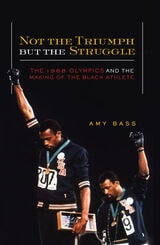
Not the Triumph But the Struggle
The 1968 Olympics and the Making of the Black AthleteAmy Bass
University of Minnesota Press, 2004
A sweeping look at black athletes through the lens of the black power protests at the Mexico City Olympics—now in paperback!
Jesse Owens. Muhammad Ali. Michael Jordan. Tiger Woods. All are iconic black athletes, as are Tommie Smith and John Carlos, the African American track and field medalists who raised black-gloved fists on the victory dais at the Mexico City Olympics and brought the roiling American racial politics of the late 1960s to a worldwide television audience. But few of those viewers fully realized what had led to this demonstration—events that included the assassination of Dr. Martin Luther King Jr., uprisings in American cities, student protests around the world, the rise of the Black Power movement, and decolonization and apartheid in Africa.
In this far-reaching account, Amy Bass offers nothing less than a history of the black athlete. Beginning with the racial eugenics discussions of the early twentieth century and their continuing reverberations in popular perceptions of black physical abilities, Bass explores ongoing African American attempts to challenge these stereotypes. Although Tommie Smith and John Carlos were reviled by Olympic officials for their demonstration, Bass traces how their protest has come to be the defining image of the 1968 Games, with lingering effects in the sports world and on American popular culture generally.
Out of Left Field
A Sportswriter’s Last WordStan Isaacs. Edited and with an Introduction by Aram Goudsouzian
University of Illinois Press, 2024
“Stan Isaacs is directly responsible for my television career--and much of how I approached what I’ve said and whom I’ve said it about.” --Keith Olbermann
Iconoclastic and irreverent, Stan Isaacs was part of a generation that bucked the sports establishment with a skepticism for authority, an appreciation for absurdity, and a gift for placing athletes and events within the context of their tumultuous times. Isaacs draws on his trademark wink-and-a-grin approach to tell the story of the long-ago Brooklyn that formed him and a career that placed him amidst the major sporting events of his era. Mixing reminiscences with column excerpts, Isaacs recalls antics like stealing a Brooklyn Dodgers pennant after the team moved to Los Angeles and his many writings on Paul Revere’s horse. But Isaacs also reveals the crusading and humanist instincts that gave Black athletes like Muhammad Ali a rare forum to express their views and celebrated the oddball, unsung Mets over the straitlaced Yankees.
Insightful and hilarious, Out of Left Field is the long-awaited memoir of the influential sportswriter and his adventures in the era of Jim Brown, Arthur Ashe, and the Amazin’ Mets.
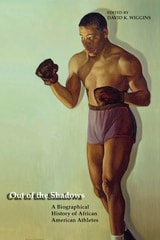
Out of the Shadows
A Biographical History of African American AthletesDavid K. Wiggins
University of Arkansas Press, 2008
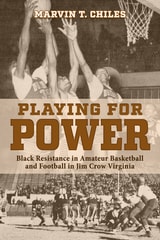
Playing for Power
Black Resistance in Amateur Basketball and Football in Jim Crow VirginiaMarvin T. Chiles
University of Alabama Press, 2025
Reveals the role of amateur Black football and basketball in Virginia before integration as a form of resistance to white supremacy
In Playing for Power, Marvin T. Chiles offers a fascinating account of amateur sports in Jim Crow Virginia, revealing how, in addition to churches, workspaces, and civil rights organizations, sports were also a key arena for Black resistance to white supremacy. Drawing from a rich trove of primary sources, Chiles recounts the development of Black football and basketball culture at the high school and college levels in Virginia from the 1890s to the early 1970s. Looking beyond their role as leisure pastimes, Chiles demonstrates how amateur sports strengthened education, neutralized class divisions, shaped Black masculinity, mentored Black male leadership, cultivated race pride, and reflected Black desires for urban modernity.
Illuminating the ways Black athletes created a world that pushed for racial progress through objective, meritocratic achievement anchored by masculine leadership and institutional success, Playing for Power traces how amateur sports coalesced into a key cultural institution that fostered Black Virginians’ collective sense of community, achievement, and purpose during segregation, cornerstones of later advances in the Civil Rights Movement. Playing for Power also contributes to a larger understanding of sports history and how amateur sports became favorite American spectacles and markers of Southern identity. Chiles’s groundbreaking work will interest historians, scholars, and individuals interested in the intersection of sports and civil rights and the history of Black sports during the Jim Crow era.
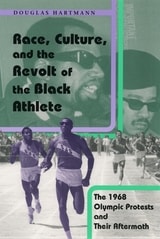
Race, Culture, and the Revolt of the Black Athlete
The 1968 Olympic Protests and Their AftermathDouglas Hartmann
University of Chicago Press, 2003
Drawing on extensive archival research and newly gathered oral histories, Douglas Hartmann sets out to answer these questions, reconsidering this pivotal event in the history of American sport. He places Smith and Carlos within the broader context of the civil rights movement and the controversial revolt of the black athlete. Although the movement drew widespread criticism, it also led to fundamental reforms in the organizational structure of American amateur athletics. Moving from historical narrative to cultural analysis, Hartmann explores what we can learn about the complex relations between race and sport in contemporary America from this episode and its aftermath.
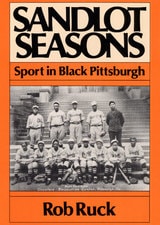
Sandlot Seasons
SPORT IN BLACK PITTSBURGHRob Ruck
University of Illinois Press, 1987
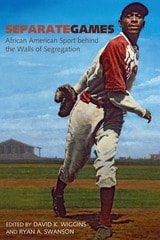
Separate Games
African American Sport behind the Walls of SegregationDavid K. Wiggins
University of Arkansas Press, 2017
Winner of the 2017 NASSH Book Award for best edited collection.
The hardening of racial lines during the first half of the twentieth century eliminated almost all African Americans from white organized sports, forcing black athletes to form their own teams, organizations, and events. This separate sporting culture, explored in the twelve essays included here, comprised much more than athletic competition; these “separate games” provided examples of black enterprise and black self-help and showed the importance of agency and the quest for racial uplift in a country fraught with racialist thinking and discrimination.
The significance of this sporting culture is vividly showcased in the stories of the Cuban Giants baseball team, basketball’s New York Renaissance Five, the Tennessee State Tigerbelles track-and-field team, black college football’s Turkey Bowl Classic, car racing’s Gold and Glory Sweepstakes, Negro League Baseball’s East-West All-Star game, and many more. These teams, organizations, and events made up a vibrant national sporting complex that remained in existence until the integration of sports beginning in the late 1940s. Separate Games explores the fascinating ways sports helped bind the black community and illuminate race pride, business acumen, and organizational abilities.
Silent Gesture
The Autobiography of Tommie SmithTommie Smith with David Steele
Temple University Press, 2008
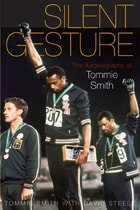
n 1968, Tommie Smith and his teammate John Carlos won the gold and silver medals, respectively, for the 200 meter dash. Receiving their medals on the dais, they raised their fists and froze a moment in time that will forever be remembered as a powerful day of protest. In this, his autobiography, Smith tells the story of that moment, and of his life before and after it, to explain what that moment meant to him.
In Silent Gesture, Smith recounts his life before and after the 1968 Olympics: his life-long commitment to athletics, education, and human rights. He dispels some of the myths surrounding his and Carlos' act on the dais -- contrary to legend, Smith wasn't a member of the Black Panthers, but a member of the US Olympic Project for Human Rights -- and describes in detail the planning and risks involved in his protest. Smith also details his many years after Mexico City of devotion to human rights, athletics, and education. A unique resource for anyone concerned with international sports, history, and the African American experience, Silent Gesture contributes a complete picture of one of the most famous moments in sports history, and of a man whose actions always matched his words.
Sol Butler
An Olympian's Odyssey through Jim Crow AmericaBrian Hallstoos
University of Illinois Press, 2026
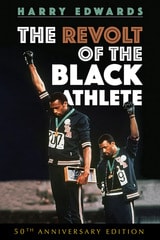
The Revolt of the Black Athlete
50th Anniversary EditionHarry Edwards
University of Illinois Press, 2017
The Unlevel Playing Field
A Documentary History of the African American Experience in SportDavid K. Wiggins and Patrick B. Miller
University of Illinois Press, 2003
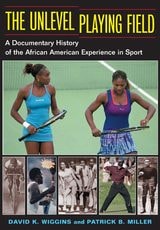
The Unlevel Playing Field offers a rich compendium of more than 100 primary sources that chart the intertwining history of African Americans and sport. Introductions and head-notes provided by David K. Wiggins and Patrick B. Miller place each document in context, shaping an unrivaled narrative.
Readers will find dozens of accounts by Frederick Douglass, W. E. B. DuBois, Booker T. Washington, Marcus Garvey, James Weldon Johnson, Richard Wright, A. S. “Doc” Young, Eldredge Cleaver, Nikki Giovanni, John Edgar Wideman, bell hooks, James Baldwin, Roy Wilkins, Henry Louis Gates, Gerald Early, and many others.
The documents range from discussions of the color line in organized baseball during the Jim Crow era and portraits of turn-of-the-century figures like the champion sprint cyclist Marshall “Major” Taylor and boxer Jack Johnson. Writers also look at modern-day issues like the participation of black athletes in the 1968 Olympics, the place of African American women in sport, and examine pioneering figures like Jackie Robinson, Muhammad Ali, Althea Gibson, Michael Jordan, Tiger Woods, and Venus and Serena Williams.