Results by title
8 books match the query 'African American clergy'
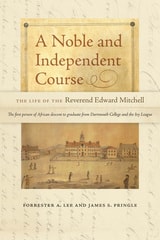
A Noble and Independent Course
The Life of the Reverend Edward MitchellForrester A. Lee and James S. Pringle
Dartmouth College Press, 2018
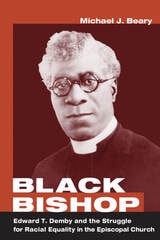
Black Bishop
Edward T. Demby and the Struggle for Racial Equality in the Episcopal ChurchMichael J. Beary
University of Illinois Press, 2001
America’s first Black bishop and his struggle to rebuild the African American presence inside the Episcopal Church
In 1918, the Right Reverend Edward T. Demby took up the reins as Suffragan (assistant) Bishop for Colored Work in Arkansas and the Province of the Southwest, an area encompassing Arkansas, Texas, Kansas, Oklahoma, Missouri, and New Mexico. Set within the context of a series of experiments in black leadership conducted by the Episcopal Diocese of Arkansas in the early decades of the twentieth century, Demby's tenure in a segregated ministry illuminates the larger American experience of segregation disguised as a social good.
Intent on demonstrating the industry and self-reliance of black Episcopalians to the church at large, Demby set about securing black priests for the diocese, baptizing and confirming communicants, and building schools and other institutions of community service. A gifted leader and a committed Episcopalian, Demby recognized that black service institutions, such as schools, hospitals, and orphanages, would be the means to draw African Americans back to the Episcopal Church, which they had abandoned in droves after emancipation as the church of their former masters.
For more than twenty years, hamstrung by white apathy, lack of funds, jurisdictional ambiguity, and the Great Depression, Demby doggedly tried to establish the credibility of a ministry that was as ill-conceived as it was well intended. Michael J. Beary skillfully narrates the shifting alliances within the Episcopal Church and shows how race was but one aspect of a more elemental struggle for power. He demonstrates how Demby's steadiness of purpose and non-confrontational manner gathered allies on both sides of the color line and how, ultimately, his judgment and the weight of his experience carried the church past its segregationist experiment.
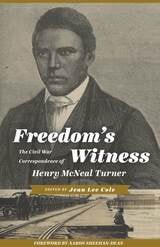
Freedom's Witness
The Civil War Correspondence of Henry McNeal TurnerJean Lee Cole
West Virginia University Press, 2013
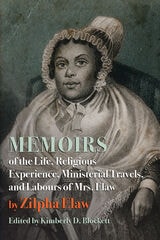
Memoirs of the Life, Religious Experience, Ministerial Travels, and Labours of Mrs. Elaw
Zilpha Elaw
West Virginia University Press, 2021
As a young Black orphan indentured to a Quaker family in Bristol, Pennsylvania, Zilpha Elaw (c. 1793–1873) decided to join the upstart Methodists in 1808. She preached her first sermon a decade later, ignoring her husband and the many church leaders, clergy, and laity who tried to silence her. Elaw’s memoir chronicles the first twenty years of her forty-year itinerant ministry during massive Protestant revivalism in the United States and England.
Elaw preached from Maine to Virginia, attracting multiracial and multidenominational audiences that included powerful men, wealthy White women, poor families, and enslaved communities. She moved from Bristol to Burlington, New Jersey, then to Nantucket, Massachusetts, and finally, in 1840, to London’s East End. In England, Elaw’s celebrity expanded, and at least twice she drew crowds so large they caused human stampedes and multiple injuries.
Blockett’s introduction and extensive annotations draw on newly unearthed information about the entirety of Elaw’s evangelism to provide context for this remarkable story of an antebellum Black woman’s personal and professional mobility.
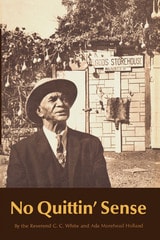
No Quittin' Sense
By the Reverend C. C. White and Ada Morehead Holland
University of Texas Press, 1994
This story, set in the Piney Woods country of East Texas, spans most of a century, from shortly after the close of the Civil War to the 1960's. It is the story of Charley White, who was born in the middle of those woods—in a decaying windowless log cabin a few years after his mother and father were freed from slavery. His childhood, lived in almost unbelievable poverty, was followed by financial stability achieved in middle age through years of struggle. And then, in order to obey God's will, he abandoned this secure life, and for forty years he waged a one-man war on poverty and intolerance.
Winner of the Carr P. Collins Award (best nonfiction book) of the Texas Institute of Letters, No Quittin' Sense presents the story of Rev. C. C. "Charley" White, whose life has inspired thousands of readers since the book was first published in 1969.
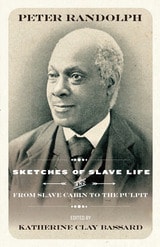
Sketches of Slave Life and From and From Slave Cabin to the Pulpit
Peter Randolph
West Virginia University Press, 2016
This book is the first anthology of the autobiographical writings of Peter Randolph, a prominent nineteenth-century former slave who became a black abolitionist, pastor, and community leader.
Randolph’s story is unique because he was freed and relocated from Virginia to Boston, along with his entire plantation cohort. A lawsuit launched by Randolph against his former master’s estate left legal documents that corroborate his autobiographies.
Randolph's writings give us a window into a different experience of slavery and freedom than other narratives currently available and will be of interest to students and scholars of African American literature, history, and religious studies, as well as those with an interest in Virginia history and mid-Atlantic slavery.
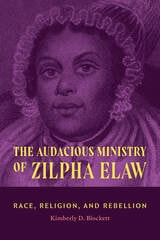
The Audacious Ministry of Zilpha Elaw
Race, Religion, and RebellionKimberly D. Blockett
Duke University Press, 2026
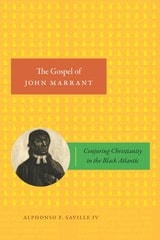
The Gospel of John Marrant
Conjuring Christianity in the Black AtlanticAlphonso F. Saville IV
Duke University Press, 2024