Results by title

21 books match the query 'African American families'

cover of Alley Life in Washington: Family, Community, Religion, and Folklife in the City, 1850-1970

Alley Life in Washington

Family, Community, Religion, and Folklife in the City, 1850-1970

James Borchert

University of Illinois Press, 1980
Forgotten today, established Black communities once existed in the alleyways of Washington, D.C., even in neighborhoods as familiar as Capitol Hill and Foggy Bottom. James Borchert's study delves into the lives and folkways of the largely alley dwellers and how their communities changed from before the Civil War, to the late 1890s era when almost 20,000 people lived in alley houses, to the effects of reform and gentrification in the mid-twentieth century.
[more]
cover of Black Fathers in Contemporary American Society: Strengths, Weaknesses, and Strategies for Change

Black Fathers in Contemporary American Society

Strengths, Weaknesses, and Strategies for Change

Obie Clayton

Russell Sage Foundation, 2003
The majority of African American children live in homes without their fathers, but the proportion of African American children living in intact, two-parent families has risen significantly since 1995. Black Fathers in Contemporary American Society looks at father absence from two sides, offering an in-depth analysis of how the absence of African American fathers affects their children, their relationships, and society as a whole, while countering the notion that father absence and family fragmentation within the African American community is inevitable. Editors Obie Clayton, Ronald B. Mincy, and David Blankenhorn lead a diverse group of contributors encompassing a range of disciplines and ideological perspectives who all agree that father absence among black families is one of the most pressing social problems today. In part I, the contributors offer possible explanations for the decline in marriage among African American families. William Julius Wilson believes that many men who live in the inner city no longer consider marriage an option because their limited economic prospects do not enable them to provide for a family. Part II considers marriage from an economic perspective, emphasizing that it is in part a wealth-producing institution. Maggie Gallagher points out that married people earn, invest, and save more than single people, and that when marriage rates are low in a community, it is the children who suffer most. In part III, the contributors discuss policies to reduce absentee fatherhood. Wornie Reed demonstrates how public health interventions, such as personal development workshops and work-related skill-building services, can be used to address the causes of fatherlessness. Wade Horn illustrates the positive results achieved by fatherhood programs, especially when held early in a man's life. In the last chapter, Enola Aird notes that from 1995 to 2000, the proportion of African American children living in two-parent, married couple homes rose from 34.8 to 38.9 percent; a significant increase indicating the possible reversal of the long-term shift toward black family fragmentation. Black Fathers in Contemporary American Society provides an in-depth look at a problem affecting millions of children while offering proof that the trend of father absence is not irrevocable.
[more]
cover of Blaming the Poor: The Long Shadow of the Moynihan Report on Cruel Images about Poverty

Blaming the Poor

The Long Shadow of the Moynihan Report on Cruel Images about Poverty

Greenbaum, Susan D

Rutgers University Press, 2015

In 1965, the late Senator Daniel Patrick Moynihan—then a high-ranking official in the Department of Labor—sparked a firestorm when he released his report “The Negro Family,” which came to be regarded by both supporters and detractors as an indictment of African American culture. Blaming the Poor examines the regrettably durable impact of the Moynihan Report for race relations and social policy in America, challenging the humiliating image the report cast on poor black families and its misleading explanation of the causes of poverty.
 
A leading authority on poverty and racism in the United States, Susan D. Greenbaum dismantles Moynihan’s main thesis—that the so called matriarchal structure of the African American family “feminized” black men, making them inadequate workers and absent fathers, and resulting in what he called a tangle of pathology that led to a host of ills, from teen pregnancy to adult crime. Drawing on extensive scholarship, Greenbaum highlights the flaws in Moynihan’s analysis. She reveals how his questionable ideas have been used to redirect blame for substandard schools, low wages, and the scarcity of jobs away from the societal forces that cause these problems, while simultaneously reinforcing stereotypes about African Americans. Greenbaum also critiques current policy issues that are directly affected by the tangle of pathology mindset—the demonization and destruction of public housing; the criminalization of black youth; and the continued humiliation of the poor by entrepreneurs who become rich consulting to teachers, non-profits, and social service personnel.  
 
A half century later, Moynihan’s thesis remains for many a convenient justification for punitive measures and stingy indifference to the poor. Blaming the Poor debunks this infamous thesis, proposing instead more productive and humane policies to address the enormous problems facing us today.
 
[more]
cover of Comedy: American Style: Jessie Redmon Fauset

Comedy

American Style: Jessie Redmon Fauset

Sherrard-Johnson, Cherene

Rutgers University Press, 2009

Comedy: American Style, Jessie Redmon Fauset's fourth and final novel, recounts the tragic tale of a family's destructionùthe story of a mother who denies her clan its heritage. Originally published in 1933, this intense narrative stands the test of time and continues to raise compelling, disturbing, and still contemporary themes of color prejudice and racial self-hatred. Several of today's bestselling novelists echo subject matter first visited in Fauset's commanding work, which overflows with rich, vivid, and complex characters who explore questions of color, passing, and black identity.

Cherene Sherrard-Johnson's introduction places this literary classic in both the new modernist and transatlantic contexts and will be embraced by those interested in earlytwentieth-century women writers, novels about passing, the Harlem Renaissance, the black/white divide, and diaspora studies. Selected essays and poems penned by Fauset are also included, among them "Yarrow Revisited" and "Oriflamme," which help highlight the full canon of her extraordinary contribution to literature and provide contextual background to the novel.
[more]
cover of Coping With Poverty: The Social Contexts of Neighborhood, Work, and Family in the African-American Community

Coping With Poverty

The Social Contexts of Neighborhood, Work, and Family in the African-American Community

Sheldon Danziger and Ann Chih Lin, Editors

University of Michigan Press, 2000
Conservatives often condemn the poor, particularly African-Americans, for having children out of wedlock, joblessness, dropping out of school, or tolerating crime. Liberals counter that, with more economic opportunity, the poor differ little from the nonpoor in these areas. In answer to both, Coping with Poverty points to the survival strategies of the poor and their multiple roles as parents, neighbors, relatives, and workers. Their attempts to balance multiple obligations occur within a context of limited information, social support, and resources. Their decisions may not always be the wisest, but they "make sense" in context.
Contributors use qualitative research methods to explore the influence of community, workplace, and family upon strategies for dealing with poverty. Promising young scholars delve into poor black inner-city neighborhoods and suburbs and middle-income black urban communities, exploring experiences at all stages of life, including high-school students, young parents, employed older men, and unemployed mothers. Two chapters discuss the role of qualitative research in poverty studies, specifically examining how this research can be used to improve policymaking.
The volume's contribution is in the diversity of experiences it highlights and in how the general themes it illustrates are similar across different age/gender groups. The book also suggests an approach to policymaking that seeks to incorporate the experiences and the needs of the poor themselves, in the hope of creating more successful and more relevant poverty policy. It is especially useful for undergraduate and graduate courses in sociology, public policy, urban studies, and African-American Studies, as its scope makes it THE basic reader of qualitative studies of poverty.
Sheldon Danziger is Director of the Poverty Research and Tranining Center and Professor of Social Work and Public Policy, University of Michigan. Ann Chih Lin is Assistant Professor of Political Science and Public Policy, University of Michigan.
[more]
cover of Daisy Turner's Kin: An African American Family Saga

Daisy Turner's Kin

An African American Family Saga

Jane C. Beck

University of Illinois Press, 2015

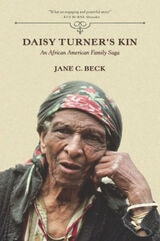
A daughter of freed African American slaves, Daisy Turner became a living repository of history. The family narrative entrusted to her--"a well-polished artifact, an heirloom that had been carefully preserved"--began among the Yoruba in West Africa and continued with her own century and more of life.
 
In 1983, folklorist Jane Beck began a series of interviews with Turner, then one hundred years old and still relating four generations of oral history. Beck uses Turner's storytelling to build the Turner family saga, using at its foundation the oft-repeated touchstone stories at the heart of their experiences: the abduction into slavery of Turner's African ancestors; Daisy's father Alec Turner learning to read; his return as a soldier to his former plantation to kill his former overseer; and Daisy's childhood stand against racism. Other stories re-create enslavement and her father's life in Vermont--in short, the range of life events large and small, transmitted by means so alive as to include voice inflections. Beck, at the same time, weaves in historical research and offers a folklorist's perspective on oral history and the hazards--and uses--of memory.

Publication of this book is supported by grants from the Andrew W. Mellon Foundation and the L. J. and Mary C. Skaggs Folklore Fund.
[more]
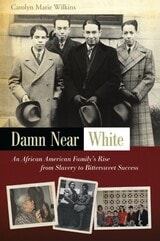
cover of Damn Near White: An African American Family's Rise from Slavery to Bittersweet Success

Damn Near White

An African American Family's Rise from Slavery to Bittersweet Success

Carolyn Marie Wilkins

University of Missouri Press, 2010

Carolyn Wilkins grew up defending her racial identity. Because of her light complexion and wavy hair, she spent years struggling to convince others that she was black. Her family’s prominence set Carolyn’s experiences even further apart from those of the average African American. Her father and uncle were well-known lawyers who had graduated from Harvard Law School. Another uncle had been a child prodigy and protégé of Albert Einstein. And her grandfather had been America's first black assistant secretary of labor.

Carolyn's parents insisted she follow the color-conscious rituals of Chicago's elite black bourgeoisie—experiences Carolyn recalls as some of the most miserable of her entire life. Only in the company of her mischievous Aunt Marjory, a woman who refused to let the conventions of “proper” black society limit her, does Carolyn feel a true connection to her family's African American heritage.

When Aunt Marjory passes away, Carolyn inherits ten bulging scrapbooks filled with family history and memories. What she finds in these photo albums inspires her to discover the truth about her ancestors—a quest that will eventually involve years of research, thousands of miles of travel, and much soul-searching.

Carolyn learns that her great-grandfather John Bird Wilkins was born into slavery and went on to become a teacher, inventor, newspaperman, renegade Baptist minister, and a bigamist who abandoned five children. And when she discovers that her grandfather J. Ernest Wilkins may have been forced to resign from his labor department post by members of the Eisenhower administration, Carolyn must confront the bittersweet fruits of her family's generations-long quest for status and approval.

Damn Near White is an insider’s portrait of an unusual American family. Readers will be drawn into Carolyn’s journey as she struggles to redefine herself in light of the long-buried secrets she uncovers. Tackling issues of class, color, and caste, Wilkins reflects on the changes of African American life in U.S. history through her dedicated search to discover her family’s powerful story.
[more]
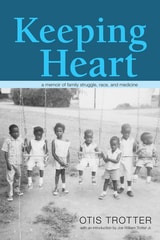
cover of Keeping Heart: A Memoir of Family Struggle, Race, and Medicine

Keeping Heart

A Memoir of Family Struggle, Race, and Medicine

Otis Trotter

Ohio University Press, 2015

“After saying our good-byes to friends and neighbors, we all got in the cars and headed up the hill and down the road toward a future in Ohio that we hoped would be brighter,” Otis Trotter writes in his affecting memoir, Keeping Heart: A Memoir of Family Struggle, Race, and Medicine.

Organized around the life histories, medical struggles, and recollections of Trotter and his thirteen siblings, the story begins in 1914 with his parents, Joe William Trotter Sr. and Thelma Odell Foster Trotter, in rural Alabama. By telling his story alongside the experiences of his parents as well as his siblings, Otis reveals cohesion and tensions in twentieth-century African American family and community life in Alabama, West Virginia, and Ohio.

This engaging chronicle illuminates the journeys not only of a black man born with heart disease in the southern Appalachian coalfields, but of his family and community. It fills an important gap in the literature on an underexamined aspect of American experience: the lives of blacks in rural Appalachia and in the nonurban endpoints of the Great Migration. Its emotional power is a testament to the importance of ordinary lives.

[more]
cover of Loving Black Boys: A Black Feminist Bible on Racism and Revolutionary Mothering

Loving Black Boys

A Black Feminist Bible on Racism and Revolutionary Mothering

Tamura Lomax

Duke University Press, 2026

Loving Black Boys is not just a love letter to Tamura Lomax’s own sons, but to all Black boys, men, fathers, and brothers. With understanding and urgency, Lomax writes honestly about Black endangerment and what it means to endure living in what James Baldwin called the “burning house” of white supremacist capitalist heteropatriarchal America. Seeing the full humanity of Black boys and men, and the liberation of all Black people, Lomax writes, requires a Black feminist lens. A companion piece to Freeing Black Girls, this book connects the everyday and extraordinary moments of Black mothering: phenomena as varied as “the talk” about police brutality, physical and emotional violence, Christian nationalism, miseducation, emotional health, sports, and more, which produce not only shared vulnerabilities but also tensions among Black folks. To her sons and to all Black men, Lomax insists that Black feminism, which emphasizes mutuality, protection, ethical autonomy, and healing, is vital to forging a safer future for individual and collective survival.
[more]
cover of Our Stories: Black Families in Early Dallas

Our Stories

Black Families in Early Dallas

George Keaton Jr.

University of North Texas Press, 2022
[more]
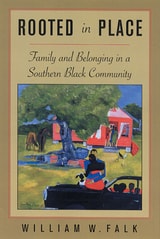
cover of Rooted in Place: Family and Belongings in a Southern Black Community

Rooted in Place

Family and Belongings in a Southern Black Community

Falk, William W

Rutgers University Press, 2004

Throughout the twentieth century, millions of African Americans, many from impoverished, historically black counties, left the South to pursue what they thought would be a better life in the North. But not everyone moved away during what scholars have termed the Great Migration. What has life been like for those who stayed? Why would they remain in a place that many outsiders would see as grim, depressed, economically marginal, and where racial prejudice continues to place them at a disadvantage?

Through oral history William Falk tells the story of an extended family in the Georgia-South Carolina lowcountry. Family members talk about schooling, relatives, work, religion, race, and their love of the place where they have lived for generations. This “conversational ethnography” argues that an interconnection between race and place in the area helps explain African Americans’ loyalty to it. In Colonial County, blacks historically enjoyed a numerical majority as well as deep cultural roots and longstanding webs of social connections that, Falk finds, more than outweigh the racism they face and the economic disadvantages they suffer.
[more]
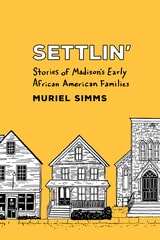
cover of Settlin’: Stories of Madison’s Early African American Families

Settlin’

Stories of Madison’s Early African American Families

Muriel Simms

Wisconsin Historical Society Press, 2018
Only a fraction of what is known about Madison’s earliest African American settlers and the vibrant and cohesive communities they formed has been preserved in traditional sources. The rest is contained in the hearts and minds of their descendants. Seeing a pressing need to preserve these experiences, lifelong Madison resident Muriel Simms collected the stories of twenty-five African Americans whose families arrived, survived, and thrived here in the late nineteenth and early twentieth centuries. While some struggled to find work, housing, and acceptance, they describe a supportive and enterprising community that formed churches, businesses, and social clubs—and frequently came together in the face of adversity and conflict. A brief history of African American settlement in Madison begins the book to set the stage for the oral histories.
[more]
cover of Slavery's Descendants: Shared Legacies of Race and Reconciliation

Slavery's Descendants

Shared Legacies of Race and Reconciliation

Jill Strauss

Rutgers University Press, 2019

Race remains a potent and divisive force in our society. Whether it is the shooting of minority people by the police, the mass incarceration of people of color, or the recent KKK rallies that have been in the news, it is clear that the scars from the United States’ histories of slavery and racial discrimination run too deep to simply be ignored. But what are the most productive ways to deal with the toxic and torturous legacies of American racism?

Slavery’s Descendants brings together contributors from a variety of racial backgrounds, all members or associates of a national racial reconciliation organization called Coming to the Table, to tell their stories of dealing with America’s racial past through their experiences and their family histories. Some are descendants of slaveholders, some are descendants of the enslaved, and many are descendants of both slaveholders and slaves. What they all have in common is a commitment toward collective introspection, and a willingness to think critically about how the nation’s histories of oppression continue to ripple into the present, affecting us all.

The stories in Slavery’s Descendants deal with harrowing topics—rape, lynching, cruelty, shame—but they also describe acts of generosity, gratitude, and love. Together, they help us confront the legacy of slavery to reclaim a more complete picture of U.S. history, one cousin at a time. 

Funding for the production of this book was provided by Furthermore, a program of the J. M. Kaplan Fund (
https://www.furthermore.org).


[more]
cover of Stick Fly: A Play

Stick Fly

A Play

Lydia R. Diamond

Northwestern University Press, 2008

Adept at capturing the experience of the upper-middle-class African-American, Diamond lays out two families' worth of secrets in this precise play. With only six characters, she constructs a vivid weekend of crossed pasts and uncertain but optimistic futures. On Martha's Vineyard, an affluent African-American family gathers in their vacation home, joined by the housekeeper's daughter, who is filling in for her mother. The family patriarch is a philandering physician; one of his sons has followed in his footsteps, while the other, after numerous false starts in a variety of careers, is a struggling novelist. Both bring along their current girlfriends, to meet the family for the first time. With such highly--perhaps over--educated vacationers, the conversation and the barbs fly, on subjects ranging from race to economics to politics. But there is also more than enough human drama, which reaches its climax when an old family secret comes out. Through lively exchanges and simmering wit, the family tackles a history filled with complications both within the family and in the outer world.
[more]
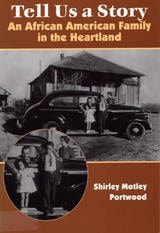
cover of Tell Us a Story: An African American Family in the Heartland

Tell Us a Story

An African American Family in the Heartland

Shirley Motley Portwood

Southern Illinois University Press, 2000

Illinois State Historical Society's Certificate of Excellence (2002)

Supplemented by recollections from the present era, Tell Us a Story is a colorful mosaic of African American autobiography and family history set in Springfield, Illinois, and in rural southern Illinois, Missouri, and Arkansas from the 1920s through the 1950s.


Shirley Motley Portwood shares rural, African American family and community history through a collection of vignettes about the Motley family. Initially transcribed accounts of the Motleys’ rich oral history, these stories have been passed among family members for nearly fifty years. In addition to her personal memories, Portwood presents interviews with her father, three brothers, and two sisters plus notes and recollections from their annual family reunions. The result is a composite view of the Motley family.


A historian, Portwood enhances the Motley family story by investigating primary data such as census, marriage, school, and land records, newspaper accounts, city directories, and other sources. The backbone of this saga, however, is oral history gathered from five generations, extending back to Portwood's grandparents, born more than one hundred years ago. Information regarding two earlier generations—her great- grandfather and great-great-grandparents, who were slaves—is based on historical research into state archives, county and local records, plantation records, and manuscript censuses.


A rich source for this material—the Motley family reunions—are week-long retreats where four generations gather at the John Motley house in Burlington, Connecticut, the Portwood home in Godfrey, Illinois, or other locations. Here the Motleys, all natural storytellers, pass on the family traditions. The stories, ranging from humorous to poignant, reveal much about the culture and history of African Americans, especially those from nonurban areas. Like many rural African Americans, the Motleys have a rich and often joyful family history with traditions reaching back to the slave past. They have known the harsh poverty that made even the necessities difficult to obtain and the racial prejudice that divided whites and blacks during the era of Jim Crow segregation and inequality; yet they have kept a tremendous faith in self-improvement through hard work and education.
           

[more]
cover of The Black Extended Family

The Black Extended Family

Elmer P. Martin and Joanne Mitchell Martin

University of Chicago Press, 1980

Misunderstood and stereotyped, the black family in America has been viewed by some as pathologically weak while others have acclaimed its resilience and strength. Those who have drawn these conflicting conclusions have gnerally focused on the nuclear family—husband, wife, and dependent children. But as Elmer and Joanne Martin point out in this revealing book, a unit of this kind often is not the center of black family life. What appear to be fatherless, broken homes in our cities may really be vital parts of strong and flexible extended families based hundreds of miles away—usually in a rural area.

Through their eight-year study of some thirty extended families, the Martins find that economic pressures, including federal tax and welfare laws, have begun to make the extended family's flexibility into a liability that threatens its future.
[more]
cover of The Bottom Rung: African American Family Life on Southern Farms

The Bottom Rung

African American Family Life on Southern Farms

Stewart E. Tolnay

University of Illinois Press, 1999

The Bottom Rung presents an in-depth investigation of a population that is becoming extinct in American society: the black farmer.
 
Tracing patterns of marriage and childbearing among both whites and blacks during the first decades of this century, Stewart Tolnay pursues questions about how black southern farm families were formed and dissolved, how they educated their children or put them to work in the fields, and how they migrated in search of opportunity. Further, he considers the possible legacy of these experiences for family life in contemporary urban environments.
 
Making revealing and innovative use of public records from the early part of the twentieth century, Tolnay challenges the widely held idea that southern migrants to northern cities carried with them a dysfunctional family culture. He demonstrates the powerful impact of economic conditions on family life and views patterns of marriage and childbearing as responsive to prevailing social, economic, and political conditions. In a provocative extension of this perspective, Tolnay argues that current high levels of single-parenthood among urban African American families likewise reflect rational responses to the socio-economic environment and government policies.
 
By placing post-World War II demographic developments in a wider historical perspective, The Bottom Rung sheds new light on recent discussions of the difficulties faced by the modern black urban family. The text is enhanced by Dorothea Lange's and Russell Lee's poignant photographs.
 
[more]
cover of The Decline in Marriage Among African Americans: Causes, Consequences, and Policy Implications

The Decline in Marriage Among African Americans

Causes, Consequences, and Policy Implications

M. Belinda Tucker

Russell Sage Foundation, 1995

In a time when the American family has undergone dramatic evolution, change among African Americans has been particularly rapid and acute. African Americans now marry later than any other major ethnic group, and while in earlier decades nearly 95 percent of black women eventually married, today 30 percent are expected to remain single. The black divorcee rate has increased nearly five-fold over the last thirty years, and is double the rate of the general population. The result, according to The Decline in Marriage Among African Americans, is a greater share of family responsibilities being borne by women, an increased vulnerability to poverty and violence, and an erosion of community ties. The original, often controversial, research presented in this book links marital decline to a pivotal drop in the pool of marriageable black males. Increased joblessness has robbed many black men of their economic viability, rendering them not only less desirable as mates, but also less inclined to take on the responsibility of marriage. Higher death rates resulting from disease, poor health care, and violent crime, as well as evergrowing incarceration rates, have further depleted the male population. Editors M. Belinda Tucker and Claudia Mitchell-Kernan and the contributors take a hard look at the effects of chronic economic instability and cultural attitudes toward the male role as family provider. Their cogent historical analyses suggest that the influence of external circumstances over marriage preferences stems in large part from the profoundly damaging experience of slavery. This book firmly positions declining marriage within an ominous cycle of economic and social erosion. The authors propose policies for relieving the problems associated the changing marital behavior, focusing on support for single parent families, public education, and increased employment for African American men.
[more]
cover of The Politics of Kinship: Race, Family, Governance

The Politics of Kinship

Race, Family, Governance

Mark Rifkin

Duke University Press, 2024
What if we understood the idea of family as central to representing alternative forms of governance as expressions of racial deviance? In The Politics of Kinship, Mark Rifkin shows how ideologies of family, including notions of kinship, recast Indigenous and other forms of collective self-organization and self-determination as disruptive racial tendencies in need of state containment and intervention. Centering work in Indigenous studies, Rifkin illustrates how conceptions of family and race work together as part of ongoing efforts to regulate, assault, and efface other political orders. The book examines the history of anthropology and its resonances in contemporary queer scholarship, contemporary Indian policy from the 1970s onward, the legal history of family formation and privacy in the United States, and the association of blackness with criminality across US history. In this way, Rifkin seeks to open new possibilities for envisioning what kinds of relations, networks, and formations can and should be seen as governance on lands claimed by the United States.
[more]
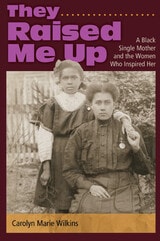
cover of They Raised Me Up: A Black Single Mother and the Women Who Inspired Her

They Raised Me Up

A Black Single Mother and the Women Who Inspired Her

Carolyn Marie Wilkins

University of Missouri Press, 2013

At the height of the cocaine-fueled 1980s, Carolyn Wilkins left a disastrous marriage in Seattle and, hoping to make it in the music business, moved with her four-year-old daughter to a gritty working-class town on the edge of Boston. They Raised Me Up is the story of her battle to succeed in the world of jam sessions and jazz clubs—a man’s world where women were seen as either sex objects or doormats. To survive, she had to find a way to pay the bills, overcome a crippling case of stage fright, fend off a series of unsuitable men, and most important, find a reliable babysitter.

Alternating with Carolyn’s story are the stories of her ancestors and mentors—five musically gifted women who struggled to realize their dreams at the turn of the twentieth century:

Philippa Schuyler, whose efforts to “pass” for white inspired Carolyn to embrace her own black identity despite her “damn near white” appearance and biracial child;

Marjory Jackson, the musician and single mother whose dark complexion and flamboyant lifestyle raised eyebrows among her contemporaries in the snobby, color-conscious world of the African American elite;

Lilly Pruett, the daughter of an illiterate sharecropper whose stunning beauty might have been her only ticket out of the “Jim Crow” South;

Ruth Lipscomb, the country girl who dreamed, against all odds, of becoming a concert pianist and realized her improbable ambition in 1941;

Alberta Sweeney, who survived a devastating personal tragedy by relying on the musical talent and spiritual stamina she had acquired growing up in a rough-and-tumble Kansas mining town.

They Raised Me Up interweaves memoir with family history to create an entertaining, informative, and engrossing read that will appeal to anyone with an interest in African American or women’s history or to readers simply looking for an intriguing story about music and family.
[more]
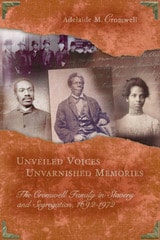
cover of Unveiled Voices, Unvarnished Memories: The Cromwell Family in Slavery and Segregation, 1692-1972

Unveiled Voices, Unvarnished Memories

The Cromwell Family in Slavery and Segregation, 1692-1972

Adelaide M. Cromwell

University of Missouri Press, 2006

When an industrious slave named Willis Hodges Cromwell earned the money to obtain liberty for his wife—who then bought freedom for him and for their children—he set in motion a family saga that resounds today. His youngest son, John Wesley Cromwell, became an educator, lawyer, and newspaper publisher—and one of the most influential men of letters in the generation that bridged Frederick Douglass and W. E. B. Du Bois. Now, in Unveiled Voices, Unvarnished Memories, his granddaughter, Adelaide M. Cromwell, documents the journey of her family from the slave marts of Annapolis to achievements in a variety of learned professions.
John W. Cromwell began the family archives from which this book is drawn—letters and documents that provide an unprecedented view of how one black family thought, strived, and survived in American society from the seventeenth century to the twentieth. These papers reflect intimate thoughts about such topics as national and local leaders, moral behavior, color consciousness, and the challenges of everyday life in a racist society. They also convey a wealth of rich insights on the burdens that black parents’ demands for achievement placed on their children, the frequently bitter rivalries within the intellectual class of the African American community, and the negative impact on African American women of sexism in a world dominated by black men whose own hold on respect was tentative at best.
The voices gathered here give readers an inside look at the formation and networks of the African American elite, as John Cromwell forged friendships with such figures as journalist John E. Bruce and the Reverend Theophilus Gould Steward. Letters with those two faithfully depict the forces that shaped the worldview of the small but steadily expanding community of African American intellectuals who helped transform the nation’s attitudes and policies on race, and whose unguarded comments on a wide range of matters will be of particular interest to social historians. Additional correspondence between John and his son, John Jr., brings the family story into modern times.
Unveiled Voices, Unvarnished Memories is a rare look at the public and private world of individuals who refused to be circumscribed by racism and the ghetto while pursuing their own well-being. Its narrative depth breaks new ground in African American history and offers a unique primary source for that community.
[more]