Results by title
7 books match the query 'African American historians'
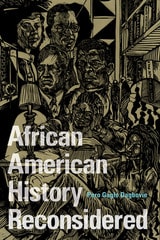
African American History Reconsidered
Pero Gaglo Dagbovie
University of Illinois Press, 2010
This groundbreaking volume establishes new perspectives on black history--its scholarship and pedagogy, scholars and interpreters, and evolution as a profession.
Pero Gaglo Dagbovie discusses a wide range of issues and themes for understanding and analyzing African American history, the twentieth century black historical enterprise, and the teaching of African American history for the twenty-first century. Additional topics include the hip-hop generation's relationship to and interpretations of African American history; past, present, and future approaches to the subject; and the social construct of knowledge in African American historiography. An examination of definitions of black history from W. E. B. Du Bois's The Souls of Black Folk and a survey of early black women historians lend further dimension and authenticity to the volume. A bold contribution to the growing fields of African American historiography and the philosophy of black history, African American History Reconsidered offers numerous analytical frameworks for understanding and delving into a variety of dimensions of the African American historical experience.
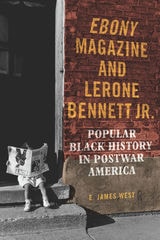
Ebony Magazine and Lerone Bennett Jr.
Popular Black History in Postwar AmericaE. James West
University of Illinois Press, 2020
E. James West's fresh and fascinating exploration of Ebony’s political, social, and historical content illuminates the intellectual role of the iconic magazine and its contribution to African American scholarship. He also uncovers a paradox. Though Ebony provided Bennett with space to promote a militant reading of black history and protest, the magazine’s status as a consumer publication helped to mediate its representation of African American identity in both past and present.
Mixing biography, cultural history, and popular memory, West restores Ebony and Bennett to their rightful place in African American intellectual, commercial, and political history.
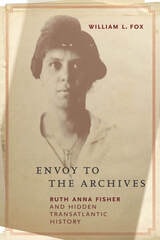
Envoy to the Archives
Ruth Anna Fisher and Hidden Transatlantic HistoryWilliam L. Fox
University of Massachusetts Press, 2026
How a pioneering manuscript librarian and intellectual uncovered buried records that reshaped America’s past
As the London-based agent of the US Library of Congress, Ruth Anna Fisher (1886–1975) profoundly shaped the field of US history. Working at the British Museum and Public Record Office between the world wars, she was responsible for a vast program of identifying and copying up to a million documents related to American history, with prescient attention to the transatlantic slave trade. This monumental achievement has provided countless scholars access to source materials that might have remained hidden in repositories throughout Britian without Fisher’s brilliant discernment and tireless labor.
In Envoy to the Archives, William L. Fox offers the first full-length biography of this remarkable American intellectual. Born to a prominent African American family in northern Ohio, Fisher was keenly aware of racial issues throughout her life. She was associated with key thinkers in the Harlem Renaissance and the twentieth century transatlantic world, including W. E. B. Du Bois, Harold Laski, and J. Franklin Jameson. A trailblazer in historical research, Fisher was among a small group of Black women who first joined the ranks of professional library work, and her efforts in London coincided with the creation and consolidation of the US National Archives in the 1930s. She also mastered technologies that were new at the time, including photostat reproduction and microfilm—precursors to the many historical digitization projects of our own era.
This engrossing biography adds to the growing body of work centered on Black women archivists, librarians, and curators. Fox draws on a wide range of archival sources, including the personal papers of prominent Black thinkers (Fisher’s were destroyed in the bombing of London in 1940), and various institutional records at the Library of Congress and the Carnegie Institution of Washington. Fox also knew Fisher personally, adding warmth and insight into this captivating portrait.
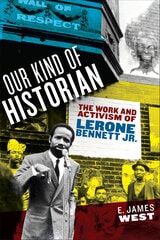
Our Kind of Historian
The Work and Activism of Lerone Bennett Jr.E. James West
University of Massachusetts Press, 2022
Journalist, activist, popular historian, and public intellectual, Lerone Bennett Jr. left an indelible mark on twentieth-century American history and culture. Rooted in his role as senior editor of Ebony magazine, but stretching far beyond the boundaries of the Johnson Publishing headquarters in Chicago, Bennett’s work and activism positioned him as a prominent advocate for Black America and a scholar whose writing reached an unparalleled number of African American readers.
This critical biography—the first in-depth study of Bennett’s life—travels with him from his childhood experiences in Jim Crow Mississippi and his time at Morehouse College in Atlanta to his later participation in a dizzying range of Black intellectual and activist endeavors. Drawing extensively on Bennett’s previously inaccessible archival collections at Emory University and Chicago State, as well as interviews with close relatives, colleagues, and confidantes, Our Kind of Historian celebrates his enormous influence within and unique connection to African American communities across more than half a century of struggle.
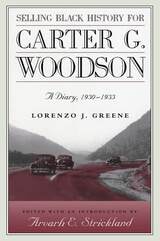
Selling Black History for Carter G. Woodson
A Diary, 1930-1933Lorenzo J. Greene, Edited & Intro by Arvarh E. Strickland
University of Missouri Press, 1996
In the summer of 1930, Lorenzo Johnston Greene, a graduate of Howard University and a doctoral candidate at Columbia University, became a book agent for the man with the undisputed title of "Father of Negro History," Carter G. Woodson. With little more than determination, Greene, along with four Howard University students, traveled throughout the South and Southeast selling books published by Woodson's Associated Publishers. Their dual purpose was to provide needed funds for the Association for the Study of Negro Life and History and to promote the study of African American history. Greene returned east by way of Chicago, and, for a time, he settled in Philadelphia, selling books there and in the nearby cities of Delaware and New Jersey. He left Philadelphia in 1931 to conduct a survey in Washington, D.C., of firms employing and not employing black workers.
From 1930 until 1933, when Greene began teaching at Lincoln University in Jefferson City, Missouri, Selling Black History for Carter G. Woodson provides a unique firsthand account of conditions in African American communities during the Great Depression. Greene describes in the diary, often in lyrical terms, the places and people he visited. He provides poignant descriptions of what was happening to black professional and business people, plus working-class people, along with details of high school facilities, churches, black business enterprises, housing, and general conditions in communities. Greene also gives revealing accounts of how the black colleges were faring in 1930.
Selling Black History for Carter G. Woodson offers important glimpses into the private thoughts of a young man of the 1930s, a developing intellectual and scholar. Greene's diary also provides invaluable insights into the personality of Carter Woodson that are not otherwise available. This fascinating and comprehensive view of black America during the early thirties will be a welcome addition to African American studies.
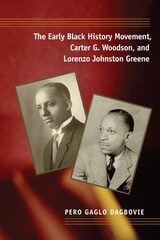
The Early Black History Movement, Carter G. Woodson, and Lorenzo Johnston Greene
Pero Gaglo Dagbovie
University of Illinois Press, 2007
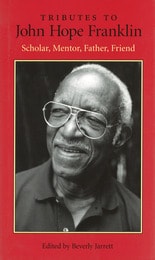
Tributes to John Hope Franklin
Scholar, Mentor, Father, FriendEdited by Beverly Jarrett
University of Missouri Press, 2003