Results by title
25 books match the query 'African American musicians'
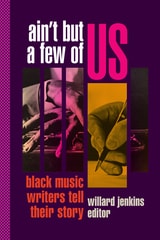
Ain't But a Few of Us
Black Music Writers Tell Their StoryWillard Jenkins, editor
Duke University Press, 2022
Contributors
Eric Arnold, Bridget Arnwine, Angelika Beener, Playthell Benjamin, Herb Boyd, Bill Brower, Jo Ann Cheatham, Karen Chilton, Janine Coveney, Marc Crawford, Stanley Crouch, Anthony Dean-Harris, Jordannah Elizabeth, Lofton Emenari III, Bill Francis, Barbara Gardner, Farah Jasmine Griffin, Jim Harrison, Eugene Holley Jr., Haybert Houston, Robin James, Willard Jenkins, Martin Johnson, LeRoi Jones, Robin D. G. Kelley, Tammy Kernodle, Steve Monroe, Rahsaan Clark Morris, John Murph, Herbie Nichols, Don Palmer, Bill Quinn, Guthrie P. Ramsey Jr., Ron Scott, Gene Seymour, Archie Shepp, Wayne Shorter, A. B. Spellman, Rex Stewart, Greg Tate, Billy Taylor, Greg Thomas, Robin Washington, Ron Welburn, Hollie West, K. Leander Williams, Ron Wynn
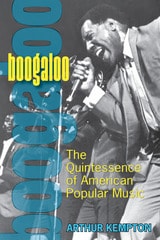
Boogaloo
The Quintessence of American Popular MusicArthur Kempton
University of Michigan Press, 2005
Praise for Boogaloo:
"From Thomas A. Dorsey and gospel to Sam Cooke and the classic age of boogaloo ('soul') to George Clinton and hip hop, this comprehensive analysis of African-American popular music is a deep and gorgeous meditation on its aesthetics and business."
---Henry Louis Gates, Jr., W.E.B. Du Bois Professor of the Humanities, Harvard
"Surpassingly sympathetic and probing. . . . a panoramic critical survey of black popular music over seventy-five years. . . .There is no book quite like it."
---New York Review of Books
". . . moving, dense, and fascinating. . . ."
---New Yorker
". . . a grand and sweeping survey of the history of soul music in America. . . . one of the best books of music journalism. . . ."
---Publisher's Weekly
". . . a fascinating and often original addition to the extensive literature. . . . an astute and witty account. . . . there is plenty in Boogaloo to set the mind and heart alight, as well as some flashes of brilliance and originality rare in music writing today."
---Times Literary Supplement
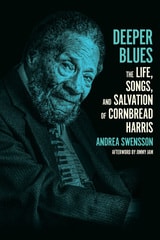
Deeper Blues
The Life, Songs, and Salvation of Cornbread HarrisAndrea Swensson
University of Minnesota Press, 2024
The emotional, epic story of James “Cornbread” Harris—a self-proclaimed “blessed dude” and one of Minneapolis’s most influential musicians
From the heart of the Minnesota blues comes the story of James “Cornbread” Harris Jr., the songwriter, pianist, and consummate bluesman whose seventy years making music helped to shape the Minneapolis Sound. “I am a blessed dude,” Cornbread tells Andrea Swensson, taking us along on his musical journey from a first “gig” entertaining his fellow soldiers during World War II to his subsequent years playing music for audiences across Minnesota. Following Cornbread’s extraordinary life story, Deeper Blues is a unique history of Minnesota music that evolves into a heartfelt tale of reconciliation and forgiveness, all to the tune of the legendary musician’s signature sound.
Cornbread’s career started in the 1950s, when he played with the Augie Garcia Quintet and cowrote their hit “Hi Ho Silver.” A tireless entertainer, he has been performing live ever since, influencing an entire generation of musicians credited with putting Minneapolis on the map in the 1980s—including his long-estranged son, Grammy-winning Rock and Roll Hall of Famer James “Jimmy Jam” Harris III. Going beyond the music, Deeper Blues turns toward family, atonement, and peace when Cornbread reunites with Jimmy Jam after a five-decade separation and they perform together on stage.
Through conversations with Cornbread, Jimmy Jam, and many others, Swensson reveals a story of perseverance and unfailing grace, a firsthand account of making music in the face of racism and segregation, and a hard-won acceptance of the personal sacrifices that are often required when dedicating one’s life to making music. As the man himself says, “All of my hardships ended up to be blessings.”
A rich mix of present-day anecdotes and historical vignettes, animated by voices from Cornbread’s life and the Twin Cities music scene, underscored by the bluesman’s original lyrics of heartache and hope, and featuring never-before-seen photographs of Cornbread and Jimmy Jam, Deeper Blues tells a singular story—one imprinted on the history, heart, and soul of the Minneapolis Sound.
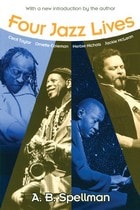
Four Jazz Lives
A. B. Spellman
University of Michigan Press, 2004
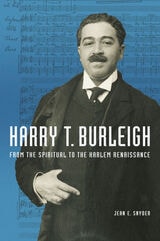
Harry T. Burleigh
From the Spiritual to the Harlem RenaissanceJean E. Snyder
University of Illinois Press, 2021
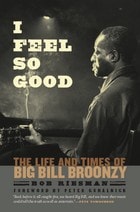
I Feel So Good
The Life and Times of Big Bill BroonzyBob Riesman
University of Chicago Press, 2011
A major figure in American blues and folk music, Big Bill Broonzy (1903–1958) left his Arkansas Delta home after World War I, headed north, and became the leading Chicago bluesman of the 1930s. His success came as he fused traditional rural blues with the electrified sound that was beginning to emerge in Chicago. This, however, was just one step in his remarkable journey: Big Bill was constantly reinventing himself, both in reality and in his retellings of it. Bob Riesman’s groundbreaking biography tells the compelling life story of a lost figure from the annals of music history.
I Feel So Good traces Big Bill’s career from his rise as a nationally prominent blues star, including his historic 1938 appearance at Carnegie Hall, to his influential role in the post-World War II folk revival, when he sang about racial injustice alongside Pete Seeger and Studs Terkel. Riesman’s account brings the reader into the jazz clubs and concert halls of Europe, as Big Bill's overseas tours in the 1950s ignited the British blues-rock explosion of the 1960s. Interviews with Eric Clapton, Pete Townshend, and Ray Davies reveal Broonzy’s profound impact on the British rockers who would follow him and change the course of popular music.
Along the way, Riesman details Big Bill’s complicated and poignant personal saga: he was married three times and became a father at the very end of his life to a child half a world away. He also brings to light Big Bill’s final years, when he first lost his voice, then his life, to cancer, just as his international reputation was reaching its peak. Featuring many rarely seen photos, I Feel So Good will be the definitive account of Big Bill Broonzy’s life and music.
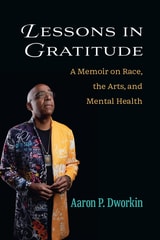
Lessons in Gratitude
A Memoir on Race, the Arts, and Mental HealthAaron P. Dworkin
University of Michigan Press, 2024
Aaron’s unique journey, which begins with his adoption by a white Jewish couple from Chicago at two weeks of age, leads him to the ultimate reunification with his birth family at the age of 31. Lessons of Gratitude is a coming of age story that examines the difficulties of biracial identity across generations and the challenges that mixed race families still face today. It is also a painful and honest adoption memoir, further complicating the narrator’s experiences of racial identity throughout his life and shaping his experiences with his own children. Through his work in the arts and the impact of this work, Dworkin has been able to “pay forward” the first thing that offered him unconditional love—music.
Lessons in Gratitude
A Memoir on Race, the Arts, and Mental HealthAaron P. Dworkin
University of Michigan Press, 2024
Aaron’s unique journey, which begins with his adoption by a white Jewish couple from Chicago at two weeks of age, leads him to the ultimate reunification with his birth family at the age of 31. Lessons in Gratitude is a coming of age story that examines the difficulties of biracial identity across generations and the challenges that mixed race families still face today. It is also a painful and honest adoption memoir, further complicating the narrator’s experiences of racial identity throughout his life and shaping his experiences with his own children. Through his work in the arts and the impact of this work, Dworkin has been able to “pay forward” the first thing that offered him unconditional love—music.
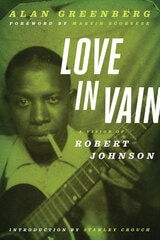
Love in Vain
A Vision of Robert JohnsonAlan Greenberg
University of Minnesota Press, 2012
Robert Johnson was undoubtedly the most outstanding of the Mississippi Delta blues musicians and also one of the first inductees into the Rock and Roll Hall of Fame, but his short life remains steeped in mystery and wrapped in some of the most enduring legends of modern music. Love in Vain is Alan Greenberg’s remarkable, highly acclaimed, and genre-defying screenplay and is widely considered to be one of the foremost books on Robert Johnson’s life and legacy and an extraordinary exercise in American mythmaking. Newly revised and complete with extensive historical notes on Johnson’s life and the culture of the Mississippi Delta and blues music during the 1930s, Love in Vain is at once a classic of music writing and a screenplay whose reputation lies firmly in the realm of great American literature.
Right to Rock
The Black Rock Coalition and the Cultural Politics of RaceMaureen Mahon
Duke University Press, 2004
Roll With It
Brass Bands in the Streets of New OrleansMatt Sakakeeny
Duke University Press, 2013
Songs of the Unsung
The Musical and Social Journey of Horace TapscottHorace Tapscott
Duke University Press, 2001
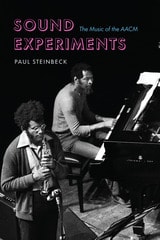
Sound Experiments
The Music of the AACMPaul Steinbeck
University of Chicago Press, 2022
Founded on Chicago’s South Side in 1965 and still thriving today, the Association for the Advancement of Creative Musicians (AACM) is the most influential collective organization in jazz and experimental music. In Sound Experiments, Paul Steinbeck offers an in-depth historical and musical investigation of the collective, analyzing individual performances and formal innovations in captivating detail. He pays particular attention to compositions by Muhal Richard Abrams and Roscoe Mitchell, the Association’s leading figures, as well as Anthony Braxton, George Lewis (and his famous computer-music experiment, Voyager), Wadada Leo Smith, and Henry Threadgill, along with younger AACM members such as Mike Reed, Tomeka Reid, and Nicole Mitchell.
Sound Experiments represents a sonic history, spanning six decades, that affords insight not only into the individuals who created this music but also into an astonishing collective aesthetic. This aesthetic was uniquely grounded in nurturing communal ties across generations, as well as a commitment to experimentalism. The AACM’s compositions broke down the barriers between jazz and experimental music and made essential contributions to African American expression more broadly. Steinbeck shows how the creators of these extraordinary pieces pioneered novel approaches to instrumentation, notation, conducting, musical form, and technology, creating new soundscapes in contemporary music.
Soundscapes of Liberation
African American Music in Postwar FranceCeleste Day Moore
Duke University Press, 2021
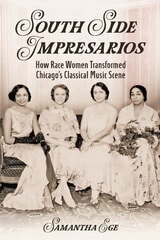
South Side Impresarios
How Race Women Transformed Chicago's Classical Music SceneSamantha Ege
University of Illinois Press, 2024
Ege focuses on composers like Florence Price, Nora Holt, and Margaret Bonds not as anomalies but as artists within an expansive cultural flowering. Overcoming racism and sexism, Black women practitioners instilled others with the skill and passion to make classical music while Race women like Maude Roberts George, Estella Bonds, Neota McCurdy Dyett, and Beulah Mitchell Hill built and fostered institutions central to the community. Ege takes readers inside the backgrounds, social lives, and female-led networks of the participants while shining a light on the scene’s audiences, supporters, and training grounds. What emerges is a history of Black women and classical music in Chicago and the still-vital influence of the world they created.
A riveting counter to a history of silence, South Side Impresarios gives voice to an overlooked facet of the Black Chicago Renaissance.
Stolen Time
Black Fad Performance and the Calypso CrazeShane Vogel
University of Chicago Press, 2018
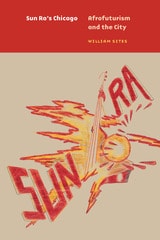
Sun Ra's Chicago
Afrofuturism and the CityWilliam Sites
University of Chicago Press, 2020
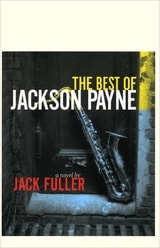
The Best of Jackson Payne
A NovelJack Fuller
University of Chicago Press, 2001
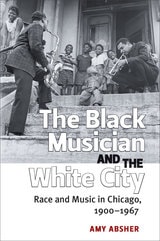
The Black Musician and the White City
Race and Music in Chicago, 1900-1967Amy Absher
University of Michigan Press, 2014
Absher’s work diverges from existing studies in three ways: First, she takes the history beyond the study of jazz and blues by examining the significant role that classically trained black musicians played in building the Chicago South Side community. By acknowledging the presence and importance of classical musicians, Absher argues that black migrants in Chicago had diverse education and economic backgrounds but found common cause in the city’s music community. Second, Absher brings numerous maps to the history, illustrating the relationship between Chicago’s physical lines of segregation and the geography of black music in the city over the years. Third, Absher’s use of archival sources is both extensive and original, drawing on manuscript and oral history collections at the Center for Black Music Research in Chicago, Columbia University, Rutgers’s Institute of Jazz Studies, and Tulane’s Hogan Jazz Archive. By approaching the Chicago black musical community from these previously untapped angles, Absher offers a history that goes beyond the retelling of the achievements of the famous musicians by discussing musicians as a group. In The Black Musician and the White City, black musicians are the leading actors, thinkers, organizers, and critics of their own story.
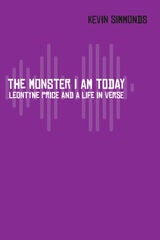
The Monster I Am Today
Leontyne Price and a Life in VerseKevin Simmonds
Northwestern University Press, 2021
Structured operatically into overture, acts, and postlude, The Monster I Am Today guides the reader through associative shifts from arias like “weather events” and Price’s forty-two-minute final ovation to memories of Simmonds’s coming of age in New Orleans. As he melds lyric forms with the biography of one of classical music’s greatest virtuosos, Simmonds composes a duet that spotlights Price’s profound influence on him as a person and an artist: “That’s how I hear: Her.”
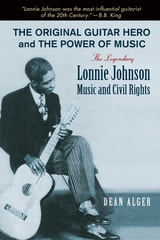
The Original Guitar Hero and the Power of Music
The Legendary Lonnie Johnson, Music, and Civil RightsDean Alger
University of North Texas Press, 2014
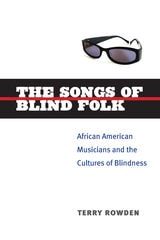
The Songs of Blind Folk
African American Musicians and the Cultures of BlindnessTerry Rowden
University of Michigan Press, 2009
"Rowden has wedded ethnomusicology and disability studies to offer a fresh approach to the study of African American popular music. The Songs of Blind Folk undermines many of the defining mythologies and tropes of blind musicians, including the perception that they are successful because they compensate for the loss of vision."
---Mark Anthony Neal, Duke University
"Illuminates how the enduring phenomenon of blind African American musicians emerged from brutal conditions, how these musicians were deployed in the burgeoning American iconography of race and 'freakdom,' and how they negotiated this hazardous cultural terrain . . . the book is timely, well-historicized, and rich in insight."
---Kari Winter, University at Buffalo
The Songs of Blind Folk explores the ways that the lives and careers of blind and visually impaired African American musicians and singers have mirrored the changes in America's image of African Americans and the social positioning and possibilities of the entire black community. The book offers a historically grounded consideration of African American performers and their audiences, and the ways that blindness, like blackness, has affected the way the music has been produced and received. Author Terry Rowden considers the controversial nineteenth-century prodigy Blind Tom Bethune; blues singers and songwriters such as Blind Lemon Jefferson, who achieved an unprecedented degree of visibility and acceptance in the 1920s and '30s; spiritual and gospel musicians such as the Blind Boys of Alabama; celebrated jazz and rhythm and blues artists Art Tatum, Rahsaan Roland Kirk, and Ray Charles; and finally, perhaps the best known of all blind performers, Stevie Wonder.
Terry Rowden is Assistant Professor of English at the City University of New York, Staten Island. He is coeditor of Transnational Cinema: The Film Reader.
Urban Blues
Charles Keil
University of Chicago Press, 1968
"Enlightening. . . . [Keil] has given a provocative indication of the role of the blues singer as a focal point of ghetto community expression."—John S. Wilson, New York Times Book Review
"[Urban Blues] expresses authentic concern for people who are coming to realize that their past was . . . the source of meaningful cultural values."—Atlantic
"An achievement of the first magnitude. . . . He opens our eyes and introduces a world of amazingly complex musical happening."—Robert Farris Thompson, Ethnomusicology
"[Keil's] vigorous, aggressive scholarship, lucid style and sparkling analysis stimulate the challenge. Valuable insights come from treating urban blues as artistic communication."—James A. Bonar, Boston Herald
Waiting for Buddy Guy
Chicago Blues at the CrossroadsAlan Harper
University of Illinois Press, 2016
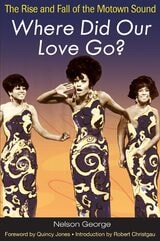
Where Did Our Love Go?
The Rise and Fall of the Motown SoundNelson George. Foreword by Quincy Jones, Introduction by Robert Christgau.
University of Illinois Press, 2007
Gordy's uncanny instinct for finding extraordinary talent--from performers and musicians to songwriters and producers—packed the label's roster with a who's who of historic artists and hitmakers. Here is the story of the Supremes and superstar Diana Ross, of the towering solo acts Marvin Gaye and Stevie Wonder, of vocal groups led by the Temptations and Four Tops, of the phenomenal Jackson Five and Michael Jackson, and of singer/songwriter and Motown executive Smokey Robinson. Up front about Gordy's manipulative and complex relationships with his artists, George reveals the inner workings of how Motown conducted its business. He also offers portraits of the Funk Brothers and other musicians who played the unforgettable songs.
George's preface shows how Motown influenced a later generation of young artists and music moguls, including R. Kelly, D'Angelo, Sean Combs, and Russell Simmons.