Results by title
9 books match the query 'African American philosophy'
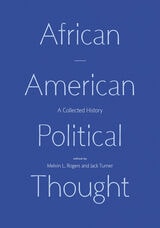
African American Political Thought
A Collected HistoryEdited by Melvin L. Rogers and Jack Turner
University of Chicago Press, 2021
While African American political thought is inextricable from the historical movement of American political thought, this volume stresses the individuality of Black thinkers, the transnational and diasporic consciousness, and how individual speakers and writers draw on various traditions simultaneously to broaden our conception of African American political ideas. This landmark volume gives us the opportunity to tap into the myriad and nuanced political theories central to Black life. In doing so, African American Political Thought: A Collected History transforms how we understand the past and future of political thinking in the West.
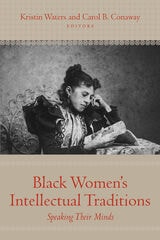
Black Women’s Intellectual Traditions
Speaking Their MindsEdited by Kristin B. Waters and Carol B. Conaway
University Press of New England, 2007
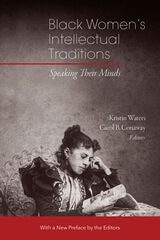
Black Women’s Intellectual Traditions
Speaking Their MindsEdited by Kristin Waters and Carol B. Conaway
Brandeis University Press, 2022
An astonishing wealth of literary and intellectual work by nineteenth-century Black women is being rediscovered and restored to print in scholarly and popular editions. In Kristin Waters’s and Carol B. Conaway’s landmark edited collection, Black Women’s Intellectual Traditions: Speaking Their Minds, sophisticated commentary on this rich body of work chronicles a powerful and interwoven legacy of activism based in social and political theories that helped shape the history of North America. The book meticulously reclaims this American legacy, providing a collection of critical analyses of the primary sources and their vital traditions. Written by leading scholars, Black Women’s Intellectual Traditions is particularly powerful in its exploration of the pioneering thought and action of the nineteenth-century Black woman lecturer and essayist Maria W. Stewart, abolitionist Sojourner Truth, novelist and poet Frances Ellen Watkins Harper, educator Anna Julia Cooper, newspaper editor Mary Ann Shadd Cary, and activist Ida B. Wells. The distinguished contributors are Hazel V. Carby, Patricia Hill Collins, Karen Baker-Fletcher, Kristin Waters, R. Dianne Bartlow, Carol B. Conaway, Olga Idriss Davis, Vanessa Holford Diana, Evelyn Simien, Janice W. Fernheimer, Michelle N. Garfield, Joy James, Valerie Palmer-Mehta, Carla L. Peterson, Marilyn Richardson, Evelyn M. Simien, Ebony A. Utley, Mary Helen Washington, Melina Abdullah, and Lena Ampadu. The volume will interest scholars and readers of African-American and women’s studies, history, rhetoric, literature, poetry, sociology, political science, and philosophy. This updated edition features a new preface by the editors in the light of new developments in current scholarship.
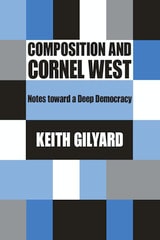
Composition and Cornel West
Notes toward a Deep DemocracyKeith Gilyard
Southern Illinois University Press, 2008
Composition and Cornel West: Notes toward a Deep Democracy identifies and explains key aspects of the work of Cornel West—the highly regarded scholar of religion, philosophy, and African American studies—as they relate to composition studies, focusing especially on three rhetorical strategies that West suggests we use in our questioning lives as scholars, teachers, students, and citizens.
In this study, author Keith Gilyard examines the strategies of Socratic Commitment (a relentless examination of received wisdom), Prophetic Witness (an abiding concern with justice and the plight of the oppressed), and Tragicomic Hope (a keep-on-pushing sensibility reflective of the African American freedom struggle). Together, these rhetorical strategies comprise an updated form of cultural criticism that West calls prophetic pragmatism.
This volume, which contains the only interview in which Cornel West directly addresses the field of composition,sketches the development of Cornel West’s theories of philosophy, political science, religion, and cultural studies and restates the link between Deweyan notions of critical intelligence and the notion of critical literacy developed by Ann Berthoff, Ira Shor, and Henry Giroux. Gilyard provides examples from the classroom to illustrate the possibilities of Socratic Commitment as part of composition pedagogy, shows the alignment of Prophetic Witness with traditional aims of critical composition, and in his chapter on Tragicomic Hope, addresses African American expressive culture with an emphasis on music and artists such as Curtis Mayfield, Marvin Gaye, Aretha Franklin, and Kanye West.
The first book to comprehensively connect the ideas of one of America's premier scholars of religion, philosophy and African American studies with composition theory and pedagogy, Composition and Cornel West will be valuable to scholars, teachers, and students interested in race, class, critical literacy, and the teaching of writing.
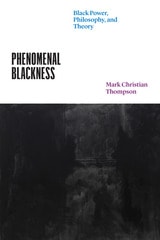
Phenomenal Blackness
Black Power, Philosophy, and TheoryMark Christian Thompson
University of Chicago Press, 2022
Phenomenal Blackness examines the changing interdisciplinary investments of key mid-century Black writers and thinkers, including the growing interest in German philosophy and critical theory. Mark Christian Thompson analyzes this shift in intellectual focus across the post-war decades, placing Black Power thought in a philosophical context.
Prior to the 1960s, sociologically oriented thinkers such as W. E. B. Du Bois had understood Blackness as a singular set of socio-historical characteristics. In contrast, writers such as Amiri Baraka, James Baldwin, Angela Y. Davis, Eldridge Cleaver, and Malcolm X were drawn to notions of an African essence, an ontology of Black being. With these perspectives, literary language came to be seen as the primary social expression of Blackness. For this new way of thinking, the works of philosophers such as Adorno, Habermas, and Marcuse were a vital resource, allowing for continued cultural-materialist analysis while accommodating the hermeneutical aspects of Black religious thought. Thompson argues that these efforts to reimagine Black singularity led to a phenomenological understanding of Blackness—a “Black aesthetic dimension” wherein aspirational models for Black liberation might emerge.
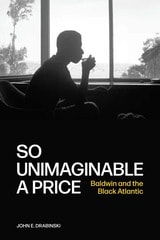
So Unimaginable a Price
Baldwin and the Black AtlanticJohn E. Drabinski
Northwestern University Press, 2026
James Baldwin’s nonfiction offers some of the most important and challenging thinking on the experience of race, history, and memory in the Black Atlantic world. Yet much of the scholarly literature on Baldwin’s writing reads his work from inside the sociocultural context of the United States, alongside key interlocutors like Richard Wright, Ralph Ellison, and Lorraine Hansberry. So Unimaginable a Price: Baldwin and the Black Atlantic shifts the critical frame, examining Baldwin’s work as part of a midcentury moment across the wider Atlantic world and tying his reflections to those of thinkers in the Caribbean and Africa to underscore the widening sense, as well as the particularity, of his critical claims. Who is Baldwin to the Atlantic world? And who, then, is Baldwin to the United States? John E. Drabinski recasts Baldwin as a Black Atlantic writer whose unique qualities as a thinker are enhanced by their similarities and differences with fellow writers of liberation in the global Black world.
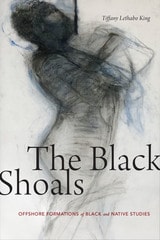
The Black Shoals
Offshore Formations of Black and Native StudiesTiffany Lethabo King
Duke University Press, 2019
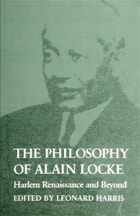
The Philosophy of Alain Locke
Harlem Renaissance and Beyondedited by Leonard Harris
Temple University Press, 1991
This collection of essays by American philosopher Alain Locke (1885-1954) makes readily available for the first time his important writings on cultural pluralism, value relativism, and critical relativism. As a black philosopher early in this century, Locke was a pioneer: having earned both undergraduate and doctoral degrees at Harvard, he was a Rhodes scholar at Oxford, studied at the University of Berlin, and chaired the Philosophy Department at Howard University for almost four decades. He was perhaps best known as a leading figure in the Harlem Renaissance.
Locke’s works in philosophy—many previously unpublished—conceptually frame the Harlem Renaissance and New Negro movement and provide an Afro-American critique of pragmatism and value absolutism, and also offer a view of identity, communicative competency, and contextualism. In addition, his major works on the nature of race, race relations, and the role of race-conscious literature are presented to demonstrate the application of his philosophy. Locke’s commentaries on the major philosophers of his day, including James, Royce, Santayana, Perry, and Ehrenfels help tell the story of his relationship to his former teachers and his theoretical affinities.
In his substantial Introduction and interpretive concluding chapter, Leonard Harris describes Locke’s life, evaluates his role as an American philosopher and theoretician of the Harlem Renaissance, situates him in the pragmatist tradition, and outlines his affinities with modern deconstructionist ideas. A chronology of the philosopher’s life and bibliography of his works are also provided. Although much has been written about Alain Locke, this is the first book to focus on his philosophical contributions.
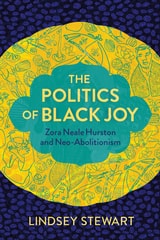
The Politics of Black Joy
Zora Neale Hurston and Neo-AbolitionismLindsey Stewart
Northwestern University Press, 2021
Stewart develops Hurston’s contributions to political theory and philosophy of race by introducing the politics of joy as a refusal of neo-abolitionism, a political tradition that reduces southern Black life to tragedy or social death. To develop the politics of joy, Stewart draws upon Zora Neale Hurston’s essays, Beyoncé’s Lemonade, and figures across several disciplines including Frederick Douglass, W. E. B. Du Bois, Toni Morrison, Angela Davis, Saidiya Hartman, Imani Perry, Eddie Glaude, and Audra Simpson. The politics of joy offers insights that are crucial for forming needed new paths in our current moment. For those interested in examining popular conceptions of Black political agency at the intersection of geography, gender, class, and Black spirituality, The Politics of Black Joy is essential reading.