Results by title
4 books match the query 'African American professional employees'
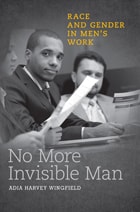
No More Invisible Man
Race and Gender in Men's WorkAdia Harvey Wingfield
Temple University Press, 2012
The “invisible men” of sociologist Adia Harvey Wingfield’s urgent and timely No More Invisible Man are African American professionals who fall between extremely high status, high-profile black men and the urban underclass. Her compelling interview study considers middle-class, professional black men and the challenges, obstacles, and opportunities they encounter in white male–dominated occupations.
No More Invisible Man chronicles these men’s experiences as a tokenized minority in the workplace to show how issues of power and inequality exist—especially as they relate to promotion, mobility, and developing occupational networks. Wingfield’s intersectional analysis deftly charts the ways that gender, race, and class collectively shape black professional men’s work experiences.
In its examination of men’s interactions with women and other men, as well as men’s performances of masculinity and their emotional demeanors in these jobs, No More Invisible Man extends our understanding of racial- and gender-based dynamics in professional work.
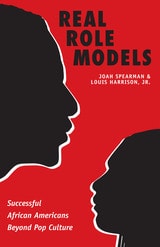
Real Role Models
Successful African Americans Beyond Pop CultureBy Joah Spearman and Louis Harrison, Jr.
University of Texas Press, 2010
All young people need good role models, and black youth especially need positive and real examples beyond the famous and wealthy people they see on SportsCenter highlights and MTV Cribs. While success as a celebrity athlete or entertainer may seem like an achievable dream, the reality is that young African Americans have a much greater chance of succeeding in the professions through education and hard work—and a mentor to show them the path. Real Role Models introduces high school and college-age African Americans to twenty-three black professionals who have achieved a high level of success in their chosen fields and who tell their stories to inspire young people to pursue a professional career and do the work necessary to achieve their dreams.
Some of the individuals profiled by Joah Spearman and Louis Harrison, Jr., include Leonard Pitts, Pulitzer Prize–winning columnist for the Miami Herald; Melody Barnes, Director of the White House Domestic Policy Council; Danyel Smith, editor-in-chief of Vibe; and Dr. Tim George, Chief of Pediatric Neuroscience at Dell Children's Medical Center of Central Texas. They and other interviewees describe their backgrounds, career paths, and desire to give back by helping others reach their goals. Representing a wide range of occupations, these real role models prove to African American youths that a whole world of successful, rewarding careers awaits them.
The Real Role Models
- Rufus Cormier, JD, Partner at the Baker Botts Law Firm, Houston, Texas
- Melody Barnes, Director of the White House Domestic Policy Council, Washington, D.C.
- Eric Motley, PhD, Managing Director of the Aspen Institute's Henry Crown Fellowship Program, Aspen, Colorado
- James McIntyre, Spokesman for the Federal Emergency Management Agency, Washington, D.C.
- Tracie Hall, Assistant Dean and Librarian at Dominican University, River Forest, Illinois
- Kimberlydawn Wisdom, MD, Surgeon General of the State of Michigan, Lansing, Michigan
- Timothy George, MD, Chief of Pediatric Neuroscience at Dell Children's Medical Center, Austin, Texas
- Victoria Holloway Barbosa, MD, Ethnic Dermatologist and Former Executive for L'Oreal, Chicago, Illinois
- Bill Douglas, White House Correspondent for McClatchy Newspapers, Washington, D.C.
- Leonard Pitts, Jr., Columnist for the Miami Herald, Miami, Florida
- Danyel Smith, Editor of Vibe Magazine, New York, New York
- Ed Stewart, Managing Director of External Communications for Delta Airlines, Atlanta, Georgia
- Lynn Tyson, Vice President of Investor Relations for Dell, Austin, Texas
- Willie Miles, Jr., Founder and CEO of Miles Wealth Management, Houston, Texas
- Horace Allen, Founder and CEO of TeamPact, Atlanta, Georgia
- Deavra Daughtry, President and CEO of Excellent Care Management, Houston, Texas
- Je'Caryous Johnson, Founder and CEO of I'm Ready Productions, Houston, Texas
- Steve Jones, Cofounder of a graphic design company, Oakland, California
- Isiah Warner, PhD, Chemistry Professor at Louisiana State University, Baton Rouge, Louisiana
- Gloria Ladson-Billings, PhD, Professor of Education at the University of Wisconsin, Madison, Wisconsin
- Bernard Muir, Athletic Director at Georgetown University, Washington, D.C.
- Craig Littlepage, Athletic Director at the University of Virginia, Charlottesville, Virginia
- Beverly Kearney, Women's Track Coach at the University of Texas at Austin, Austin, Texas
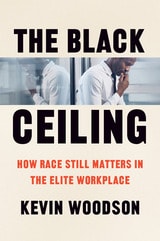
The Black Ceiling
How Race Still Matters in the Elite WorkplaceKevin Woodson
University of Chicago Press, 2023
America’s elite law firms, investment banks, and management consulting firms are known for grueling hours, low odds of promotion, and personnel practices that push out any employees who don’t advance. While most people who begin their careers in these institutions leave within several years, work there is especially difficult for Black professionals, who exit more quickly and receive far fewer promotions than their White counterparts, hitting a “Black ceiling.”
Sociologist and law professor Kevin Woodson knows firsthand what life at a top law firm feels like as a Black man. Examining the experiences of more than one hundred Black professionals at prestigious firms, Woodson discovers that their biggest obstacle in the workplace isn’t explicit bias but racial discomfort, or the unease Black employees feel in workplaces that are steeped in Whiteness. He identifies two types of racial discomfort: social alienation, the isolation stemming from the cultural exclusion Black professionals experience in White spaces, and stigma anxiety, the trepidation they feel over the risk of discriminatory treatment. While racial discomfort is caused by America’s segregated social structures, it can exist even in the absence of racial discrimination, which highlights the inadequacy of the unconscious bias training now prevalent in corporate workplaces. Firms must do more than prevent discrimination, Woodson explains, outlining the steps that firms and Black professionals can take to ease racial discomfort.
Offering a new perspective on a pressing social issue, The Black Ceiling is a vital resource for leaders at preeminent firms, Black professionals and students, managers within mostly White organizations, and anyone committed to cultivating diverse workplaces.
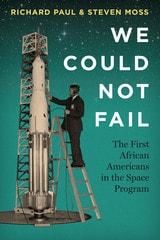
We Could Not Fail
The First African Americans in the Space ProgramBy Richard Paul and Steven Moss
University of Texas Press, 2015
The Space Age began just as the struggle for civil rights forced Americans to confront the long and bitter legacy of slavery, discrimination, and violence against African Americans. Presidents John F. Kennedy and Lyndon Johnson utilized the space program as an agent for social change, using federal equal employment opportunity laws to open workplaces at NASA and NASA contractors to African Americans while creating thousands of research and technology jobs in the Deep South to ameliorate poverty. We Could Not Fail tells the inspiring, largely unknown story of how shooting for the stars helped to overcome segregation on earth.
Richard Paul and Steven Moss profile ten pioneer African American space workers whose stories illustrate the role NASA and the space program played in promoting civil rights. They recount how these technicians, mathematicians, engineers, and an astronaut candidate surmounted barriers to move, in some cases literally, from the cotton fields to the launching pad. The authors vividly describe what it was like to be the sole African American in a NASA work group and how these brave and determined men also helped to transform Southern society by integrating colleges, patenting new inventions, holding elective office, and reviving and governing defunct towns. Adding new names to the roster of civil rights heroes and a new chapter to the story of space exploration, We Could Not Fail demonstrates how African Americans broke the color barrier by competing successfully at the highest level of American intellectual and technological achievement.