Results by title

12 books match the query 'African American women authors'
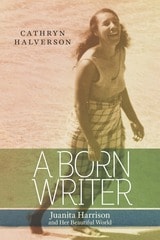
cover of A Born Writer: Juanita Harrison and Her Beautiful World

A Born Writer

Juanita Harrison and Her Beautiful World

Cathryn Halverson

University of Massachusetts Press, 2025

The first biography of a best-selling travel writer dedicated to the pursuit of leisure, freedom, and experience
 
Despite the challenges she faced as an average southern Black woman of her time, Juanita Harrison transcended expectations, earning a unique place in African American and literary history. Over the course of more than four decades, she traveled constantly, first throughout the US and then throughout the world. To fund her trips, she took on short-term jobs as housekeeper, cook, and nurse, never committing to any one household. Always on the move, she made it a rule to travel alone, and she had a penchant for “passing,” not as white but as local. Her wanderlust was less aspirational and upwardly mobile than dedicated to the pursuit of leisure, freedom, and experience. “It’s my life to see and enjoy,” she declared.

In 1936, she published My Great, Wide, Beautiful World, a travelogue that charts her life between 1927 and 1935. A compilation of letters she sent to friends, employers, and patrons during her travels, the book was an immediate success, running through nine printings within ten months and becoming a bestseller for that year. The illustrious Atlantic Monthly published excerpts, the book was reviewed in newspapers and magazines nationwide, and it attracted a remarkably diverse readership, sparking the enthusiasm of Black working-class library patrons, white women’s book clubs, Japanese American journalists, Harlem Renaissance luminaries, and many others. It came back into print in 1996, ensuring her legacy would endure.

A Born Writer is the first biography of this fascinating woman who found a uniquely rewarding way to live and work that many would envy today. Combining micro histories, literary criticism, and biography—and despite limited archival records—Cathryn Halverson skillfully traces Harrison from her birth in the bitterly divided South to her death in Hawai’i, tracking her varied experiences along the way in New York, Havana, Paris, Madrid, Cairo, Mumbai, Kobe, Buenos Aires, and many other places. The resulting portrait shows a woman who transcended all kinds of borders—political, social, and cultural—to experience a freedom rarely available to women, and especially women of color, in the early-to-mid twentieth century, an achievement that continues to resonate.
[more]
cover of Activist Sentiments: Reading Black Women in the Nineteenth Century

Activist Sentiments

Reading Black Women in the Nineteenth Century

P. Gabrielle Foreman

University of Illinois Press, 2009

Activist Sentiments takes as its subject women who in fewer than fifty years moved from near literary invisibility to prolific productivity. Grounded in primary research and paying close attention to the historical archive, this book offers against-the-grain readings of the literary and activist work of Harriet Jacobs, Harriet Wilson, Frances E. W. Harper, Victoria Earle Matthews and Amelia E. Johnson.

Part literary criticism and part cultural history, Activist Sentiments examines nineteenth-century social, political, and representational literacies and reading practices. P. Gabrielle Foreman reveals how Black women's complex and confrontational commentary–often expressed directly in their journalistic prose and organizational involvement--emerges in their sentimental, and simultaneously political, literary production.
[more]
cover of Black Gathering: Art, Ecology, Ungiven Life

Black Gathering

Art, Ecology, Ungiven Life

Sarah Jane Cervenak

Duke University Press, 2021
In Black Gathering Sarah Jane Cervenak engages with Black artists and writers who create alternative spaces for Black people to gather free from interruption or regulation. Drawing together Black feminist theory, critical theories of ecology and ecoaesthetics, and Black aesthetics, Cervenak shows how novelists, poets, and visual artists such as Gayl Jones, Toni Morrison, Clementine Hunter, Samiya Bashir, and Leonardo Drew advance an ecological imagination that unsettles Western philosophical ideas of the earth as given to humans. In their aestheticization and conceptualization of gathering, these artists investigate the relationships among art, the environment, home, and forms of Black togetherness. Cervenak argues that by offering a formal and conceptual praxis of gathering, Black artists imagine liberation and alternative ways of being in the world that exist beyond those Enlightenment philosophies that presume Black people and earth as given to enclosure and ownership.
[more]
cover of Black Women Writing Autobiography: A Tradition Within a Tradition

Black Women Writing Autobiography

A Tradition Within a Tradition

Joanne Braxton

Temple University Press, 1990

"In this illuminating study Joanne Braxton shows the continuity and tradition in the writing of Afra-American women. An important work for teachers and students of Literature, History, and Women's Studies." --Gerda Lerner "As black American women, we are born into a mystic sisterhood, and we live our lives within a magic circle, a realm of shared language, reference, and allusion within the veil of our blackness and our femaleness. We have been as invisible to the dominant culture as rain; we have been knowers, but we have not been known." Joanne Braxton argues for a redefinition of the genre of black American autobiography to include the images of women as well as their memoirs, reminiscences, diaries, and journals--as a corrective to both black and feminist literary criticism. Beginning with slave narratives and concluding with modern autobiography, she deals with individual works as representing stages in a continuum and situates these works in the context of other writings by both black and white writers. Braxton demonstrates that the criteria used to define the slave narrative genre are inadequate for analyzing Harriet "Linda Brent" Jacobs's pseudonymously published Incidents in the Life of a Slave Girl: Written by Herself (1861). She examines "sass" as a mode of women's discourse and a weapon of self-defense, and she introduces the "outraged mother" as a parallel to the articulate hero archetype. Not even emancipation authorized black women to define themselves or address an audience. Late-nineteenth-century accounts in the form of confessional spiritual autobiographies, travelogue/adventure stories, and slave memoirs enabled such women as Jarena Lee, Rebecca Cox Jackson, Elizabeth Keckley, Susie King Taylor, as well as Harriet Tubman and Sojourner Truth to tell their own extraordinary stories and to shed light on the thousands of lives obscured by illiteracy and sexual and racial oppression. In her diaries, Charlotte Forten Grimké, the gifted poet, epitomizes the problems faced by a well-educated, extremely articulate black woman attempting to find a public voice in America. Moving into the twentieth century, Braxton analyzes the memoir of Ida B. Wells, journalist and anti-lynching activist, and the work of Zora Neale Hurston and Era Bell Thompson. They represent the first generation of black female autobiographers who did not continually come into contact with former slaves and who transcended the essential struggle for survival that occupied earlier writings. For the contemporary black woman autobiographer, the quest for personal fulfillment is the central theme. Braxton concludes with Maya Angelou's I Know Why the Caged Bird Sings (1996), which represents the black woman of the 1960s who has found the place to recreate the self in her own image--the place all the others had been searching for. "Braxton's book is scrupulously researched. She has been creative in finding resources and courageous in analyzing and interpreting her finds. This is the word of a diligent mind. The material is mountainous, yet the book sings. Braxton is a poet. Thank goodness." --Maya Angelou "Joanne Braxton's essays on black women's autobiographies delineate and illuminate the personal and historical dimension of an important literary tradition. Emphasizing the distinct character of Afra-American women's experience and relations with each other, she ground their writing of their lives in the struggles and triumphs of the lives they actually led." --Elizabeth Fox-Genovese "In this compelling and lucid study examining the content, context, and continuum of black women autobiographers, Braxton clears the place for it in the curriculum: at the center of black and feminist studies." --Paula Giddings "This is the fullest and most sympathetic study of black American autobiographers I know. By paying close attention to private and public history, to social networks and literary kinships, to narrative structures and patterns of imagery, Braxton leads her readers to see the black woman 'at the center of her own [written] experiences.' At once scholarly and passionate, Braxton's critique will immediately secure her a place among the leading analysts of black American autobiography." --Albert E. Stone "A highly readable and original contribution to the important fields of Afro-American studies, feminist criticism, and autobiographical narrative." --Elaine Showalter "Rich in empathy and insight, Joanne M. Braxton's trailblazing study attends to both the textual and historical dimensions of a powerful literary inheritance. She brings to bear a keen sense of the departures and continuities of which any tradition consists; and an appreciation of the distinctive Afro-American dynamic between literary convention and a vernacular substrate. Braxton doesn't just read--she listens." --Henry Louis Gates, Jr. "Joanne Braxton makes a unique contribution to the scholarship of American autobiography. Her focus on the outraged mother as a figure of rebellion is a significant challenge to our conventional understanding of autobiographical acts." --Hazel Carby "This is the most inclusive and thoughtful literary history of black American women's autobiography in existence…It is not just a collection of essays; it is well knit together and displays multiple traditions as they evolved and are in the process of evolving still." --William L. Andrews "This book marks another milestone in the critical appraisal of American autobiographical writings. In tracing the evolution of a tradition of black women in autobiography in America, Braxton takes us on the first journey of this kind: the black American woman's search for a dignified, self-defining identity through the rejection of traditional female roles. This book sets the tone for future studies of black women's autobiographies." --Nellie McKay
[more]
cover of Broken Silences: Interviews with Black and White Women Writers

Broken Silences

Interviews with Black and White Women Writers

Edited by Shirley M Jordan

Rutgers University Press, 1993

From Publishers Weekly
In these 20 interviews with women writers of fiction, Jordan, who teaches at Hampton University in Virginia, attempts to plumb the relations between black and white women in fiction and in life, and to explore the creative process. Although the book suffers from lengthy discussions of somewhat obscure work, the interviewees, most of whom have portrayed female characters of a race other than their own, offer intriguing, often conflicting observations about the primacy of race, gender or class. Kaye Gibbons ( Ellen Foster ) suggests that rural locations offer commonality to black and white Southern women; Marita Golden ( Long Distance Life ) observes that white writers emphasize female beauty while black writers focus on character. This book may be a useful supplement to literature courses.

From Library Journal
The message derived from the candid and articulate women interviewed here is, as Belva Plain states, "you learn as you live together." Editor Jordan (Hampton Univ., Virginia) has opened a dialog on writing and race relations by publishing these interviews with 20 significant contemporary black and white women writers, from Alice Childress and Joyce Carol Oates to Mildred Pitts Walker. The substance of these writers' thoughts is that the commonality of women's experience informs the genuine portrayal of a character as much as does the writer's understanding of her blackness or whiteness. This special book, so different from others that examine the writing process, is likely to stimulate dialog among women and to provoke serious study of many excellent women writers working today. Recommended for all collections supporting the study of literature, women's studies, and race relations.
[more]
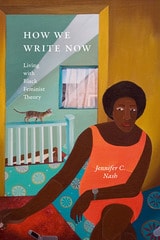
cover of How We Write Now: Living with Black Feminist Theory

How We Write Now

Living with Black Feminist Theory

Jennifer C. Nash

Duke University Press, 2024
In How We Write Now Jennifer C. Nash examines how Black feminists use beautiful writing to allow writers and readers to stay close to the field’s central object and preoccupation: loss. She demonstrates how contemporary Black feminist writers and theorists such as Jesmyn Ward, Elizabeth Alexander, Christina Sharpe, and Natasha Trethewey mobilize their prose to ask readers to feel, undo, and reassemble themselves. These intimate invitations are more than a set of tools for decoding the social world; Black feminist prose becomes a mode of living and feeling, dreaming and being, and a distinctly affective project that treats loss as not only paradigmatic of Black life but also an aesthetic question. Through her own beautiful writing, Nash shows how Black feminism offers itself as a companion to readers to chart their own lives with and in loss, from devastating personal losses to organizing around the movement for Black lives. Charting her own losses, Nash reminds us that even as Black feminist writers get as close to loss as possible, it remains a slippery object that troubles memory and eludes capture.
[more]
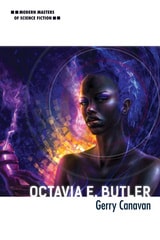
cover of Octavia E. Butler

Octavia E. Butler

Gerry Canavan

University of Illinois Press, 2016

"I began writing about power because I had so little," Octavia E. Butler once said. Butler's life as an African American woman--an alien in American society and among science fiction writers--informed the powerful works that earned her an ardent readership and acclaim both inside and outside science fiction.

Gerry Canavan offers a critical and holistic consideration of Butler's career. Drawing on Butler's personal papers, Canavan tracks the false starts, abandoned drafts, tireless rewrites, and real-life obstacles that fed Butler's frustrations and launched her triumphs. Canavan departs from other studies to approach Butler first and foremost as a science fiction writer working within, responding to, and reacting against the genre's particular canon. The result is an illuminating study of how an essential SF figure shaped themes, unconventional ideas, and an unflagging creative urge into brilliant works of fiction.
[more]
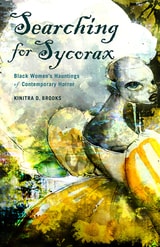
cover of Searching for Sycorax: Black Women's Hauntings of Contemporary Horror

Searching for Sycorax

Black Women's Hauntings of Contemporary Horror

Brooks, Kinitra D

Rutgers University Press, 2018
Searching for Sycorax highlights the unique position of Black women in horror as both characters and creators. Kinitra D. Brooks creates a racially gendered critical analysis of African diasporic women, challenging the horror genre’s historic themes and interrogating forms of literature that have often been ignored by Black feminist theory. Brooks examines the works of women across the African diaspora, from Haiti, Trinidad, and Jamaica, to England and the United States, looking at new and canonized horror texts by Nalo Hopkinson, NK Jemisin, Gloria Naylor, and Chesya Burke. These Black women fiction writers take advantage of horror’s ability to highlight U.S. white dominant cultural anxieties by using Africana folklore to revise horror’s semiotics within their own imaginary. Ultimately, Brooks compares the legacy of Shakespeare’s Sycorax (of The Tempest) to Black women writers themselves, who, deprived of mainstream access to self-articulation, nevertheless influence the trajectory of horror criticism by forcing the genre to de-centralize whiteness and maleness.  
[more]
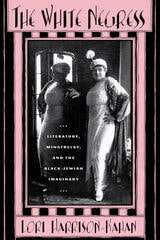
cover of The White Negress: Literature, Minstrelsy, and the  Black-Jewish Imaginary

The White Negress

Literature, Minstrelsy, and the Black-Jewish Imaginary

Harrison-Kahan, Lori

Rutgers University Press, 2010

During the first half of the twentieth century, American Jews demonstrated a commitment to racial justice as well as an attraction to African American culture. Until now, the debate about whether such black-Jewish encounters thwarted or enabled Jews’ claims to white privilege has focused on men and representations of masculinity while ignoring questions of women and femininity. The White Negress investigates literary and cultural texts by Jewish and African American women, opening new avenues of inquiry that yield more complex stories about Jewishness, African American identity, and the meanings of whiteness.

Lori Harrison-Kahan examines writings by Edna Ferber, Fannie Hurst, and Zora Neale Hurston, as well as the blackface performances of vaudevillian Sophie Tucker and controversies over the musical and film adaptations of Show Boat and Imitation of Life. Moving between literature and popular culture, she illuminates how the dynamics of interethnic exchange have at once produced and undermined the binary of black and white.
[more]
cover of We See with the Skin: On Zora Neale Hurston's Methodology

We See with the Skin

On Zora Neale Hurston's Methodology

Roshanak Kheshti

Duke University Press, 2026
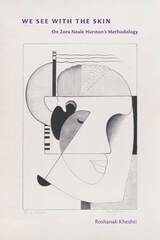
Roshanak Kheshti opens her book with a line from one of Zora Neale Hurston’s earliest stories: “we see with the skin.” From this brief but potent line, Kheshti examines how Hurston’s understanding of Black skin as both seen and seeing offers radical insight into racialized perception and Black consciousness. Kheshti follows Hurston’s travels across the back woods of Florida, Georgia, Alabama, and Louisiana as a filmmaker and sensory ethnographer of the African diasporic spiritual practice of hoodoo. Through her travels, Hurston encountered a sensibility that could animate the object status of being colored with the power of a return gaze. Kheshti considers both how Hurston poetically exploited the synesthetic logic at the heart of race thinking—being colored—and how her embodied performance ethnography catalogued an outside to that logic. We See with the Skin is an original mapping of Hurston’s synesthetic theory and its broader implications for understanding minoritarian perception and thought.
[more]
cover of Witches, Goddesses, and Angry Spirits: The Politics of Spiritual Liberation in African Diaspora Women's Fiction

Witches, Goddesses, and Angry Spirits

The Politics of Spiritual Liberation in African Diaspora Women's Fiction

Maha Marouan

The Ohio State University Press, 2013
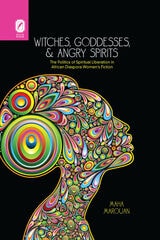
Witches, Goddesses and Angry Spirits: The Politics of Spiritual Liberation in African Diaspora Women’s Fiction explores African diaspora religious practices as vehicles for Africana women’s spiritual transformation, using representative fictions by three contemporary writers of the African Americas who compose fresh models of female spirituality: Breath, Eyes, Memory (1994) by Haitian American novelist Edwidge Danticat; Paradise (1998) by African American Nobel laureate Toni Morrison; and I, Tituba, Black Witch of Salem (1992) by Guadeloupean author Maryse Condé.
 
Author Maha Marouan argues that while these authors’ works burst with powerful female figures—witches, goddesses, healers, priestesses, angry spirits—they also remain honest in reminding readers of the silences surrounding African diaspora women’s realities and experiences of violence, often as a result of gendered religious discourses. To make sense of Africana women’s experiences of the diaspora, this book operates from a transnational perspective that moves across national and linguistic boundaries as it connects the Anglophone, the Francophone, and the Creole worlds of the African Americas. In doing so, Marouan identifies crucial shared thematic concerns regarding the authors’ engagement with religious frameworks—some Judeo-Christian, some not—heretofore unexamined in such a careful, comparative fashion.
[more]
cover of Words of Witness: Black Women's Autobiography in the Post-<i>Brown</i> Era

Words of Witness

Black Women's Autobiography in the Post-<i>Brown</i> Era

Angela A. Ards

University of Wisconsin Press, 2015

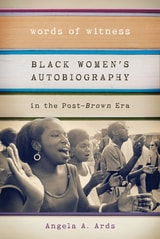
A literary and political genealogy of the last half-century, Words of Witness explores black feminist autobiographical narratives in the context of activism and history since the landmark 1954 segregation case, Brown v. Board of Education. Angela A. Ards examines how activist writers, especially five whose memoirs were published in the 1990s and 2000s, crafted these life stories to engage and shape progressive, post-Brown politics.
            Exploring works by the critically acclaimed June Jordan and Edwidge Danticat, as well as by popular and emerging authors such as Melba Beals, Rosemary Bray, and Eisa Davis, Ards demonstrates how each text asserts countermemories to official—and often nostalgic—understandings of the civil rights and Black Power movements. She situates each writer as activist-citizen, adopting and remaking particular roles—warrior, “the least of these,” immigrant, hip-hop head—to crystallize a range of black feminist responses to urgent but unresolved political issues.
[more]