64 books match the query 'African Diaspora' and 8 start with a

cover of Africana Studies: Theoretical Futures

Africana Studies

Theoretical Futures

Edited by Grant Farred

Temple University Press, 2022

As Africana Studies celebrates its fiftieth anniversary throughout the United States, this invigor ating collection presents possibilities for the future of the discipline’s theoretical paths. The essays in Africana Studies focus on philosophy, science, and technology; poetry, literature, and music; the crisis of the state; issues of colonialism, globalization, and neoliberalism; and the ever-expanding diaspora. The editor and contributors to this volume open exciting avenues for new narratives, philosophies, vision, and scale in this critical field of study—formed during the 1960s around issues of racial injustice in America—to show what Africana Studies is already in the process of becoming.

Africana Studies recognizes how the discipline has been shaped, changing over the decades as scholars have opened new modes of theoretical engagement such as addressing issues of gender and sexuality, politics, and cultural studies. The essays debate and (re)consider black and diasporic life to sustain, provoke, and cultivate Africana Studies as a singular yet polyvalent mode of thinking.

Contributors: Akin Adeṣọkan, John E. Drabinski, Zeyad El Nabolsy, Pierre-Philippe Fraiture, Kasareka Kavwahirehi, Gregory Pardlo, Radwa Saad, Sarah Then Bergh, and the editor
[more]
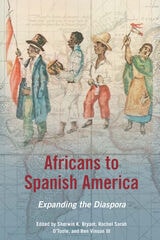
cover of Africans to Spanish America: Expanding the Diaspora

Africans to Spanish America

Expanding the Diaspora

Edited by Sherwin K. Bryant, Rachel Sarah O’Toole, & Ben Vinson III

University of Illinois Press, 2014

Africans to Spanish America expands the Diaspora framework that has shaped much of the recent scholarship on Africans in the Americas to include Mexico, Peru, Ecuador, and Cuba, exploring the connections and disjunctures between colonial Latin America and the African Diaspora in the Spanish empires. While a majority of the research on the colonial Diaspora focuses on the Caribbean and Brazil, analysis of the regions of Mexico and the Andes opens up new questions of community formation that incorporated Spanish legal strategies in secular and ecclesiastical institutions as well as articulations of multiple African identities. Editors Sherwin K. Bryant, Rachel Sarah O'Toole, and Ben Vinson III arrange the volume around three themes: identity construction in the Americas; the struggle by enslaved and free people to present themselves as civilized, Christian, and resistant to slavery; and issues of cultural exclusion and inclusion. Across these broad themes, contributors offer probing and detailed studies of the place and roles of people of African descent in the complex realities of colonial Spanish America.

Contributors are Joan C. Bristol, Nancy E. van Deusen, Leo J. Garofalo, Herbert S. Klein, Charles Beatty-Medina, Karen Y. Morrison, Rachel Sarah O'Toole, Frank "Trey" Proctor III, and Michele Reid-Vazquez.
[more]
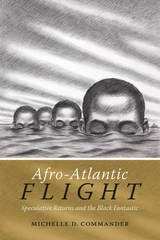
cover of Afro-Atlantic Flight: Speculative Returns and the Black Fantastic

Afro-Atlantic Flight

Speculative Returns and the Black Fantastic

Michelle D. Commander

Duke University Press, 2017
In Afro-Atlantic Flight Michelle D. Commander traces how post-civil rights Black American artists, intellectuals, and travelers envision literal and figurative flight back to Africa as a means by which to heal the dispossession caused by the slave trade. Through ethnographic, historical, literary, and filmic analyses, Commander shows the ways that cultural producers such as Octavia Butler, Thomas Allen Harris, and Saidiya Hartman engage with speculative thought about slavery, the spiritual realm, and Africa, thereby structuring the imaginary that propels future return flights.  She goes on to examine Black Americans’ cultural heritage tourism in and migration to Ghana; Bahia, Brazil; and various sites of slavery in the US South to interrogate the ways that a cadre of actors produces “Africa” and contests master narratives. Compellingly, these material flights do not always satisfy Black Americans’ individualistic desires for homecoming and liberation, leading Commander to focus on the revolutionary possibilities inherent in psychic speculative returns and to argue for the development of a Pan-Africanist stance that works to more effectively address the contemporary resonances of slavery that exist across the Afro-Atlantic.
[more]
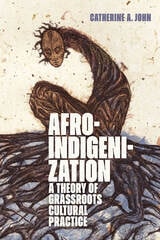
cover of Afroindigenization: A Theory of Grassroots Cultural Practice

Afroindigenization

A Theory of Grassroots Cultural Practice

Catherine A. John

Duke University Press, 2026
In Afroindigenization, Catherine A. John addresses the underbelly of spiritual resilience shaping a range of African diasporic institutions, traditions, and practices. John argues that repressed forms of indigenous African knowledge systems manifest in a myriad of culturally embodied ways in African diaspora spaces and places. From mermaid lore in rural Jamaica to hip-hop trance-induced dance in Los Angeles to the stories of two debaters-turned-social-media-influencers, John shows how the descendants of enslaved Africans express the signs and substance of their afroindigenous power through collective creativity. Drawing from scholars such as Vèvè Clark, Hortense Spillers, Dianne M. Stewart, and Sylvia Wynter, Afroindigenization exposes the cultural and spiritual ancestries that lie at the heart of modern Black identities and practices.
[more]
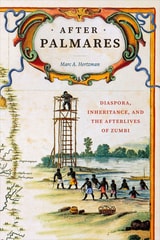
cover of After Palmares: Diaspora, Inheritance, and the Afterlives of Zumbi

After Palmares

Diaspora, Inheritance, and the Afterlives of Zumbi

Marc A. Hertzman

Duke University Press, 2024

In After Palmares, Marc A. Hertzman tells the rise, fall, and afterlives of Palmares, one of history’s largest and longest-lasting maroon societies. Forged during the seventeenth century by formerly enslaved Africans in what would become northeast Brazil, Palmares stood for a century, withstanding sustained attacks from two European powers. In 1695, colonial forces assassinated its most famous leader, Zumbi. Hertzman examines the remarkable ways that Palmares and its inhabitants lived on after Zumbi’s death, creating vivid portraits of those whose lives and voices scholars have often assumed are inaccessible. With an innovative approach to African languages, and paying close attention to place as well as African and diasporic spiritual beliefs, Hertzman reshapes our understanding of Palmares and Zumbi and advances a new framework for studying fugitive slave communities and marronage in the African diaspora.
[more]
cover of Amplifications of Black Sound from Colonial Mexico: Vocality and Beyond

Amplifications of Black Sound from Colonial Mexico

Vocality and Beyond

Sarah Finley

Vanderbilt University Press, 2024

Thinkers like W. E. B. Du Bois and Paul Gilroy have long championed sound as an affective register of Black subjectivity, particularly in the African Atlantic. Prior studies in this vein focus on Anglophone or Caribbean contexts, a tendency that furthers Mexico’s marginalization within narratives of the Black and African diaspora and mutes Afro-descendant traditions that date back to the sixteenth century. Indeed, the New Spanish archive contains whispers of the region’s Black sound cultures, including monetary records for the voices of enslaved singers and representations of Black music in casta paintings. Despite such evidence, it is difficult to attend fully to these subaltern voices, for the cultural filters of the lettered elite often mute or misinterpret non-European sounds.

Amplifications of Black Sound from Colonial Mexico is the first extensive study of Afro-descendant sonorities in New Spain or elsewhere in colonial Latin America. In this context, it attends to Black sounds through a framework that remixes Jacques Derrida’s reading of the ear’s anatomy with theories like Gilroy’s lower frequencies or Fred Moten’s phonic materiality. Sarah Finley’s aim is to unsettle the divide between self and other so the auditory archive might emerge as a polyphonic record that exceeds dichotomies of sounding object / listening subject. Through sampling the Afro-descendant sounds of this archive, this book recovers and rearticulates Black voices and auditory practices in New Spain.
[more]
cover of At Home in Diaspora: Black International Writing

At Home in Diaspora

Black International Writing

Wendy Walters

University of Minnesota Press, 2005

Although he never lived in Harlem, Chester Himes commented that he experienced “a sort of pure homesickness” while creating the Harlem-set detective novels from his self-imposed exile in Paris. Through writing, Himes constructed an imaginary home informed both by nostalgia for a community he never knew and a critique of the racism he left behind in the United States. Half a century later, Michelle Cliff wrote about her native Jamaica from the United States, articulating a positive Caribbean feminism that at the same time acknowledged Jamaica’s homophobia and color prejudice. 

In At Home in Diaspora, Wendy Walters investigates the work of Himes, Cliff, and three other twentieth-century black international writers—Caryl Phillips, Simon Njami, and Richard Wright—who have lived in and written from countries they do not call home. Unlike other authors in exile, those of the African diaspora are doubly displaced, first by the discrimination they faced at home and again by their life abroad. Throughout, Walters suggests that in the absence of a recoverable land of origin, the idea of diaspora comes to represent a home that is not singular or exclusionary. In this way, writing in exile is much more than a literary performance; it is a profound political act. 

Wendy W. Walters is assistant professor of literature at Emerson College.
[more]
cover of Autochthonomies: Transnationalism, Testimony, and Transmission in the African Diaspora

Autochthonomies

Transnationalism, Testimony, and Transmission in the African Diaspora

Myriam J. A. Chancy

University of Illinois Press, 2020

In Autochthonomies, Myriam J. A. Chancy engages readers in an interpretive journey. She lays out a radical new process that invites readers to see creations by artists of African descent as legible within the context of African diasporic historical and cultural debates. By invoking a transnational African/diasporic lens and negotiating it through a lakou or ”yard space,” we can see such identities transfigured, recognized, and exchanged. Chancy demonstrates how the process can examine the salient features of texts and art that underscore African/diasporic sensibilities and render them legible. What emerges is a potential for richer readings of African diasporic works that also ruptures the Manichean binary dynamics that have dominated previous interpretations of the material. The result: an enriching interpretive mode focused on the transnational connections between subjects of African descent as the central pole for reader investigation.

A bold challenge to established scholarship, Autochthonomies ranges from Africa to Europe and the Americas to provide powerful new tools for charting the transnational interactions between African cultural producers and sites.

[more]