Results by title
3 books match the query 'Age Climate Change'

Calculating Amazonia
The Politics of Quantification in the Age of Climate ChangeEduardo Romero Dianderas
Duke University Press, 2027
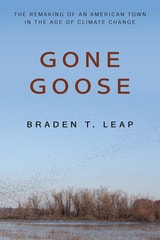
Gone Goose
The Remaking of an American Town in the Age of Climate ChangeBraden T. Leap
Temple University Press, 2019
Sumner, MO, pop. 102, near the Swan Lake National Wildlife Refuge, proclaims itself “The Wild Goose Capital of the World.” It even displays Maxie, the World’s largest goose: a 40-foot tall fiberglass statue with a wingspan stretching more than 60 feet. But while the 200,000 Canada geese that spent their falls and winters at Swan Lake helped generate millions of dollars for the local economy—with hunting and the annual Goose Festival—climate change, as well as environmental and land use issues, have caused the birds to disappear. The economic loss of the geese and the activities they inspired served as key building blocks in the rural identities residents had developed and treasured.
In his timely and topical book, Gone Goose, Braden Leap observes how members of this rural town adapted, reorganized, and reinvented themselves in the wake of climate change—and how they continued to cultivate respect and belonging in their community. Leap conducted interviews with residents and participated in various community events to explore how they reimagine their relationships with each other as well as their community’s relationship with the environment, even as they wish the geese would return.
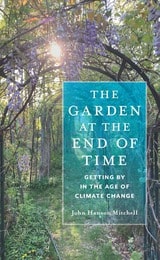
The Garden at the End of Time
Getting By in the Age of Climate ChangeJohn Hanson Mitchell
University of Massachusetts Press, 2025
John Hanson Mitchell has long written about his garden outside of Boston, and about the plants and animals with whom he shares this land. In 2022, the United Nations and others started reporting the true severity of the climate crisis as the Earth passed a point of no return. All across the globe it was the worst year on record for climate-related disasters, including extinctions, deadly floods, massive fires, and dramatic droughts, all of which have worsened since that year. Mitchell, like so many, felt overwhelmed. He looked to the story of Voltaire’s Candide, and settled on the famous aphorism from that book: “We must cultivate our garden.”
The Garden at the End of Time features Mitchell’s trademark blend of science, literature, and anecdote as he processes both the information he is reading from various sources and what it prompts him to do in his own small corner of the world. The story that unfolds is one of Mitchell diversifying his plantings; fighting what he sees as unnecessary local development; walking through and observing changes in the wild lands nearby; continuing to read the news from around the world; and meditating on other moments, real and imagined, when people sought refuge even as they did their part to improve a personally and collectively stressful situation.
Readers discover the impossibility of separating gardening from global warming, while also seeing the solace that exposure to plants can offer, in addition to their contribution to carbon consumption. With gravitas, kindness, and wit, Mitchell offers a model for maintaining a connection to nature even as it reels from manmade threats.