Results by title
4 books match the query 'Age Revolution'
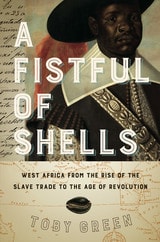
A Fistful of Shells
West Africa from the Rise of the Slave Trade to the Age of RevolutionToby Green
University of Chicago Press, 2019
With A Fistful of Shells, Toby Green transforms our view of West and West-Central Africa by reconstructing the world of these kingdoms, which revolved around trade, diplomacy, complex religious beliefs, and the production of art. Green shows how the slave trade led to economic disparities that caused African kingdoms to lose relative political and economic power. The concentration of money in the hands of Atlantic elites in and outside these kingdoms brought about a revolutionary nineteenth century in Africa, parallel to the upheavals then taking place in Europe and America. Yet political fragmentation following the fall of African aristocracies produced radically different results as European colonization took hold.
Drawing not just on written histories, but on archival research in nine countries, art, oral history, archaeology, and letters, Green lays bare the transformations that have shaped world politics and the global economy since the fifteenth century and paints a new and masterful portrait of West Africa, past and present.
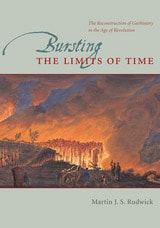
Bursting the Limits of Time
The Reconstruction of Geohistory in the Age of RevolutionMartin J. S. Rudwick
University of Chicago Press, 2005
In 1650, Archbishop James Ussher of Armagh joined the long-running theological debate on the age of the earth by famously announcing that creation had occurred on October 23, 4004 B.C. Although widely challenged during the Enlightenment, this belief in a six-thousand-year-old planet was only laid to rest during a revolution of discovery in the late eighteenth and early nineteenth centuries. In this relatively brief period, geologists reconstructed the immensely long history of the earth-and the relatively recent arrival of human life. Highlighting a discovery that radically altered existing perceptions of a human's place in the universe as much as the theories of Copernicus, Darwin, and Freud did, Bursting the Limits of Time is a herculean effort by one of the world's foremost experts on the history of geology and paleontology to sketch this historicization of the natural world in the age of revolution.
Addressing this intellectual revolution for the first time, Rudwick examines the ideas and practices of earth scientists throughout the Western world to show how the story of what we now call "deep time" was pieced together. He explores who was responsible for the discovery of the earth's history, refutes the concept of a rift between science and religion in dating the earth, and details how the study of the history of the earth helped define a new branch of science called geology. Rooting his analysis in a detailed study of primary sources, Rudwick emphasizes the lasting importance of field- and museum-based research of the eighteenth and nineteenth centuries.
Bursting the Limits of Time, the culmination of more than three decades of research, is the first detailed account of this monumental phase in the history of science.
From Yorktown to Valmy
The Transformation of the French Army in an Age of RevolutionSamuel F. Scott
University Press of Colorado, 1998
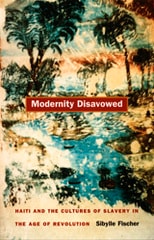
Modernity Disavowed
Haiti and the Cultures of Slavery in the Age of RevolutionSibylle Fischer
Duke University Press, 2004
Fischer draws on history, literary scholarship, political theory, philosophy, and psychoanalytic theory to examine a range of material, including Haitian political and legal documents and nineteenth-century Cuban and Dominican literature and art. She demonstrates that at a time when racial taxonomies were beginning to mutate into scientific racism and racist biology, the Haitian revolutionaries recognized the question of race as political. Yet, as the cultural records of neighboring Cuba and the Dominican Republic show, the story of the Haitian Revolution has been told as one outside politics and beyond human language, as a tale of barbarism and unspeakable violence. From the time of the revolution onward, the story has been confined to the margins of history: to rumors, oral histories, and confidential letters. Fischer maintains that without accounting for revolutionary antislavery and its subsequent disavowal, Western modernity—including its hierarchy of values, depoliticization of social goals having to do with racial differences, and privileging of claims of national sovereignty—cannot be fully understood.