Results by title
4 books match the query 'Aircraft accidents'
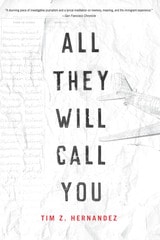
All They Will Call You
Tim Z. Hernandez
University of Arizona Press, 2017
All They Will Call You is the harrowing account of “the worst airplane disaster in California’s history,” which claimed the lives of thirty-two passengers, including twenty-eight Mexican citizens—farmworkers who were being deported by the U.S. government. Outraged that media reports omitted only the names of the Mexican passengers, American folk icon Woody Guthrie penned a poem that went on to become one of the most important protest songs of the twentieth century, “Plane Wreck at Los Gatos (Deportee).” It was an attempt to restore the dignity of the anonymous lives whose unidentified remains were buried in an unmarked mass grave in California’s Central Valley. For nearly seven decades, the song’s message would be carried on by the greatest artists of our time, including Pete Seeger, Dolly Parton, Bruce Springsteen, Bob Dylan, and Joan Baez, yet the question posed in Guthrie’s lyrics, “Who are these friends all scattered like dry leaves?” would remain unanswered—until now.
Combining years of painstaking investigative research and masterful storytelling, award-winning author Tim Z. Hernandez weaves a captivating narrative from testimony, historical records, and eyewitness accounts, reconstructing the incident and the lives behind the legendary song. This singularly original account pushes narrative boundaries, while challenging perceptions of what it means to be an immigrant in America, but more importantly, it renders intimate portraits of the individual souls who, despite social status, race, or nationality, shared a common fate one frigid morning in January 1948.
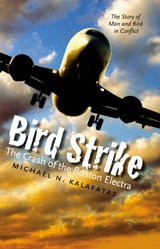
Bird Strike
The Crash of the Boston ElectraMichael N. Kalafatas
Brandeis University Press, 2010
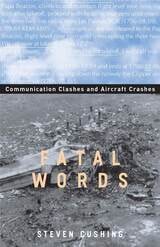
Fatal Words
Communication Clashes and Aircraft CrashesSteven Cushing
University of Chicago Press, 1994
In Fatal Words, Steven Cushing explains how miscommunication has led to dozens of aircraft disasters, and he proposes innovative solutions for preventing them. He examines ambiguities in language when aviation jargon and colloquial English are mixed, when a word is used that has different meanings, and when different words are used that sound alike. To remedy these problems, Cushing proposes a visual communication system and a computerized voice mechanism to help clear up confusing language.
Fatal Words is an accessible explanation of some of the most notorious aircraft tragedies of our time, and it will appeal to scholars in communications, linguistics, and cognitive science, to aviation experts, and to general readers.
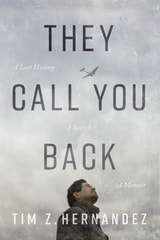
They Call You Back
A Lost History, A Search, A MemoirTim Z. Hernandez
University of Arizona Press, 2024
A haunting, an obsession, a calling: Tim Z. Hernandez has been searching for people his whole life. Now, in this highly anticipated memoir, he takes us along on an investigative odyssey through personal and collective history to uncover the surprising conjunctions that bind our stories together.
Hernandez’s mission to find the families of the twenty-eight Mexicans who were killed in the 1948 plane wreck at Los Gatos Canyon formed the basis for his acclaimed documentary novel All They Will Call You, which the San Francisco Chronicle dubbed “a stunning piece of investigative journalism,” and the New York Times hailed as “painstaking detective work by a writer who is the descendant of farmworkers.”
In this riveting new work, Hernandez continues his search for the plane crash victims while also turning the lens on himself and his ancestral past, revealing the tumultuous and deeply intimate experiences that have fueled his investigations—a lifelong journey haunted by memory, addiction, generational trauma, and the spirit world.
They Call You Back is the true chronicle of one man’s obsession to restore dignity to an undignified chapter in America’s past, while at the same time making a case for why we must heal our personal wounds if we are ever to heal our political ones.