Results by title
3 books match the query 'Airwaves'
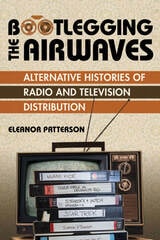
Bootlegging the Airwaves
Alternative Histories of Radio and Television DistributionEleanor Patterson
University of Illinois Press, 2024
Long before internet archives and the anytime, anywhere convenience of streaming, people collected, traded, and shared radio and television content via informal networks that crisscrossed transnational boundaries.
Eleanor Patterson’s fascinating cultural history explores the distribution of radio and TV tapes from the 1960s through the 1980s. Looking at bootlegging against the backdrop of mass media’s formative years, Patterson delves into some of the major subcultures of the era. Old-time radio aficionados felt the impact of inexpensive audio recording equipment and the controversies surrounding programs like Amos ‘n’ Andy. Bootlegging communities devoted to buddy cop TV shows like Starsky and Hutch allowed women to articulate female pleasure and sexuality while Star Trek videos in Australia inspired a grassroots subculture built around community viewings of episodes. Tape trading also had a profound influence on creating an intellectual pro wrestling fandom that aided wrestling’s growth into an international sports entertainment industry.
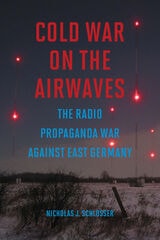
Cold War on the Airwaves
The Radio Propaganda War against East GermanyNicholas J. Schlosser
University of Illinois Press, 2015
Nicholas J. Schlosser draws on broadcast transcripts, internal memoranda, listener letters, and surveys by the U.S. Information Agency to profile RIAS. Its mission: to undermine the German Democratic Republic with propaganda that, ironically, gained in potency by obeying the rules of objective journalism. Throughout, Schlosser examines the friction inherent in such a contradictory project and propaganda's role in shaping political culture. He also portrays how RIAS's primarily German staff influenced its outlook and how the organization both competed against its rivals in the GDR and pushed communist officials to alter their methods in order to keep listeners.
From the occupation of Berlin through the airlift to the construction of the Berlin Wall, Cold War on the Airwaves offers an absorbing view of how public diplomacy played out at a flashpoint of East-West tension.
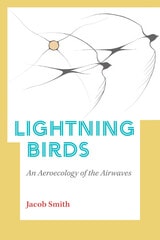
Lightning Birds
An Aeroecology of the AirwavesJacob Smith
University of Michigan Press, 2021
The aerosphere is a literal and figurative contact zone for birds and media. Transmission towers become obstacles in birds’ flight paths; radar systems emit signals that reveal the large-scale movements of birds; parabolic microphones directed at the sky detect avian flight calls; and miniature radio transmitters are attached to birds to track their global travels.
Lightning Birds is a multi-media project that consists of a five-episode, podcast-style audiobook, a curatorial essay, and a bibliography. It tells a new story about radio, describes important scientific discoveries about bird migration through interviews with key researchers, and explores a mode of ecocriticism that combines traditional forms of text-based scholarship with sound art, music, and audio storytelling. At a moment when 13% of all bird species are threatened with extinction, Smith writes not only to those working in media studies, environmental studies, and ornithology, but also to a broader public. He argues that by knowing more about how birds use the sky, we might begin to minimize the damage that our buildings, media, and environmental degradation do to the aerosphere.