Results by title
15 books match the query 'Alaska Natives'
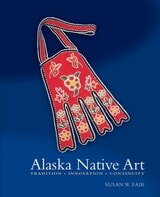
Alaska Native Art
Tradition, Innovation, ContinuitySusan W. Fair
University of Alaska Press, 2006
The rich artistic traditions of Alaska Natives are the subject of this landmark volume, which examines the work of the premier Alaska artists of the twentieth century. Ranging across the state from the islands of the Bering Sea to the interior forests, Alaska Native Art provides a living context for beadwork, ivory carving, basketry, and skin sewing. Examples of work from Tlingit, Aleutian Islanders, Pacific Eskimo, Athabaskan, Yupik, and Inupiaq artists make this volume the most comprehensive study of Alaskan art ever published.
Beautifully illustrated with full-color photographs of artists and their works, Alaska Native Art examines the concept of tradition in the modern world. Fair demonstrates that tradition is alive and well in Alaska through the words of Native artists and a multitude of examples, reproduced in color and accompanied by historic photographs.
Alaska Native Art is a volume to treasure, a tribute to the incredible vision of Alaska's artists and to the enduring traditions of all of Alaska's Native peoples.
Alaska Natives & American Laws
David Case
University of Alaska Press, 2002
Alaska Natives and American Laws
Third EditionDavid S. Case and David A. Voluck
University of Alaska Press, 2012
Now in its third edition, Alaska Natives and American Laws is still the only work of its kind, canvassing federal law and its history as applied to the indigenous peoples of Alaska. Covering 1867 through 2011, the authors offer lucid explanations of the often-tangled history of policy and law as applied to Alaska’s first peoples. Divided conceptually into four broad themes of indigenous rights to land, subsistence, services, and sovereignty, the book offers a thorough and balanced analysis of the evolution of these rights in the forty-ninth state.
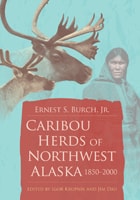
Caribou Herds of Northwest Alaska, 1850-2000
Ernest S. Burch, Jr.
University of Alaska Press, 2012
In his final, major publication Ernest S. “Tiger” Burch Jr. reconstructs the distribution of caribou herds in northwest Alaska using data and information from research conducted over the past several decades as well as sources that predate western science by more than one hundred years. Additionally, he explores human and natural factors that contributed to the demise and recovery of caribou and reindeer populations during this time. Burch provides an exhaustive list of published and unpublished literature and interviews that will intrigue laymen and experts alike. The unflinching assessment of the roles that humans and wolves played in the dynamics of caribou and reindeer herds will undoubtedly strike a nerve. Supplemental essays before and after the unfinished work add context about the author, the project of the book, and the importance of both.
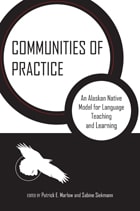
Communities of Practice
An Alaskan Native Model for Language Teaching and LearningEdited by Patrick E. Marlow and Sabine Siekmann
University of Arizona Press, 2013
In Alaska, the Second Language Acquisition Teacher Education (SLATE) project was designed to enable Indigenous communities and schools to improve the quality of native-language and English-language instruction and assessment by focusing on the elimination of barriers that have historically hindered degree completion for Indigenous and rural teachers. The Guided Research Collaborative (GRC) model, was employed to support the development of communities of practice through near-peer mentoring and mutual scaffolding. Through this important new model, teachers of both the heritage language, in this case Central Yup’ik, and English were able to situate their professional development into a larger global context based on current notions of multilingualism.
In Communities of Practice contributors show how the SLATE program was developed and implemented, providing an important model for improving second-language instruction and assessment. Through an in-depth analysis of the program, contributors show how this project can be successfully adapted in other communities via its commitment to local control in language programming and a model based on community-driven research.
Communities of Practice demonstrates how an initial cohort of Yup’ik- and English-language teachers collaborated to negotiate and ultimately completed the SLATE program. In so doing, these educators enhanced the program and their own effectiveness as teachers through a greater understanding of language learning. It is these understandings that will ultimately allow heritage- and English-language teachers to work together to foster their students’ success in any language.
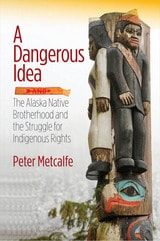
Dangerous Idea
The Alaska Native Brotherhood and the Struggle for Indigenous RightsPeter Metcalfe
University of Alaska Press, 2014
A Dangerous Idea tells an overlooked but powerful story of Alaska Natives fighting for their rights under American law and details one of the rare successes for Native Americans in their nearly two-hundred-year effort to define and protect their rights.
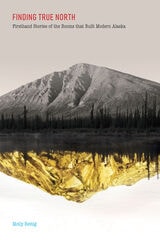
Finding True North
First-Hand Stories of the Booms that Built Modern AlaskaMolly Rettig
University of Alaska Press, 2021
Melting sea ice and rumbling volcanoes. Sled dogs racing through unnamed valleys.
These were the images that came to mind when Molly Rettig moved to Fairbanks, Alaska to work as a reporter at the local newspaper. An avid environmentalist, she couldn’t wait to explore the vast, untamed spaces that had largely been paved over on the east coast. But when her 72-year-old neighbor, Clutch, invites her on a tour of his gold mine—an 800-foot tunnel blasted into the side of his house–she begins to question many of her ideas about Alaska, and about herself.
In Finding True North, Rettig takes us on a gripping journey through Alaska's past that brings alive the state's magnificent country and its quirky, larger-than-life characters. She meets a trapper who harvests all she needs from the land, a bush pilot who taught himself how to fly, and an archaeologist who helped build an oil pipeline through pristine wilderness. While she learns how airplanes, mines, and oil fields have paved the way for newcomers like herself, she also stumbles upon a bigger question: what has this quest for Alaska’s natural resources actually cost, and how much more is at stake?
This is a book about all the ways wild places teach us about ourselves. Rettig writes both playfully and honestly about how one place can be many things to many people—and how all of it can be true.
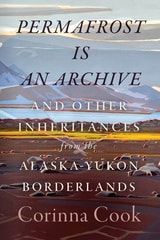
Permafrost Is an Archive
and Other Inheritances from the Alaska-Yukon BorderlandsCorinna Cook
West Virginia University Press, 2026
The Yukon Ice Patch Project reveals ancient lives. A road through the boreal forest reads like a map of climate upheaval. Those houses with broken doorknobs—a legacy of government regulation over Indigenous life. Corinna Cook, who was born white on Áak’w Kwáan Tlingit land in Juneau, Alaska, wrestles with the past and future into Canada’s Yukon Territory. With writing that blends research and reverie, her essays ask how we might come into right relations with our most difficult, shared histories. How can we carry the past together, in a good way, as the land melts? The answers—elusive as they are—carry global resonance, taking shape through a deeply personal lens combined with careful study of local arts, artifacts, maps, and the land we depend on.
Preventing Child Maltreatment in the U.S.
American Indian and Alaska Native PerspectivesRoyleen J Ross
Rutgers University Press, 2022
This book is part of a concentrated series of books that examines child maltreatment across minoritized, cultural groups.Specifically, this volume addresses American Indian and Alaska Native populations. However, in an effort to contextualize the experiences of 574 federally recognized tribes and 50+ state recognized tribes, as well as villages, the authors focus on populations within rural and remote regions and discuss the experiences of some tribal communities throughout US history. It should be noted that established research has primarily drawn attention to the pervasive problems impacting Indigenous individuals, families, and communities. Aligned with an attempt to adhere to a decolonizing praxis, the authors share information in a strength-based framework for the Indigenous communities discussed within the text. The authors review federally funded programs (prevention, intervention, and treatment) that have been adapted for tribal communities (e.g., Safecare) and include cultural teachings that address child maltreatment. The intention of this book is to inform researchers, practitioners, policy makers, and advocates about the current state of child maltreatment from an Indigenous perspective.
Settler Imperialism
Alaska Natives and the Myth of the Last FrontierJess Arnett
University of Minnesota Press, 2026
How Alaska redefined US colonialism through Indigenous resistance and legal innovation
Long treated as the symbolic “last frontier,” Alaska was, in fact, the United States’s first experiment in overseas empire. Settler Imperialism reveals these concepts as fictitious stories promoted by government officials and offers a sweeping history of Alaska Native legal and political struggle in the face of a colonial structure that defied the norms of US expansion. Examining Alaska as both a settler and imperial space, Jess Arnett challenges familiar narratives of American growth, sovereignty, and law.
Following the 1867 Treaty of Cession when the United States purchased Alaska from Russia, the federal government refused to sign treaties with Alaska Natives, excluded them from the Bureau of Indian Affairs, and denied the region designation as Indian Country. These departures from standard Indian policy created legal ambiguity that enabled new opportunities for land dispossession and resource extraction by state and corporate interests. Focusing on history from the late nineteenth century through the 1971 Alaska Native Claims Settlement Act, Arnett uncovers how the Tlingit, Haida, Tsimshian, and other Indigenous nations navigated and contested Alaska’s peculiar legal terrain. Members of these communities forcefully petitioned for US citizenship, mobilized Indigenous legal orders, and engaged selective federal Indian law to assert land rights and political authority.
By placing Alaska at the center of US colonial history, Settler Imperialism turns a critical lens on the evolution of America. To understand US expansion, race, and legal formation, Alaska must be seen not as the last frontier but as a proving ground for empire.
Retail e-book files for this title are screen-reader friendly with images accompanied by short alt text and/or extended descriptions.
Sold American
The Story of Alaska Natives and Their Land 1867-1959Donald Craig Mitchell
University of Alaska Press, 2003
Don Mitchell's companion volume, Take My Land, Take My Life, concludes that story by describing the events that in 1971 resulted in Congress's enactment of the Alaska Native Claims Settlement Act, the most generous aboriginal land claims settlement in the nation's history. Insightful and drawn from years of painstaking research of primary source materials, Sold American and Take My Land, Take My Life are an indispensable resource for readers who are interested in the history of the nation's largest state and of the federal government's involvement with Alaska's indigenous peoples.
Take My Land, Take My Life
The Story of Congress's Historic Settlement of Alaska Native Land Claims 1960-1971Donald Craig Mitchell
University of Alaska Press, 2001
In Take My Land, Take My Life, Mitchell concludes the story of the 134-year history of the U.S. government's relations with Alaska's Native people begun in Sold American:The Story of Alaska Natives and Their Land, 1867-1959. The culmination of that tale occurred in 1971 when Congress enacted the Alaska Native Claims Settlement Act. ANCSA authorized Alaska Natives to be paid $962.5 million and to be conveyed title to 44 million acres of land. Though highly controversial, ANCSA remains the most generous settlement of aboriginal land claims in the nation's history. Mitchell's insightful, exhaustively researched work also describes the political history during the first decade of Alaska statehood, from the rise of Native organizations such as the Alaska Federation of Natives to the battles for power in the subcommittees of Congress.
Insightful and drawn from years of painstaking research of primary source materials, Sold American and Take My Land, Take My Life are an indispensable resource for readers who are interested in the history of the nation's largest state and of the federal government's involvement with Alaska's indigenous peoples.
The Alaska Native Reader
History, Culture, PoliticsMaria Shaa Tláa Williams, ed.
Duke University Press, 2009
The Alaska Native Reader describes indigenous worldviews, languages, arts, and other cultural traditions as well as contemporary efforts to preserve them. Several pieces examine Alaska Natives’ experiences of and resistance to Russian and American colonialism; some of these address land claims, self-determination, and sovereignty. Some essays discuss contemporary Alaska Native literature, indigenous philosophical and spiritual tenets, and the ways that Native peoples are represented in the media. Others take up such diverse topics as the use of digital technologies to document Native cultures, planning systems that have enabled indigenous communities to survive in the Arctic for thousands of years, and a project to accurately represent Dena’ina heritage in and around Anchorage. Fourteen of the volume’s many illustrations appear in color, including work by the contemporary artists Subhankar Banerjee, Perry Eaton, Erica Lord, and Larry McNeil.
With the Wind and the Waves
A Guide to Mental Health Practices in Alaska Native CommunitiesRay M. Droby
University of Alaska Press, 2020
Words of the Real People
Alaska Native Literature in TranslationEdited by Ann Fienup-Riordan and Lawrence D. Kaplan
University of Alaska Press, 2007