Results by title
3 books match the query 'Alegría, Claribel'

Claribel Alegría and Central American Literature
Critical EssaysSandra M. Boschetto-Sandoval
Ohio University Press, 1993
These essays examine the multifaceted work of the Central American author whom Latin American literary historians consider precursor of “cultural dialogism” in poetry and fiction. As poet, essayist, journalist, novelist, and writer of “quasi–testimonio,” Alegría’s multiple discourses transgress the boundaries between traditional and postmodern political theories and practices. Her work reveals an allegory of relation and negotiation between “intelligentsia” and subaltern peoples as well as the need for a more socially extensive literature, not exclusive of more elite “magical literatures.”
The essays in the fist section frame Alegría’s discourses within sociohistorical, political, and literary contexts in order to illuminate the author’s singular place in the literary and political history of Central America. The essays in the second section engage in a feminist dialogic in which the reader encounters various critical validations and valorizations of Alegría’s many female voices. The third section involves the reader in the pursuit of extratextual or extraliterary resonances in Alegría’s work.
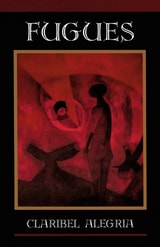
Fugues
Claribel Alegría, translated from the Spanish by D. J. Flakoll
Northwestern University Press, 1995
Writing Women in Central America
Gender and the Fictionalization of HistoryLaura Barbas-Rhoden
Ohio University Press, 2003
What is the relationship between history and fiction in a place with a contentious past? And of what concern is gender in the telling of stories about that past?
Writing Women in Central America explores these questions as it considers key Central American texts. This study analyzes how authors appropriate history to confront the rhetoric of the state, global economic powers, and even dissident groups within their own cultures. Laura Barbas-Rhoden winds a common thread in the literary imaginations of Claribel Alegría, Rosario Aguilar, Gioconda Belli, and Tatiana Lobo and shows how these writers offer provocative supplements to the historical record.
Writing Women in Central America considers more than a dozen narratives in which the authors craft their own interpretations of history to make room for women, indigenous peoples, and Afro-Latin Americans. Some of the texts reveal silences in the narratives of empire- and nation-building. Others reinterpret events to highlight the struggle of marginalized peoples for dignity and humanity in the face of oppression. All confront the ways in which stories have been told about the past.
Yet ultimately, Professor Barbas-Rhoden asserts, all concern the present and the future. As seen in Writing Women in Central America, though their fictions are historical, the writers direct their readers beyond the present toward a more just future for all who live in Central America.