Results by title
26 books match the query 'Algorithms'
Algorithmic Worldmaking
The Rhetorical Craft of Networked OrderJeremy David Johnson
University of Alabama Press, 2025
Illuminates how algorithms, intertwined with human biases, damage political discourse and civic engagement.
Algorithmic Worldmaking is an urgent exploration of the dynamic relationship between algorithms that encode their human creators’ assumptions and the humans whose choices are shaped by these algorithms in search engines, social media, and other digital spaces. Transcending discussions of one or the other, Jeremy David Johnson traces the corrupting political and social influences that arise from their mutual interaction.
Johnson uses the concept of kosmos in its sense of a dynamic order to frame the interplay between algorithms, humans, and their environments. He first shows how algorithms, far from being objective or unbiased, perpetuate human errors. Johnson then suggests a framework of four parts—navigation, exploration, maintenance, and monetization—to map the variety of political consequences to a society influenced by these four factors.
Citing controversies at major platforms such as Google, YouTube, and Facebook, Johnson demonstrates how algorithms limit and shape human thought. He makes several persuasive arguments. First, algorithms and humans share agency but humans have exceptional responsibility. Second, the algorithmic kosmos mirrors and shapes social oppression. Third, algorithms incentivize capitalist exploitation. Last, these influences damage democratic deliberation.
This landmark study is essential for scholars and students of political science, media studies, and those interested in the perilous implications of algorithmic systems on civic and political life.
Algorithms and Numerical Techniques for Modern Antenna Measurements in MATLAB®
Stuart Gregson
The Institution of Engineering and Technology, 2026
Algorithms of Education
How Datafication and Artificial Intelligence Shape PolicyKalervo N. Gulson
University of Minnesota Press, 2022
A critique of what lies behind the use of data in contemporary education policy
While the science fiction tales of artificial intelligence eclipsing humanity are still very much fantasies, in Algorithms of Education the authors tell real stories of how algorithms and machines are transforming education governance, providing a fascinating discussion and critique of data and its role in education policy.
Algorithms of Education explores how, for policy makers, today’s ever-growing amount of data creates the illusion of greater control over the educational futures of students and the work of school leaders and teachers. In fact, the increased datafication of education, the authors argue, offers less and less control, as algorithms and artificial intelligence further abstract the educational experience and distance policy makers from teaching and learning. Focusing on the changing conditions for education policy and governance, Algorithms of Education proposes that schools and governments are increasingly turning to “synthetic governance”—a governance where what is human and machine becomes less clear—as a strategy for optimizing education.
Exploring case studies of data infrastructures, facial recognition, and the growing use of data science in education, Algorithms of Education draws on a wide variety of fields—from critical theory and media studies to science and technology studies and education policy studies—mapping the political and methodological directions for engaging with datafication and artificial intelligence in education governance. According to the authors, we must go beyond the debates that separate humans and machines in order to develop new strategies for, and a new politics of, education.
Archaeology of Algorithmic Artefacts
David Link
University of Minnesota Press, 2016
As historical processes increasingly become steeped in technology, it becomes more necessary for a discipline to emerge that is capable of comprehending these materialities to better understand the fields they inundate such as science, art, and warfare. This effort is further compromised by the inherent complexity and complete arbitrariness of technical languages—especially when they are algorithmic—along with the rapid pace in which they become obsolete, unintelligible, or simply forgotten. The Turing Machine plays a central role in the Archaeology of Algorithmic Artefacts, wherein the gradual developments of the individual components encompassed by this complex technology are placed within the context of engineering sciences and the history of inventions. This genealogy also traces the origin of the computer in mathematics, meta-mathematics, combinatorics, cryptology, philosophy, and physics. The investigations reveal that the history of apparatuses that process signs is in no way limited to the second half of the twentieth century; rather, it is possible they existed at all times and in all cultures.

Big Data Recommender Systems
Algorithms, Architectures, Big Data, Security and Trust, Volume 1Osman Khalid
The Institution of Engineering and Technology, 2019
Cloud Ethics
Algorithms and the Attributes of Ourselves and OthersLouise Amoore
Duke University Press, 2020
Computing Taste
Algorithms and the Makers of Music RecommendationNick Seaver
University of Chicago Press, 2022
The people who make music recommender systems have lofty goals: they want to broaden listeners’ horizons and help obscure musicians find audiences, taking advantage of the enormous catalogs offered by companies like Spotify, Apple Music, and Pandora. But for their critics, recommender systems seem to embody all the potential harms of algorithms: they flatten culture into numbers, they normalize ever-broadening data collection, and they profile their users for commercial ends. Drawing on years of ethnographic fieldwork, anthropologist Nick Seaver describes how the makers of music recommendation navigate these tensions: how product managers understand their relationship with the users they want to help and to capture; how scientists conceive of listening itself as a kind of data processing; and how engineers imagine the geography of the world of music as a space they care for and control.
Computing Taste rehumanizes the algorithmic systems that shape our world, drawing attention to the people who build and maintain them. In this vividly theorized book, Seaver brings the thinking of programmers into conversation with the discipline of anthropology, opening up the cultural world of computation in a wide-ranging exploration that travels from cosmology to calculation, myth to machine learning, and captivation to care.
Data Fusion in Wireless Sensor Networks
A statistical signal processing perspectiveDomenico Ciuonzo
The Institution of Engineering and Technology, 2019

Data Power
Radical Geographies of Control and ResistanceJim E. Thatcher
Pluto Press, 2021
In recent years, popular media has inundated audiences with sensationalized headlines recounting data breaches, new forms of surveillance and other dangers of our digital age. Despite their regularity, such accounts treat each case as unprecedented and unique. This book proposes a radical rethinking of the history, present and future of our relations with the digital, spatial technologies that increasingly mediate our everyday lives.
From smartphones to surveillance cameras, to navigational satellites, these new technologies offer visions of integrated, smooth and efficient societies, even as they directly conflict with the ways users experience them. Recognizing the potential for both control and liberation, the authors argue against both acquiescence to and rejection of these technologies.
Through intentional use of the very systems that monitor them, activists from Charlottesville to Hong Kong are subverting, resisting and repurposing geographic technologies. Using examples as varied as writings on the first telephones to the experiences of a feminist collective for migrant women in Spain, the authors present a revolution of everyday technologies. In the face of the seemingly inevitable circumstances, these technologies allow us to create new spaces of affinity, and a new politics of change.
Demystifying Graph Data Science
Graph algorithms, analytics methods, platforms, databases, and use casesPethuru Raj
The Institution of Engineering and Technology, 2022
Digital Platforms and Algorithmic Subjectivities
Emiliana Armano, Marco Briziarelli and Elisabetta Risi
University of Westminster Press, 2022

Ex Ante
Power and Prediction in the Real-Time FutureJohn Cheney-Lippold
University of Chicago Press, 2027
An incisive framework for understanding how predictive AI has reshaped our relationship with time.
Ex Ante argues that AI systems draw us into a new experience of time, a continuous stream of machine-generated futures that reshapes our relationship to ourselves, to capitalism, and to infrastructure. Unlike other predictive tools that help us prepare for what might come, these projections—produced by algorithms and sourced by massive flows of data—calibrate our actions moment by moment, second by second.
In this book, John Cheney-Lippold offers a framework he calls the ex ante, Latin for “before the event,” as a way to consider how the future has become capitalism’s latest resource for exploitation. Through case studies spanning TikTok beauty filters that have fueled a surge in plastic surgery consultations, chess engines that redefine how the game is played, online sports betting platforms that commodify probability itself, hospital sepsis algorithms that transform the labor of nursing, and coordinated vehicle networks that collectively anticipate their surroundings to function, Ex Ante offers an exploration and powerful critique of our algorithmic present and the powers behind it.

Foundations of Digital Signal Processing
Theory, algorithms and hardware designPatrick Gaydecki
The Institution of Engineering and Technology, 2004
Geographic Medicine for the Practitioner
Algorithms in the Diagnosis and Management of Exotic DiseasesKenneth D. Warren and Adel A. F. Mahmoud
University of Chicago Press, 1978
"The algorithms in this book have been developed by Drs. Warren and Mahmoud, as the result of a systematic effort to produce such guides. The book is presented as another in the series "Studies in Infectious Disease Research" and is a most welcome addition, certain to supply a major and hitherto inadequately fulfilled need."—from the Foreword, by Edward H. Kass, M. D., Ph.D
Inequalities of Platform Publishing
The Promise and Peril of Self-Publishing in the Digital Book EraClaire Parnell
University of Massachusetts Press, 2025
Uncovering race, gender, and sexual biases in popular self-publishing platforms
The average reader need not go far in a bookstore before, knowingly or not, they encounter authors who started their careers by self-publishing prior to achieving commercial success. Examples include Margaret Atwood, Andy Weir, Colleen Hoover, Anna Todd, E. L. James, Scarlett St. Clair, and many more. Such stories of self-made writers are compelling and seem more attainable to others with the accessibility of modern publishing platforms such as Amazon, Apple, Google, Kobo, Wattpad, Webtoon, Radish, Inkitt, Qidian, Tapas, and Swoon Reads. However, as Claire Parnell uncovers in her examination of the two most popular—Amazon and Wattpad—these services in fact perpetuate systemic racial, gender, and sexual bias against authors of color and queer authors through their technological, economic, social, and cultural structures.
At a time when there is a real reckoning with the discrimination that has resulted in publishing opportunities for only relatively few privileged authors—who are often White, upper class, and male—self-publishing presents itself as an equalizer of sorts. Exploring that idea, Parnell shows that these platforms are not just intermediaries for information; they structure content and users in multiple, often inequitable, ways through their ability to set market conditions and apply algorithmic sorting. Combining original interviews, walkthrough method, metadata analysis, and more, Parnell finds that self-publishing platforms reproduce challenges for authors from marginalized communities. Far from equalizing the market, the new platforms instead frequently perpetuate the stubborn barriers to mainstream success for BIPOC and queer authors.

Inverse Synthetic Aperture Radar Imaging
Principles, algorithms and applicationsVictor C. Chen
The Institution of Engineering and Technology, 2014
Language and the Rise of the Algorithm
Jeffrey M. Binder
University of Chicago Press, 2022
A wide-ranging history of the algorithm.
Bringing together the histories of mathematics, computer science, and linguistic thought, Language and the Rise of the Algorithm reveals how recent developments in artificial intelligence are reopening an issue that troubled mathematicians well before the computer age: How do you draw the line between computational rules and the complexities of making systems comprehensible to people? By attending to this question, we come to see that the modern idea of the algorithm is implicated in a long history of attempts to maintain a disciplinary boundary separating technical knowledge from the languages people speak day to day.
Here, Jeffrey M. Binder offers a compelling tour of four visions of universal computation that addressed this issue in very different ways: G. W. Leibniz’s calculus ratiocinator; a universal algebra scheme Nicolas de Condorcet designed during the French Revolution; George Boole’s nineteenth-century logic system; and the early programming language ALGOL, short for algorithmic language. These episodes show that symbolic computation has repeatedly become entangled in debates about the nature of communication. Machine learning, in its increasing dependence on words, erodes the line between technical and everyday language, revealing the urgent stakes underlying this boundary.
The idea of the algorithm is a levee holding back the social complexity of language, and it is about to break. This book is about the flood that inspired its construction.

Metaheuristic Optimization in Power Engineering
Algorithms and power dispatch using MATLAB®-based software, Volume 1Jordan Radosavljević
The Institution of Engineering and Technology, 2024
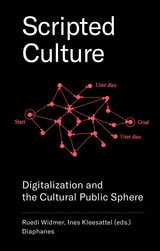
Scripted Culture
Digitalization and the Cultural Public SphereEdited by Ruedi Widmer and Ines Kleesattel
Diaphanes, 2018
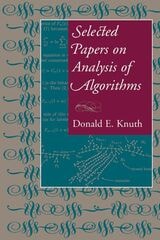
Selected Papers on Analysis of Algorithms
Donald E. Knuth
CSLI, 2000

Swarm Intelligence
Applications, Volume 3Ying Tan
The Institution of Engineering and Technology, 2018

Swarm Intelligence
Innovation, new algorithms and methods, Volume 2Ying Tan
The Institution of Engineering and Technology, 2018

Swarm Intelligence
Principles, current algorithms and methods, Volume 1Ying Tan
The Institution of Engineering and Technology, 2018
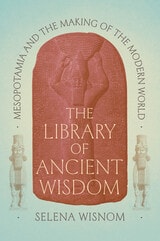
The Library of Ancient Wisdom
Mesopotamia and the Making of the Modern WorldSelena Wisnom
University of Chicago Press, 2025
The library of Ashurbanipal, Assyria’s last great king, held an astonishing collection at the forefront of knowledge in its day, from ancient traditions in religion and literature to the latest developments in magic and medicine. When the Assyrian empire fell, the library burned to the ground, and its contents, clay tablets inscribed with cuneiform writing, lay buried for thousands of years until a team of Victorian archaeologists discovered the remnants in modern-day Iraq. The clay had baked and hardened; the very fire that consumed the library had helped its texts to survive for millennia.
In The Library of Ancient Wisdom, scholar Selena Wisnom, one of only a few hundred experts able to read cuneiform script today, guides us inside this important collection and, through its contents, brings ancient Mesopotamia and its people to life. Introducing us to Ashurbanipal and his family, scribes, astrologers, physicians, and more, Wisnom explores the library’s tablets and the details they divulge about how these ancient people thought about the world. Like us, they had concerns about job security, jealous rivalries, and profound friendships, and questions about the meaning of life. Wisnom ushers us into a world where magic was commonplace, where the gods spoke to you in dreams, and where the secrets of the universe were revealed through puns—taking us to the heart of what it means to be human.
Offering a close look at a major historical landmark as well as a readable account of the world’s earliest civilizations, The Library of Ancient Wisdom lays bare the ideas, hopes, fears, and desires that survive on humble clay.
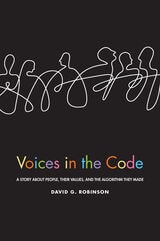
Voices in the Code
A Story about People, Their Values, and the Algorithm They MadeDavid G. Robinson
Russell Sage Foundation, 2022
In Voices in the Code, scholar David G. Robinson tells the story of how one community built a life-and-death algorithm in an inclusive, accountable way. Between 2004 and 2014, a diverse group of patients, surgeons, clinicians, data scientists, public officials and advocates collaborated and compromised to build a new kidney transplant matching algorithm—a system to offer donated kidneys to particular patients from the U.S. national waiting list. Drawing on interviews with key stakeholders, unpublished archives, and a wide scholarly literature, Robinson shows how this new Kidney Allocation System emerged and evolved over time, as participants gradually built a shared understanding both of what was possible, and of what would be fair. Robinson finds much to criticize, but also much to admire, in this story. It ultimately illustrates both the promise and the limits of participation, transparency, forecasting and auditing of high stakes software. The book’s final chapter draws out lessons for the broader struggle to build technology in a democratic and accountable way.
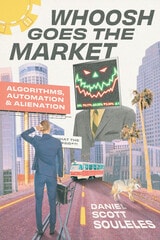
Whoosh Goes the Market
Algorithms, Automation, and AlienationDaniel Scott Souleles
University of Chicago Press, 2024
Markets are messy, and no one knows this better than traders who work tirelessly to predict what they will do next. In Whoosh Goes the Market, Daniel Scott Souleles takes us into the day-to-day experiences of a team at a large trading firm, revealing what it’s actually like to make and lose money on contemporary capital markets.
The traders Souleles shadows have mostly moved out of the pits and now work with automated, glitch-prone computer systems. They remember the days of trading manually, and they are suspicious of algorithmically driven machine-learning systems. Openly musing about their own potential extinction, they spend their time expressing fear and frustration in profanity-laced language. With Souleles as our guide, we learn about everything from betting strategies to inflated valuations, trading swings, and market manipulation. This crash course in contemporary finance vividly reveals the existential anxiety at the evolving front lines of American capitalism.