Results by title

13 books match the query 'Allegory'
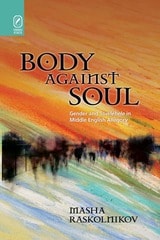
cover of Body Against Soul: Gender and Sowlehele in Middle English Allegory

Body Against Soul

Gender and Sowlehele in Middle English Allegory

Masha Raskolnikov

The Ohio State University Press, 2009

In medieval allegory, Body and Soul were often pitted against one another in debate. In Body Against Soul: Gender and Sowlehele in Middle English Allegory, Masha Raskolnikov argues that such debates function as a mode of thinking about psychology, gender, and power in the Middle Ages. Neither theological nor medical in nature, works of sowlehele (“soul-heal”) described the self to itself in everyday language—moderns might call this kind of writing “self-help.” Bringing together contemporary feminist and queer theory along with medieval psychological thought, Body Against Soul examines Piers Plowman, the “Katherine Group,” and the history of psychological allegory and debate. In so doing, it rewrites the history of the Body to include its recently neglected fellow, the Soul.

The topic of this book is one that runs through all of Western history and remains of primary interest to modern theorists—how “my” body relates to “me.” In the allegorical tradition traced by this study, a male person could imagine himself as a being populated by female personifications, because Latin and Romance languages tended to gender abstract nouns as female. However, since Middle English had ceased to inflect abstract nouns as male or female, writers were free to gender abstractions like “Will” or “Reason” any way they liked. This permitted some psychological allegories to avoid the representational tension caused by placing a female soul inside a male body, instead creating surprisingly queer same-sex inner worlds. The didactic intent driving sowlehele is, it turns out, complicated by the erotics of the struggle to establish a hierarchy of the self’s inner powers.
 
 
[more]
cover of Dark Conceit: The Making of Allegory

Dark Conceit

The Making of Allegory

Edwin Honig

Northwestern University Press, 1959
Dark Conceit is the first book in English to treat allegory seriously in terms of literary creation and criticism. The study explores the methods and ideas that go into the making of allegory, discusses the misconceptions that have obscured the subject, and surveys the changing concept of allegory. The greater part of the book concerns the typical features of allegorical fiction, focusing on a group of Romantic and contemporary writers, including Melville, Hawthorne, and Kafka, who continue the allegorical tradition in literature. Such writers, along with Lawrence, James, and Joyce, are taken to be the modern counterparts to an earlier group of pastoral, evangelical, and satirical writers represented by Spenser, Bunyan, and Swift. Honig’s thesis is that literary allegory, while symbolic in method, is realistic in aim. Its very power lies in its giving proof to the physical and ethical realities of life objectively conceived.
[more]
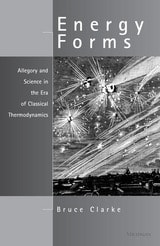
cover of Energy Forms: Allegory and Science in the Era of Classical Thermodynamics

Energy Forms

Allegory and Science in the Era of Classical Thermodynamics

Bruce Clarke

University of Michigan Press, 2001

This book follows the interplay between allegory and physics in Europe from the inception of the laws of thermodynamics in the 1850s to the cultural acceptance of the theory of relativity in the 1920s. Bruce Clarke delves into the cultural poetics of this emergence, as well as using allegory theory to link the literature of that era to the consolidation of modern physics in England. In his examination of these correlating topics the author displays not only an impressive grasp on the scientific climate of that era, but also comprehensive knowledge of late nineteenth- and early twentieth-century literature.
The book begins with an overview of the interconnections between allegory in literature and allegory in science, then analyzes the interaction between energy and entropy and their personification in the literature of the times. Energy Forms draws on the writing of well-known literary and scientific authors including H. G. Wells, Camille Flammarion, Charles Howard Hinton and D. H. Lawrence, among others. The focus then shifts to the broad cultural tension between thermodynamic malaise and electromagnetic aspiration. Energy Forms uncovers the works of important but overlooked authors in the fields of science and literature and will appeal especially to those who are intrigued by interdisciplinary studies.
Bruce Clarke is Professor of English,Texas Tech University. He is the author of Dora Marsden and Early Modernism: Gender, Individualism, Science; Allegories of Writing: The Subject of Metamorphosis; and editor of The Body and the Text: Comparative Essays in Literature and Medicine.
[more]
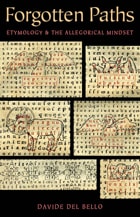
cover of Forgotten Paths: Etymology and the Allegorical Mindset

Forgotten Paths

Etymology and the Allegorical Mindset

Davide Del Bello

Catholic University of America Press, 2007
In Forgotten Paths, Davide Del Bello draws on the insights of Giambattista Vico and examines exemplary texts from classical, medieval, and Renaissance culture with the intent to trace the links between etymological and allegorical ways of knowing, writing, thinking, and arguing
[more]
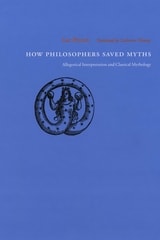
cover of How Philosophers Saved Myths: Allegorical Interpretation and Classical Mythology

How Philosophers Saved Myths

Allegorical Interpretation and Classical Mythology

Luc Brisson

University of Chicago Press, 2004

This study explains how the myths of Greece and Rome were transmitted from antiquity to the Renaissance. Luc Brisson argues that philosophy was ironically responsible for saving myth from historical annihilation. Although philosophy was initially critical of myth because it could not be declared true or false and because it was inferior to argumentation, mythology was progressively reincorporated into philosophy through allegorical exegesis. Brisson shows to what degree allegory was employed among philosophers and how it enabled myth to take on a number of different interpretive systems throughout the centuries: moral, physical, psychological, political, and even metaphysical.

How Philosophers Saved Myths also describes how, during the first years of the modern era, allegory followed a more religious path, which was to assume a larger role in Neoplatonism. Ultimately, Brisson explains how this embrace of myth was carried forward by Byzantine thinkers and artists throughout the Middle Ages and Renaissance; after the triumph of Chistianity, Brisson argues, myths no longer had to agree with just history and philosophy but the dogmas of the Church as well.

[more]
cover of Literal Figures: Puritan Allegory and the Reformation Crisis in Representation

Literal Figures

Puritan Allegory and the Reformation Crisis in Representation

Thomas H. Luxon

University of Chicago Press, 1995

Literal Figures is the most important work on John Bunyan to appear in many years, and a significant contribution to the history and theory of representation. Beginning with mainstream Puritan responses to a challenge to orthodoxy—a man who claims he has been literally transformed into Christ and his companion who claims to be the "Spouse of Christ"—and concluding with an analysis of The Pilgrim's Progress, which John Bunyan described as a "fall into Allegory," Thomas Luxon presents detailed analyses of key moments in the Reformation crisis of representation.

Why did Puritan Christianity repeatedly turn to allegorical forms of representation in spite of its own intolerance of "Allegorical fancies?" Luxon demonstrates that Protestant doctrine itself was a kind of allegory in hiding, one that enabled Puritans to forge a figural view of reality while championing the "literal" and the "historical". He argues that for Puritanism to survive its own literalistic, anti-symbolic, and millenarian challenges, a "fall" back into allegory was inevitable. Representative of this "fall," The Pilgrim's Progress marks the culminating moment at which the Reformation's war against allegory turns upon itself. An essential work for understanding both the history and theory of representation and the work of John Bunyan, Literal Figures skillfully blends historical and critical methods to describe the most important features of early modern Protestant and Puritan culture.
[more]
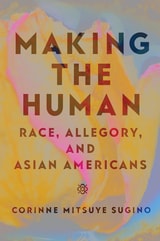
cover of Making the Human: Race, Allegory, and Asian Americans

Making the Human

Race, Allegory, and Asian Americans

Corinne Mitsuye Sugino

Rutgers University Press, 2025

Winner of the 2026 Cultural Studies Association First Book Prize 

From the debate over affirmative action to the increasingly visible racism amidst the COVID-19 pandemic, Asian Americans have emerged as key figures in a number of contemporary social controversies. In Making the Human: Race, Allegory, and Asian Americans, Corinne Mitsuye Sugino offers the lens of racial allegory to consider how media, institutional, and cultural narratives mobilize difference to normalize a white, Western conception of the human. Rather than focusing on a singular arena of society, Sugino considers contemporary sources across media, law, and popular culture to understand how they interact as dynamic sites of meaning-making. Drawing on scholarship in Asian American studies, Black studies, cultural studies, communication, and gender and sexuality studies, Sugino argues that Asian American racialization and gendering plays a key role in shoring up abstract concepts such as “meritocracy,” “family,” “justice,” “diversity,” and “nation” in ways that naturalize hierarchy. In doing so, Making the Human grapples with anti-Asian racism’s entanglements with colonialism, antiblackness, capitalism, and gendered violence.
 

[more]
cover of The Allegorical Epic: Essays in its Rise and Decline

The Allegorical Epic

Essays in its Rise and Decline

Michael Murrin

University of Chicago Press, 1980
[more]
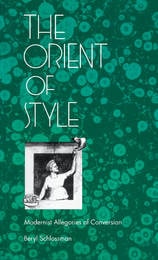
cover of The Orient of Style: Modernist Allegories of Conversion

The Orient of Style

Modernist Allegories of Conversion

Beryl Schlossman

Duke University Press, 1991

In this study of modernist aesthetics, Beryl Schlossman reveals how for such writers as Marcel Proust, Gustave Flaubert, and Charles Baudelaire, the Orient came to symbolize the highest aspirations of literary representation. She demonstrates that through allegory, modernism became a style itself, a style that married the ancient and the modern and that emerged as both a cause and an effect, both an ideal construct and an textual materiality, all symbolized by the Orient—land of style, place of plurality, and site of the coexistence of holy lands.
Toward the end of Remembrance of Things Past, the narrator describes the act of creating a work of art as a conversion of sensation into a spiritual equivalent. By means of such allegories of “conversion,” Schlossman shows, the modernist artist disappeared within the work of art and left behind the trace of his sublime vocation, a vocation in which he was transformed, in Schlossman’s words, “into a kind of priest kneeling at the altar of beauty before the masked divinity of representation.”
The author shows how allegory—the representation of the symbolic as something real—was adapted by modernist writers to reflect subjectivity while masking an authorial origin. She reveals how modernist allegory arose, as Walter Benjamin suggests, at the crossroads of history, sociology, economics, urban architecture, and art—providing a kind of map of capitalism—and was produced through the eyes of a melancholic gazing at a “monument of absence.”
[more]
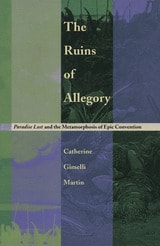
cover of The Ruins of Allegory: Paradise Lost and the Metamorphosis of Epic Convention

The Ruins of Allegory

Paradise Lost and the Metamorphosis of Epic Convention

Catherine Gimelli Martin

Duke University Press, 1998

In this reexamination of the allegorical dimensions of Paradise Lost, Catherine Martin presents Milton’s poem as a prophecy foretelling the end of one culture and its replacement by another. She argues that rather than merely extending the allegorical tradition as defined by Augustine, Dante, and Spenser, Milton has written a meta-allegory that stages a confrontation with an allegorical formalism that is either dead or no longer philosophically viable. By both critiquing and recasting the traditional form, Milton describes the transition to a new epoch that promises the possibility of human redemption in history.
Martin shows how Paradise Lost, written at the threshold of the enormous imaginative shift that accompanied the Protestant, scientific, and political revolutions of the seventeenth century, conforms to a prophetic baroque model of allegory similar to that outlined by Walter Benjamin. As she demonstrates, Milton’s experimentation with baroque forms radically reformulates classical epic, medieval romance, and Spenserian allegory to allow for both a naturalistic, empirically responsible understanding of the universe and for an infinite and incomprehensible God. In this way, the resulting poetic world of Paradise Lost is like Milton’s God, an allegorical “ruin” in which the divine is preserved but at the price of a loss of certainty. Also, as Martin suggests, the poem affirmatively anticipates modernity by placing the chief hope of human progress in the fully self-authored subject.
Maintaining a dialogue with a critical tradition that extends from Johnson and Coleridge to the best contemporary Milton scholarship, Martin sets Paradise Lost in both the early modern and the postmodern worlds. Ruins of Allegory will greatly interest all Milton scholars, as well as students of literary criticism and early modern studies.
[more]
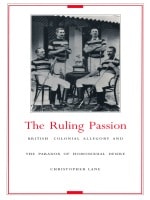
cover of The Ruling Passion: British Colonial Allegory and the Paradox of Homosexual Desire

The Ruling Passion

British Colonial Allegory and the Paradox of Homosexual Desire

Christopher Lane

Duke University Press, 1995

In The Ruling Passion, Christopher Lane examines the relationship between masculinity, homosexual desire, and empire in British colonialist and imperialist fictions at the turn of the twentieth century. Questioning the popular assumption that Britain’s empire functioned with symbolic efficiency on sublimated desire, this book presents a counterhistory of the empire’s many layers of conflict and ambivalence.
Through attentive readings of sexual and political allegory in the work of Kipling, Forster, James, Beerbohm, Firbank, and others—and deft use of psychoanalytic theory—The Ruling Passion interprets turbulent scenes of masculine identification and pleasure, power and mastery, intimacy and antagonism. By foregrounding the shattering effects of male homosexuality and interracial desire, and by insisting on the centrality of unconscious fantasy and the death drive, The Ruling Passion examines the startling recurrence of colonial failure in narratives of symbolic doubt and ontological crisis. Lane argues compellingly that Britain can progress culturally and politically only when it has relinquished its residual fantasies of global mastery.
[more]
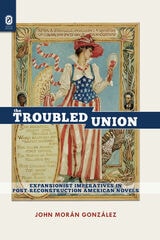
cover of The Troubled Union: Expansionist Imperatives in Post-Reconstruction American Novels

The Troubled Union

Expansionist Imperatives in Post-Reconstruction American Novels

John Morán González

The Ohio State University Press, 2010
In The Troubled Union: Expansionist Imperatives in Post-Reconstruction American Novels, John Morán González traces the imperialist imaginings behind literary efforts to reunite the United States after the trauma of the Civil War and Reconstruction. This innovative study explores how the U.S. historical romance attempted to rebuild a national identity by renovating Manifest Destiny for the twentieth-century imperialist future through courtship and marriage plots. Yet even as these literary romances promised expansive national futures, the racial and gender contradictions of U.S. democracy threatened to result in troubled unions at home and fractious ventures abroad. Canonical authors such as Henry James, popular authors such as Helen Hunt Jackson, and rediscovered authors such as María Amparo Ruiz de Burton provide the dramatic narratives examined in this book.
 
Employing theoretical perspectives drawn from American Studies and Latin American Studies, González highlights the importance of the “domestic”—understood as both the domestic boundaries of the nation and of the home—as a key site within civil society that maintained and renewed imperialist national subjectivities. The Troubled Union combines the formal analysis of literary genre with interdisciplinary cultural studies to elucidate just how the imperial national allegory deeply structured the U.S. cultural imagination of the late nineteenth century.
[more]
cover of The Vitality of Allegory: Figural Narrative in Modern and Contemporary Fiction

The Vitality of Allegory

Figural Narrative in Modern and Contemporary Fiction

Gary Johnson

The Ohio State University Press, 2012

In The Vitality of Allegory Gary Johnson argues that the rumors of allegory’s death have been greatly exaggerated. Surveying the broad landscape of modern and contemporary narrative fiction, including works from Europe, Africa, and North America, Johnson demonstrates that, although wholly allegorical narratives have become relatively rare, allegory itself remains a vibrant presence in the ongoing life of the novel, a presence that can manifest itself in a variety of ways.
Working from the premise that conventional conceptions of allegory have been inadequate, Johnson takes a rhetorical approach, defining allegory as the transformation of some phenomenon into a figural narrative for some larger purpose. This reconception allows us to recognize that allegory can govern a whole narrative—and can do so strongly or weakly—or be an embedded part or a thematic subject of a narrative and that it can even be used ironically. By developing these theoretical points through careful and insightful analysis of works such as Jackson’s “The Lottery,” Orwell’s Animal Farm, Kafka’s The Metamorphosis and The Trial, Achebe’s Things Fall Apart, Roth’s American Pastoral, Mann’s Death in Venice, Coetzee’s Elizabeth Costello, and several works by John Barth, Johnson himself transforms our understanding of allegory and of the history of the modern and contemporary novel.
[more]