Results by title
7 books match the query 'Allied Health Services'
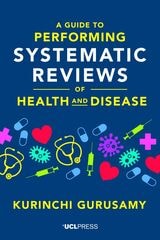
A Guide to Performing Systematic Reviews of Health and Disease
Kurinchi Gurusamy
University College London, 2025
Systematic reviews are the foundation of evidence-based healthcare, shaping treatment decisions and public health policies. A Guide to Performing Systematic Reviews of Health and Disease is a practical, step-by-step resource designed to help students and health professionals conduct high-quality reviews with confidence, even without extensive statistical training. This guide walks readers through the entire review process using free, open-source software. Each chapter features clear learning objectives and integrated videos to support hands-on learning.
Written by leading expert Kurinchi Gurusamy, this book simplifies complex research methodologies, making systematic reviews more accessible to a broad audience. Whether you are a novice researcher or a healthcare professional seeking to refine your evidence-based practice, this guide provides the essential tools to critically synthesize medical research. With an emphasis on clarity and real-world application, A Guide to Performing Systematic Reviews of Health and Disease is an indispensable resource for anyone looking to contribute to the ever-evolving landscape of healthcare research.
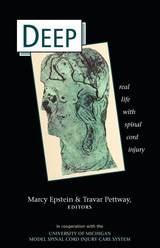
Deep
Real Life with Spinal Cord InjuryMarcy Epstein and Travar Pettway, Editors
University of Michigan Press, 2010
"This project fits into the larger picture of excellence that we wish to accomplish in all dimensions of our health system: groundbreaking and dedicated research, compassionate clinical care, progressive education, and a welcoming environment that includes community with people with disabilities. In Deep, the writers and editors of this book realize this mission with accuracy and clarity."
---Denise G. Tate, Director of Research at the University of Michigan Model Spinal Cord Injury Care System
People with spinal cord injuries experience life beyond their medical and rehabilitative journeys, but these stories are rarely told. Deep: Real Life with Spinal Cord Injury includes the stories of ten men and women whose lives have been transformed by spinal cord injury. Each essay challenges the stereotypes and misconceptions about SCI---with topics ranging from faith to humility to sex and manhood---offering a multitude of voices that weave together to create a better understanding of the diversity of disability and the uniqueness of those individuals whose lives are changed but not defined by their injuries. Life with SCI can be traumatic and ecstatic, uncharted and thrilling, but it always entails a journey beyond previous expectations. This volume captures this sea change, exploring the profound depths of SCI experience.
Measuring and Modeling Health Care Costs
Edited by Ana Aizcorbe, Colin Baker, Ernst R. Berndt, and David M. Cutler
University of Chicago Press, 2018
The research in Measuring and Modeling Health Care Costs seeks to connect our knowledge of expenditures with what we are able to measure of results, probing questions of methodology, changes in the pharmaceutical industry, and the shifting landscape of physician practice. The research in this volume investigates, for example, obesity’s effect on health care spending, the effect of generic pharmaceutical releases on the market, and the disparity between disease-based and population-based spending measures. This vast and varied volume applies a range of economic tools to the analysis of health care and health outcomes.
Practical and descriptive, this new volume in the Studies in Income and Wealth series is full of insights relevant to health policy students and specialists alike.
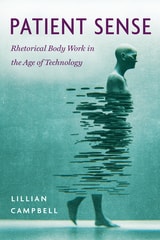
Patient Sense
Rhetorical Body Work in the Age of TechnologyLillian Campbell
The Ohio State University Press, 2025
In Patient Sense, Lillian Campbell introduces a theory of rhetorical body work and applies it to three distinct healthcare contexts: clinical nursing simulations, physical therapy labs, and tele-observation in a virtual intensive care unit. Drawing on sociological frameworks, she defines rhetorical body work as paid physical, emotional, or discursive labor performed at the material or technological interface of worker–client bodies. Such work is devalued within social and institutional systems and often gendered and racialized. Campbell captures the value of providers’ intuitive patient sense in the face of increasingly technology-mediated healthcare and intervenes in conversations about the future of healthcare training. Ultimately, she demonstrates that we will always need responsive healthcare providers whose rhetorical body work and patient sense cannot be replaced by technicians or algorithms.
Reinventing Care
Assisted Living in New York CityDavid Barton Smith
Vanderbilt University Press, 2003
In Reinventing Care, David Barton Smith offers brilliant insights into those questions by examining the realities of assisted living in New York City. Encompassing the largest, most concentrated population of elderly in the United States, New York spends more per person caring for its seniors than any other urban center. Yet, while the size of the city's care system boggles the mind, it nevertheless contains the same elements that exist in other metropolitan areas and thus provides valuable lessons for the nation as a whole.
Smith's study draws on twenty-five years of research, including hundreds of interviews and visits to representative facilities. He provides a succinct overview of how care is presently organized for New York's aging population and traces the history of the system up to the present. Among the key issues he addresses are the role of market forces and government regulation, the impact of class differences on access to quality care, and the ways in which perceptions of community affect the creation and management of assisted living programs. At the heart of the book are ten fascinating case studies, half of them focused on private-pay facilities and the other half on public-pay institutions.
While finding that the actualities of assisted living rarely match the rhetoric of its proponents, Smith sees much to admire in its goals. He suggests tactics and strategies--such as promoting family- and community-based models of assisted living and adopting a standard of licensure for certain facilities--that could point the way to a better future.

The Drama Therapy Decision Tree
Connecting Drama Therapy Interventions to TreatmentEdited by Paige Dickinson and Sally Bailey
Intellect Books, 2020
The Drama Therapy Decision Tree provides an integrated model for therapeutic decision-making by deconstructing the processes of choosing drama therapy interventions. The authors strive to provide a common language for communicating what drama therapists do in terms of diagnoses and interventions, especially for students and early career professionals in the field.
The book provides a systematic method for drama therapists and drama therapy students to use to determine the most appropriate therapy technique for clients. Paige Dickinson and Sally Bailey have identified and analyzed their own experiences with the task, and here they explain how to put learned theory into practice. In doing so, they provide early career drama therapy professionals a reliable and effective tool for making clinical decisions and offer practitioners a point of reference in addressing the socio-emotional needs of their clients.
The authors explain the basic tools drama therapists use in therapy situations, identify the core healing concepts of the practice, discuss the basic treatment planning process, and explain how these components are used together to identify an appropriate type of intervention for the client. They also offer examples of how this system can be applied to a variety of common diagnoses, and the appendices provide resources to connect drama therapy interventions to global treatment outcomes.
Wheeling and Dealing
Living with Spinal Cord InjuryEsther Isabelle Wilder
Vanderbilt University Press, 2006
Meghan is a high-level quadriplegic, living alone, who uses a power wheelchair and requires daily attendant care. She laments, "There are so many people who think we're asexual, we're not pretty, and we're creeps and weirdoes." To dispel this myth, she envisions a fashion show of women in wheelchairs parading down a runway. Meghan has been involved in a number of sexual relationships since sustaining her injury. While she doesn't think her disability has diminished her sexual pleasure, she feels that it has affected her sexual performance: "Well, you can't move it. You can't, like, bump and grind."
In 32 unusually frank in-depth interviews like these, the men and women in this book freely discuss their sex lives, their beliefs about God, how they want others to treat them, and whether they want to walk again. In each chapter the author presents their complex voices and comprehensive research about different facets of spinal cord injury (SCI).
Wheeling and Dealing explores the extent to which people with spinal cord injury locate their challenges in their physical impairments or in the social environment. Some disagree with those disability activists who focus almost exclusively on the latter, but the author examines this issue in depth.
Topics include:
--Physical health from degrees of loss of function to problems like pressure sores, temperature regulation, and bladder control.
--The stages of psychological adjustment and rehabilitation.
--Obstacles to sexual intimacy, treatment of erectile dysfunction, and new sources of sexual pleasure and emotional intimacy.
--Religion and spirituality.
--Social and political beliefs, with those with SCI weighing in on everything from welfare services to embryonic stem cell research.
--Dating, marriage, and parenting.
--Friendship networks and social supports; concerns about transportation and accessibility; stigma.
--Education, employment, and economic consequences.
This book is the recipient of the 2004 Norman L. and Roselea J. Goldberg Prize from Vanderbilt University Press for the best project in the area of medicine.