Results by title
3 books match the query 'Almeida, Onésimo T.'
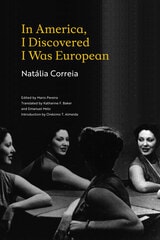
In America, I Discovered I Was European
NatáliaCorreia, Translated by Katharine F. Baker and Melo, Emanuel; Introduction by Onésimo T. Almeida
Tagus Press, 2025
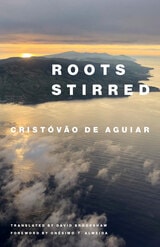
Roots Stirred
Cristóvão de Aguiar, Translated by David Brookshaw, Foreword by Onésimo T. Almeida
Tagus Press, 2026
A vibrant tale of memory, resistance, and the enduring spirit of an island community
This richly woven, multi-voiced novel transports readers to a small village on São Miguel, the largest of Portugal’s Azores islands. Through the eyes of a young boy growing up in the 1940s, and the stories shared by his beloved great-uncle, Tio Pascoal, the novel paints a vivid portrait of island life—its beauty, its hardships, and its quiet defiance.
As Tio Pascoal recounts his own youth at the start of the 20th century, we glimpse a world shaped by poverty, exploitation, and the heavy hands of church, landowners, and, later, the rise of Portugal’s authoritarian regime. Yet amid these struggles, the resilience of the islanders shines through—in their music, their feast days, their customs, and the enduring ties between those who stayed behind and those who set sail for America.
Told in a style alive with the rhythms and color of the local language—carefully rendered into English—Roots Stirred is both a coming-of-age story and a tribute to the rebellious spirit that endures across generations. By the time the young narrator prepares to leave his childhood behind, his uncle’s stories have taken root within him, carrying forward the memory of their people and the islands they call home.
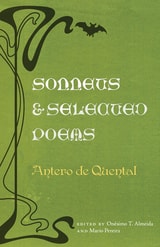
Sonnets and Selected Poems
Antero de Quental, Edited by Onésimo T. Almeida and Mario Pereira
Tagus Press, 2022
Grappling with metaphysical questions of suffering, death, and infinity, Antero de Quental’s sonnets have been widely celebrated by writers and intellectuals around the world, with Fernando Pessoa calling him “one of the greatest poets of the nineteenth century.” Irreverent and nonconformist, Antero became the ideologue and moving spirit behind the group of progressive intellectuals known as the Generation of 1870 who rebelled against tradition and attempted to reverse Portugal’s intellectual stagnation. This is the first bilingual (Portuguese-English) edition of Antero's sonnets and poems, as well as the first to assemble the translations by Aubrey F. G. Bell, Roy Campbell, Richard Garnett, George Monteiro, S. Griswold Morley, Fernando Pessoa, Edgar Prestage, and Richard Zenith in a single volume.