Results by title
10 books match the query 'Am'
Am I Still A Woman
Hysterectomy And Gender IdentityJean Elson
Temple University Press, 2003
Am I That Name
Feminism And The Category Of Women In HistoryDenise Riley
University of Minnesota Press, 2003
Writing about changes in the notion of womanhood, Denise Riley examines, in the manner of Foucault, shifting historical constructions of the category of “women” in relation to other categories central to concepts of personhood: the soul, the mind, the body, nature, the social.
Feminist movements, Riley argues, have had no choice but to play out this indeterminacy of women. This is made plain in their oscillations, since the 1790s, between concepts of equality and of difference. To fully recognize the ambiguity of the category of “women” is, she contends, a necessary condition for an effective feminist political philosophy.
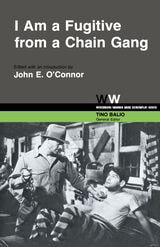
I Am a Fugitive From a Chain Gang
Edited, with an introduction by John E. O'Connor; Tino T. Balio, Series Editor
University of Wisconsin Press, 1981
Since its release in 1932, I Am a Fugitive From a Chain Gang had earned a reputation as one of the few Hollywood products that can be associated directly with social change. Film historians attribute the reform of the southern chain gang system to the public outrage generated by this movie, which depicts a true story.
In addition to being an important social document, the film remains a gripping experience for filmgoers today because of its unusual dramatic conception, its hauntingly inconclusive ending, and Paul Muni's performance as the good boy forced to go wrong.
This book includes the complete screenplay.
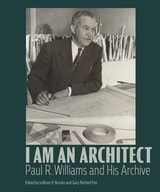
I Am an Architect
Paul R. Williams and His ArchiveLeRonn P. Brooks
J. Paul Getty Trust, The, 0
Discover the visionary legacy of the groundbreaking architect Paul R. Williams, FAIA, one of the most prolific Black architects of the 20th century.
Paul R. Williams (1894–1980), among the first Black members of the American Institute of Architects, was a defining force in shaping the city of Los Angeles and Southern California, yet his impact was undoubtedly global.
Threading together Williams’s biography, social histories of Los Angeles, and transformations in the profession, this richly researched monograph traces his remarkable career against the evolving landscape of Los Angeles and the wider architectural world.
- Presents the first research-driven monograph on preeminent architect Paul R. Williams.
- Features nearly 200 images, including many never-before published drawings, renderings, and archival materials.
- Williams’s expansive oeuvre spans everything from early residential commissions in the 1920s to civic, religious, commercial, and cultural landmarks that came to define Los Angeles’s identity at midcentury.
- Examines the intersection of race, space, and professional practice in twentieth-century American architecture.
- Highlights Williams’s commitment to designing for Black communities and advancing social change through architecture.
Step into the world of a visionary who transformed cities and challenged barriers—this volume invites you to get to know Paul R. Williams and the enduring power of architecture to shape society.
This volume is published to accompany an exhibition on view at the Fisher Museum of Art at the University of Southern California from August 18, 2026, to March 13, 2027, Los Angeles County Museum of Art from November 15, 2026, to May 31, 2027, and Getty Research Institute at the Getty Center from December 15, 2026, to March 14, 2027.
I Am of Ireland
Women of the North Speak OutElizabeth Shannon
University of Massachusetts Press, 1997
Resentment's Virtue
Jean Amery and the Refusal to ForgiveThomas Brudholm, Foreword by Jeffrie Murphy
Temple University Press, 2010
Most current talk of forgiveness and reconciliation in the aftermath of collective violence proceeds from an assumption that forgiveness is always superior to resentment and refusal to forgive. Victims who demonstrate a willingness to forgive are often celebrated as virtuous moral models, while those who refuse to forgive are frequently seen as suffering from a pathology. Resentment is viewed as a negative state, held by victims who are not "ready" or "capable" of forgiving and healing.
Resentment's Virtue offers a new, more nuanced view. Building on the writings of Holocaust survivor Jean Améry and the work of the South African Truth and Reconciliation Commission, Thomas Brudholm argues that the preservation of resentment can be the reflex of a moral protest that might be as permissible, humane or honorable as the willingness to forgive. Taking into account the experiences of victims, the findings of truth commissions, and studies of mass atrocities, Brudholm seeks to enrich the philosophical understanding of resentment.
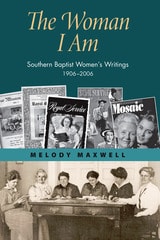
The Woman I Am
Southern Baptist Women's Writings, 1906–2006Melody Maxwell
University of Alabama Press, 2014
The Southern Baptist Convention (SBC) represents the largest Protestant denomination in the United States, yet Southern Baptist women’s voices have been underreported in studies of American religion and culture. In The Woman I Am, Melody Maxwell explores how female Southern Baptist writers and editors in the twentieth century depicted changing roles for women and responded to the tensions that arose as Southern Baptist women assumed leadership positions, especially in the areas of missions and denominational support.
Given access to a century of primary sources and archival documents, Maxwell writes, as did many of her subjects, in a style that deftly combines the dispassionate eye of an observer with the multidimensional grasp of a participant. She examines magazines published by Woman’s Missionary Union (WMU), an auxiliary to the SBC: Our Mission Fields (1906–1914), Royal Service (1914–1995), Contempo (1970–1995), and Missions Mosaic (1995–2006). In them, she traces how WMU writers and editors perceived, constructed, and expanded the lives of southern women.
Showing ingenuity and resiliency, these writers and editors continually, though not always consciously, reshaped their ideal of Christian womanhood to better fit the new paths open to women in American culture and Southern Baptist life. Maxwell’s work demonstrates that Southern Baptists have transformed their views on biblically sanctioned roles for women over a relatively short historical period.
How Southern Baptist women perceive women’s roles in their churches, homes, and the wider world is of central importance to readers interested in religion, society, and gender in the United States. The Woman I Am is a tour de force that makes a lasting contribution to the world’s understanding of Southern Baptists and to their understanding of themselves.
This Is Where I Am
A MemoirZeke Caligiuri
University of Minnesota Press, 2016
Prison is where Zeke Caligiuri is. Powderhorn Park in South Minneapolis, dubbed “Murderapolis” the year he turned eighteen, is where he comes from. It was the same neighborhood his father grew up in but had changed dramatically by the early 1990s. Yet in Zeke’s family, father and mother and grandmother kept things together while all around them the houses decayed and once-safe streets gave way to the crush of poverty and crime.
This Is Where I Am is Zeke Caligiuri’s clear-eyed account of how he got from there to here, how a boy who had every hope went from dreaming of freedom to losing it, along with nearly everything and everyone he loved. Tenderhearted in its reflections on his lost childhood, brutally candid in its description of a life of hanging and hustling, Zeke’s memoir recreates a world of tagging and goofing gone awry, of moving from smoking pot to unsuccessful attempts at dealing crack, of watching his father weep at the funeral of a seventeen-year-old boy, of going to jail: first strike. It is a place where, when asked what he's going to do with his life, a friend can only answer: “What the fuck are you talking about?”
This Is Where I Am is Zeke's own answer: he is going to tell his story, every sharp detail and sobering word, with the natural grace of a gifted writer and the hard-won wisdom of hindsight.

Www.Here I Am
Russell Stannard
Templeton Press, 2002
•Does belief in God play a part in that?
•Do you believe in evolution—that you came from animals?
•Do you think there is life on other planets?
•If so, does that make human beings less important?
•Do the world religions contradict each other, or are they simply talking about the same God in somewhat different ways?
•How should belief in an afterlife affect the way you live this life?

mitoni niya nêhiyaw / Cree is Who I Truly Am
nêhiyaw-iskwêw mitoni niya / Me, I am Truly a Cree WomanSarah Whitecalf
University of Manitoba Press, 2021