Results by title
6 books match the query 'Amazonian Society'
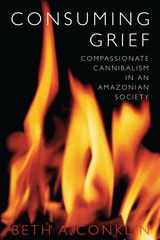
Consuming Grief
Compassionate Cannibalism in an Amazonian SocietyBy Beth A. Conklin
University of Texas Press, 2001
Mourning the death of loved ones and recovering from their loss are universal human experiences, yet the grieving process is as different between cultures as it is among individuals. As late as the 1960s, the Wari' Indians of the western Amazonian rainforest ate the roasted flesh of their dead as an expression of compassion for the deceased and for his or her close relatives. By removing and transforming the corpse, which embodied ties between the living and the dead and was a focus of grief for the family of the deceased, Wari' death rites helped the bereaved kin accept their loss and go on with their lives.
Drawing on the recollections of Wari' elders who participated in consuming the dead, this book presents one of the richest, most authoritative ethnographic accounts of funerary cannibalism ever recorded. Beth Conklin explores Wari' conceptions of person, body, and spirit, as well as indigenous understandings of memory and emotion, to explain why the Wari' felt that corpses must be destroyed and why they preferred cannibalism over cremation. Her findings challenge many commonly held beliefs about cannibalism and show why, in Wari' terms, it was considered the most honorable and compassionate way of treating the dead.
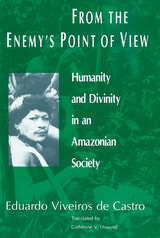
From the Enemy's Point of View
Humanity and Divinity in an Amazonian SocietyEduardo Viveiros de Castro
University of Chicago Press, 1992
Building upon ethnographic description and interpretation, Viveiros de Castro addresses the central aspect of the Arawete's concept of divinity—consumption—showing how its cannibalistic expression differs radically from traditional representations of other Amazonian societies. He situates the Araweté in contemporary anthropology as a people whose vision of the world is complex, tragic, and dynamic, and whose society commands our attention for its extraordinary openness to exteriority and transformation. For the Araweté the person is always in transition, an outlook expressed in the mythology of their gods, whose cannibalistic ways they imitate. From the Enemy's Point of View argues that current concepts of society as a discrete, bounded entity which maintains a difference between "interior" and "exterior" are wholly inappropriate in this and in many other Amazonian societies.
In Favor of Deceit
A Study of Tricksters in an Amazonian SocietyEllen B. Basso
University of Arizona Press, 1988
Ellen Basso's new study of these stories considers their relationship to other kinds of Kalapalo activities involving deception and features a unique collection of South American Indian narratives translated directly from performances by master storytellers in their original Carib language. Combining an ethnopoetic, performance-focused approach to storytelling with an action-oriented psychology, Basso arrives at an ethnographic understanding of Kalapalo trickster myths and Kalapalo ideas about deception.
The commentary on the translations considers matters of theme, discourse, narrative progression, and performance context. The dialogical, interactive nature of Kalapalo storytelling, the development of characters through their conversations with one another, and the many ways storytelling and ordinary life enrich one another are examined to reveal the complex psychology of trickster myths and the special tricksterish quality of day-to-day Kalapalo behavior.

Keepers of the Sacred Chants
The Poetics of Ritual Power in an Amazonian SocietyJonathan D. Hill
University of Arizona Press, 1993
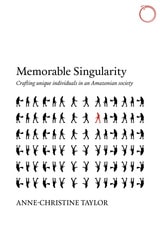
Memorable Singularity
Crafting Unique Individuals in an Amazonian SocietyAnne-Christine Taylor
HAU, 2018
In Memorable Singularity, anthropologist Anne-Christine Taylor describes how Jivaroans strive for uniqueness of being and destiny, unconstrained by the claims of any institutionalized form authority beyond the individual. Taylor covers a wide range of subjects: feuding and intertribal warfare, Jivaroan notions of personhood, corporeality, reflexive consciousness, thought and affect, memory, and visual culture. An essential collection of one of the foremost Amazonian specialists, Memorable Singularity is at once a richly literary work and an illuminating meditation on the process of crafting and imagining the human self.
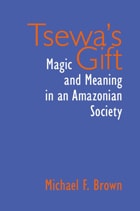
Tsewa's Gift
Magic and Meaning in an Amazonian SocietyMichael F. Brown
University of Alabama Press, 1986
Discover the spiritual threads that bind Amazonian life and culture.
Tsewa’s Gift is a profound exploration of the cultural and spiritual life of the indigenous peoples of the Peruvian Amazon. Anthropologist Michael F. Brown delves into the concept of tsewa, a spiritual force central to the worldview of the Aguaruna people, revealing how this belief system shapes social relationships, moral obligations, and the exchange of gifts. Through vivid ethnographic detail and thoughtful analysis, Brown examines the intersection of ritual, reciprocity, and cosmology, offering readers a nuanced understanding of how indigenous communities navigate identity, power, and meaning in a rapidly changing world. This book is an essential resource for scholars of anthropology, religion, and Latin American studies, as well as anyone seeking insight into the complexities of cultural resilience and adaptation.