Results by title
4 books match the query 'America's War'

America's War
Talking about the Civil War and Emancipation on Their 150th AnniversariesAmerican Library Association, 2012
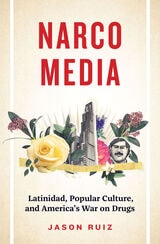
Narcomedia
Latinidad, Popular Culture, and America's War on DrugsJason Ruiz
University of Texas Press, 2023
2024 Honorable Mention — The Victor Villaseñor Best Latino Focused Nonfiction Book Award – English, Empowering Latino Futures’ International Latino Book Awards
Exploring representations of Latinx people from Scarface to Narcos, this book examines how pop culture has framed Latin America as the villain in America’s long and ineffectual War on Drugs.
If there is an enemy in the War on Drugs, it is people of color. That is the lesson of forty years of cultural production in the United States. Popular culture, from Scarface and Miami Vice to Narcos and Better Call Saul, has continually positioned Latinos as an alien people who threaten the US body politic with drugs. Jason Ruiz explores the creation and endurance of this trope, its effects on Latin Americans and Latinx people, and its role in the cultural politics of the War on Drugs.
Even as the focus of drug anxiety has shifted over the years from cocaine to crack and from methamphetamines to opioids, and even as significant strides have been made in representational politics in many areas of pop culture, Latinx people remain an unshakeable fixture in stories narrating the production, distribution, and sale of narcotics. Narcomedia argues that such representations of Latinx people, regardless of the intentions of their creators, are best understood as a cultural front in the War on Drugs. Latinos and Latin Americans are not actually America’s drug problem, yet many Americans think otherwise—and that is in no small part because popular culture has largely refused to imagine the drug trade any other way.
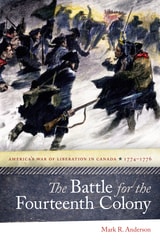
The Battle for the Fourteenth Colony
America’s War of Liberation in Canada, 1774–1776Mark R. Anderson
University Press of New England, 2013

The Dark Sahara
America's War on Terror in AfricaJeremy Keenan
Pluto Press, 2009
The US is keen to build a substantial military presence in Africa, citing the need to combat the growth of Al-Qaeda in Somalia, Algeria and other countries on the continent. This book reveals the secret US agenda behind the 'war on terror' in Africa and the shocking methods used to perpetuate the myth that the region is a hot-bed of Islamic terrorism.
Africa expert Jeremy Keenan points to overwhelming evidence suggesting that, from 2003, the Bush administration and Algerian government were responsible for hostage takings blamed on Islamic militants. This created a permissive public attitude, allowing the US to establish military bases in the region and pursue multiple imperial objectives in the name of security.
The shocking revelations in this book seriously undermine the mainstream view of Africa as a legitimate 'second front' in the 'war on terror'.