Results by title
21 books match the query 'American Art'

American Art, volume 35 number 1 (Spring 2021)
The University of Chicago Press
University of Chicago Press Journals, 2021
American Art, volume 35 number 2 (Summer 2021)
The University of Chicago Press
University of Chicago Press Journals, 2021
American Art, volume 35 number 3 (Fall 2021)
The University of Chicago Press
University of Chicago Press Journals, 2021
American Art, volume 36 number 1 (Spring 2022)
The University of Chicago Press
University of Chicago Press Journals, 2022
American Art, volume 36 number 2 (Summer 2022)
The University of Chicago Press
University of Chicago Press Journals, 2022
American Art, volume 36 number 3 (Fall 2022)
The University of Chicago Press
University of Chicago Press Journals, 2022
American Art, volume 37 number 1 (Spring 2023)
The University of Chicago Press
University of Chicago Press Journals, 2023
American Art, volume 37 number 2 (Summer 2023)
The University of Chicago Press
University of Chicago Press Journals, 2023
American Art, volume 37 number 3 (Fall 2023)
The University of Chicago Press
University of Chicago Press Journals, 2023
American Art, volume 38 number 1 (Spring 2024)
The University of Chicago Press
University of Chicago Press Journals, 2024
American Art, volume 38 number 2 (Summer 2024)
The University of Chicago Press
University of Chicago Press Journals, 2024
American Art, volume 38 number 3 (Fall 2024)
The University of Chicago Press
University of Chicago Press Journals, 2024
American Art, volume 39 number 1 (Spring 2025)
The University of Chicago Press
University of Chicago Press Journals, 2025
American Art, volume 39 number 2 (Summer 2025)
The University of Chicago Press
University of Chicago Press Journals, 2025
American Art, volume 39 number 3 (Fall 2025)
The University of Chicago Press
University of Chicago Press Journals, 2025
American Art, volume 40 number 1-2 (Spring 2026)
The University of Chicago Press
University of Chicago Press Journals, 2026
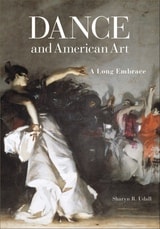
Dance and American Art
A Long EmbraceSharyn R. Udall
University of Wisconsin Press, 2012
From ballet to burlesque, from the frontier jig to the jitterbug, Americans have always loved watching dance, whether in grand ballrooms, on Mississippi riverboats, or in the streets. Dance and American Art is an innovative look at the elusive, evocative nature of dance and the American visual artists who captured it through their paintings, sculpture, photography, and prints from the early nineteenth century through the mid-twentieth century. The scores of artists discussed include many icons of American art: Winslow Homer, George Caleb Bingham, Mary Cassatt, James McNeill Whistler, Alexander Calder, Joseph Cornell, Edward Steichen, David Smith, and others.
As a subject for visual artists, dance has given new meaning to America’s perennial myths, cherished identities, and most powerful dreams. Their portrayals of dance and dancers, from the anonymous to the famous—Anna Pavlova, Isadora Duncan, Loïe Fuller, Josephine Baker, Martha Graham—have testified to the enduring importance of spatial organization, physical pattern, and rhythmic motion in creating aesthetic form.
Through extensive research, sparkling prose, and beautiful color reproductions, art historian Sharyn R. Udall draws attention to the ways that artists’ portrayals of dance have defined the visual character of the modern world and have embodied culturally specific ideas about order and meaning, about the human body, and about the diverse fusions that comprise American culture.
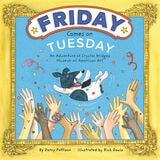
Friday Comes on Tuesday
An Adventure at Crystal Bridges Museum of American ArtDarcy Pattison
University of Arkansas Press, 2021
Winner, 2022 Susannah DeBlack Award, Arkansas Historical Association
The delightful story of Friday, a dog who discovers that the world of art is filled with many wonderful friends.
A dog in an art museum? Maybe not most dogs, but Friday goes to the museum every Tuesday to visit his friends. One day Friday must say goodbye for the winter. Join the fun as Friday trots through the galleries, taking photos and saying goodbye to Maman the spider, Rosie the Riveter, George Washington, and many others.
Looking back on his day, Friday realizes that the works of art in a museum are more than just bronze and steel, paint and canvas, ink and paper. Instead, the art connects him—and us—to a diversity of cultures, stories, and dreams.
Through the art collection at Crystal Bridges, all of us—even a dog—become part of the American experience.
Lexile Level: 570L

Mutual Reflections
Jews and Blacks in American ArtHeyd, Milly
Rutgers University Press, 1998
Mutual Reflections is the first book to examine this many-layered relationship through its visual dimension. Milly Heyd investigates how artists of both backgrounds have viewed each other during the last hundred years-how the visual languages and the-matic choices of their art have reflected changing concerns from symbiosis to disillusionment. She explores a wide range of artistic mediums: painting, sculpture, cartoons, comic strips, and installations. Interviews with artists provide additional insight. The post modern discourse poses questions problematizing ethnic and racial stereotyping.
As Heyd states, when an artist of one group investigates the other group, that person is embarking on a journey of self-discovery. And while that journey can lead to disillusionment and criticism, the artist's vision-and final work of art-very often can help put all of us on our own paths of self-discovery.
Supernatural America
The Paranormal in American ArtEdited by Robert Cozzolino
University of Chicago Press, 2021
Featuring artists from James McNeill Whistler and Kerry James Marshall to artist/mediums who made images with spirits during séances, this catalog covers more than two hundred years of the supernatural in American art. Here we find works that explore haunting, UFO sightings, and a broad range of experiential responses to other worldly contact.

Tactile Sensibilities
Seeing Through Print in American ArtJuliet Sperling
University of Chicago Press, 0
A print-driven history of American art in the long nineteenth century.
Juliet Sperling’s Tactile Sensibilities uses interactive printed objects to uncover culturally instilled ideas about touch’s role in perception and shows how these frameworks were integral to ways of making and appreciating even seemingly untouchable works of painting and sculpture. Crucial to Sperling’s argument is a genre of paper constructions designed to engage the hand and eye in tandem: multilayered and lift-the-flap book plates, pull-tab engravings, foldable playbills, and spinning paper wheels that built expectations of touch as a trained, focused process into their structure and material. Intimately scaled and portable, tactile prints cut across multiple spheres of experience, including spaces in which people learned to view, understand, and create art.
Sperling reverses standard procedures for integrating prints into art history. Rather than working her way outward from canonical artworks toward ephemeral sources within the artist’s orbit, she uses previously unstudied printed materials to open period discourses of tactile sensibility that ultimately lead to art objects, unlocking new meanings behind works of painting and sculpture by artists including Raphaelle Peale, Hiram Powers, William Sidney Mount, and Winslow Homer. In treating sidelined materials as dedicated objects of study in their own right, Tactile Sensibilities reveals that in the long nineteenth century, print was an intellectually dense and powerfully connective medium, vital in mediating the tactile sensibilities that shaped ways of making and appreciating art.