Results by title
13 books match the query 'American Civil War'
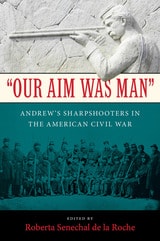
"Our Aim Was Man"
Andrew's Sharpshooters in the American Civil WarRoberta Senechal de la Roche
University of Massachusetts Press, 2016
One was a father who worried about his fellow soldiers' swearing. Another hoped to enter Harvard College. The third was a farmer whose letters home depict the later stages of the war. The fourth had turned to boot making when he did not inherit land. Based on the letters, diaries, and memoirs of four members of the First Company Massachusetts Sharpshooters, known as Andrew's Sharpshooters, this book provides a rare glimpse into the experiences of Union Army snipers. The company was one of the first units in American military history to be equipped with telescope-sighted rifles to enable long-distance targeting. Despite complaints that snipers violated codes of honorable combat, the members of Andrew's Sharpshooters generally expressed quiet pride in being an elite unit of highly skilled soldiers—"cool blooded sharpshooters," as one of them said.
Introduced and edited by Roberta Senechal de la Roche, these primary accounts include new details about the equipment, training, and deployment of snipers in the Army of the Potomac. They also reveal the challenges of covert warfare and include rich detail on the everyday problems of Civil War soldiers, including bad food, disease, punishing marches, and homesickness. The collected documents also convey the trials of those left on the home front.
A Leaf of Voices
Stories of the American Civil War in the Words of Those Who Lived and Died, 1861-65Jennifer McSpadden
Indiana Historical Society Press, 2014
A Prussian Observes the American Civil War
The Military Studies of Justus ScheibertEdited & Translated by Frederic Trautmann
University of Missouri Press, 2001
Prussia, like much of nineteenth-century Germany, was governed by the belief that knowledge, and thus understanding, was best derived from direct observation and communicated through documentation. Justus Scheibert, an officer in the Royal Prussian Engineers, was therefore sent to the United States for seven months to observe the Civil War and report the effects of artillery on fortifications. His interests, however, surpassed that limited assignment, and his observations, as well as the writings translated in this work, went on to include tactics, strategy, logistics, intelligence, combined operations, and the medical service.
Scheibert, an expert on warfare, had access to the Confederate high command, including such luminaries as Robert E. Lee, J. E. B. Stuart, and Stonewall Jackson. He brought to the war not only the fresh perspective of a foreigner, but also the insightful eye of a career military officer and a skillful author and correspondent. Although he was personally sympathetic to the South, Scheibert researched both sides of the conflict in order to write unbiased, informed commentary for his fellow Prussian officers. His firsthand account of many aspects of the Civil War included a theoretical discussion of every branch of service and the Confederate high command, illustrated with his personal observations.
Sheibert's narrative portrays soldiers, weaponry, and battles, including the first, and one of the few, studies of combined operations in the Civil War. Trautmann combines two of Scheibert's publications, The Civil War in the North American States: A Military Study for the German Officer (1874) and Combined Operations by Army and Navy: A Study Illustrated by the War on the Mississippi, 1861-1863 (ca. 1887), which for decades influenced German military writing. Trautmann's translations evince the grace and achieve the readability of Scheibert's intricate and complex works.
A Prussian Observes the American Civil War makes an important addition to Civil War studies and will appeal greatly to professional historians and those interested in, and dedicated to, Civil War and military studies.
Beyond the Battlefield
Race, Memory, and the American Civil WarDavid W. Blight
University of Massachusetts Press, 2002
The book as a whole demonstrates several ways to probe the history of memory, to understand how and why groups of Americans have constructed versions of the past in the service of contemporary social needs. Topics range from the writing and thought of Frederick Douglass and W.E.B. Du Bois to a comparison of Abraham Lincoln and Douglass on the level of language and memory. The volume also includes a compelling study of the values of a single Union soldier, an analysis of Ken Burns's PBS series The Civil War, and a retrospective treatment of the distinguished African American historian Nathan I. Huggins.
Taken together, these lucidly written pieces offer a thoroughgoing assessment of the stakes of Civil War memory and their consequences for American race relations. Beyond the Battlefield demonstrates not only why we should preserve and study our Civil War battlefields, but also why we should lift our vision above those landscapes and ponder all the unfinished questions of healing and justice, of racial harmony and disharmony, that still bedevil our society and our historical imagination.

Disarming the Nation
Women's Writing and the American Civil WarElizabeth Young
University of Chicago Press, 1999
Combining literary analysis, cultural history, and feminist theory, Disarming the Nation argues that the Civil War functioned in women's writings to connect female bodies with the body politic. Women writers used the idea of "civil war" as a metaphor to represent struggles between and within women—including struggles against the cultural prescriptions of "civility." At the same time, these writers also reimagined the nation itself, foregrounding women in their visions of America at war and in peace. In a substantial afterword, Young shows how contemporary black and white women—including those who crossdress in Civil War reenactments—continue to reshape the meanings of the war in ways startlingly similar to their nineteenth-century counterparts.
Learned, witty, and accessible, Disarming the Nation provides fresh and compelling perspectives on the Civil War, women's writing, and the many unresolved "civil wars" within American culture today.
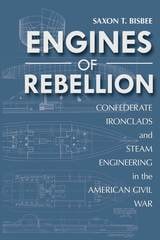
Engines of Rebellion
Confederate Ironclads and Steam Engineering in the American Civil WarSaxon T. Bisbee
University of Alabama Press, 2018
The development of steam propulsion machinery in warships during the nineteenth century, in conjunction with iron armor and shell guns, resulted in a technological revolution in the world’s navies. Warships utilizing all of these technologies were built in France and Great Britain in the 1850s, but it was during the American Civil War that large numbers of ironclads powered solely by steam proved themselves to be quite capable warships.
Historians have given little attention to the engineering of Confederate ironclads, although the Confederacy was often quite creative in building and obtaining marine power plants. Engines of Rebellion: Confederate Ironclads and Steam Engineering in the American Civil War focuses exclusively on ships with American built machinery, offering a detailed look at marine steam-engineering practices in both northern and southern industry prior to and during the Civil War.
Beginning with a contextual naval history of the Civil War, the creation of the ironclad program, and the advent of various technologies, Saxon T. Bisbee analyzes the armored warships built by the Confederate States of America that represented a style adapted to scarce industrial resources and facilities. This unique historical and archaeological investigation consolidates and expands on the scattered existing information about Confederate ironclad steam engines, boilers, and propulsion systems.
Through analysis of steam machinery development during the Civil War, Bisbee assesses steam plants of twenty-seven ironclads by source, type, and performance, among other factors. The wartime role of each vessel is discussed, as well as the stories of the people and establishments that contributed to its completion and operation. Rare engineering diagrams never before published or gathered in one place are included here as a complement to the text.
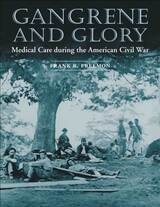
Gangrene and Glory
Medical Care during the American Civil WarFrank R. Freemon
University of Illinois Press, 1998
A medical doctor and a credentialed historian, Frank R. Freemon combines poignant, sometimes horrifying anecdotes of amputation, infection, and death with a clearheaded discussion of the state of medical knowledge, the effect of the military bureaucracy on medical supplies, and the members of the medical community who risked their lives, their health, and even their careers to provide appropriate care to the wounded. Freemon examines the impact on major campaigns--Manassas, Gettysburg, Vicksburg, Shiloh, Atlanta--of ignorance, understaffing, inexperience, overcrowded hospitals, insufficient access to ambulances, and inadequate supplies of essentials such as quinine.
Presenting the medical side of the war from a variety of perspectives--the Union, the Confederacy, doctors, nurses, soldiers, and their families--Gangrene and Glory achieves a peculiar immediacy by restricting its scope to the knowledge and perceptions available to its nineteenth-century subjects. Now available for the first time in paperback, this important volume takes a hard, close look at a neglected and crucial aspect of this bloody conflict.
Spain and the American Civil War
Wayne H. Bowen
University of Missouri Press, 2011
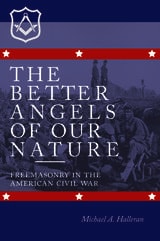
The Better Angels of Our Nature
Freemasonry in the American Civil WarMichael A. Halleran
University of Alabama Press, 2010
The first in-depth study of the Freemasons during the Civil War
One of the enduring yet little examined themes in Civil War lore is the widespread belief that on the field of battle and afterward, members of Masonic lodges would give aid and comfort to wounded or captured enemy Masons, often at great personal sacrifice and danger. This work is a deeply researched examination of the recorded, practical effects of Freemasonry among Civil War participants on both sides.
From first-person accounts culled from regimental histories, diaries, and letters, Michael A. Halleran has constructed an overview of 19th-century American freemasonry in general and Masonry in the armies of both North and South in particular, and provided telling examples of how Masonic brotherhood worked in practice. Halleran details the response of the fraternity to the crisis of secession and war, and examines acts of assistance to enemies on the battlefield and in POW camps.
The author examines carefully the major Masonic stories from the Civil War, in particular the myth that Confederate Lewis A. Armistead made the Masonic sign of distress as he lay dying at the high-water mark of Pickett’s charge at Gettysburg.
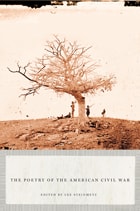
The Poetry of the American Civil War
Lee Steinmetz
Michigan State University Press, 2013
Deeply affecting and diverse in perspective, The Poetry of the American Civil War is the first comprehensive volume to focus entirely on poetry written and published during the Civil War. Of the nearly one thousand books of poetry published in the 1860s, some two hundred addressed the war in some way, and these collectively present a textured portrait of life during the conflict. The poets represented here hail from the North and the South, and at times mirror each other uncannily. Among them are housewives, doctors, preachers, bankers, journalists, and teachers. Their verse reflects the day-to-day reality of war, death, and destruction, and it contemplates questions of faith, slavery, society, patriotism, and politics. This is an essential volume for poetry lovers, historians, and Civil War enthusiasts alike.
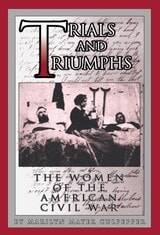
Trials and Triumphs
The Women of the American Civil WarMarilyn Mayer Culpepper
Michigan State University Press, 1991
Just as the Civil War influenced culture and government, it shaped the attitudes of a new breed of pioneering woman. As the war progressed, either by choice or by default, men turned over more and more responsibility to women on the home front. As a result, women began to break free from the "cult of domesticity" to expand career opportunities. By war's end, women on both sides of the conflict proved to themselves and to a nearly shattered nation that the appellation "weaker sex" was a misnomer.
Originally published in 1992, this revised paperback edition includes a new index.
Turning Points of the American Civil War
Edited by Chris Mackowski and Kristopher D. White, with a foreword by Thomas A. Desjardin
Southern Illinois University Press, 2017
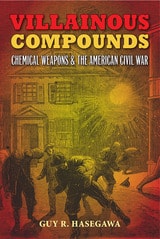
Villainous Compounds
Chemical Weapons and the American Civil WarGuy R. Hasegawa
Southern Illinois University Press, 2015
In chilling detail, Hasegawa describes the weapons proposed and prepared for use during the war and introduces the people behind the concepts. Although many of the ideas for chemical weapons had a historical precedent, most of the suggested agents were used in industry or medicine, and their toxicity was common knowledge. Proponents, including a surprisingly high number of civilian physicians, suggested a wide variety of potential chemical weapons—from liquid chlorine in artillery shells to cayenne pepper solution sprayed from fire engines. Some weapons advocates expressed ethical qualms, while others were silent on the matter or justified their suggestions as necessary under current circumstances.
As Hasegawa explains, bureaucrats in the war departments of both armies either delayed or rejected outright most of these unusual weapons, viewing them as unneeded or unworkable. Nevertheless, many of the proposed armaments presaged the widespread use of chemical weapons in the twentieth and twenty-first centuries. For example, while Civil War munitions technology was not advanced enough to deliver poison gas in artillery shells as some advocates suggested, the same idea saw extensive use during World War I. Similarly, forms of an ancient incendiary weapon, Greek fire, were used sparingly during the Civil War and appeared in later conflicts as napalm bombs and flamethrowers.
Especially timely with today’s increased chemical threats from terrorists and the alleged use of chemical agents in the Syrian Civil War, Villainous Compounds: Chemical Weapons and the American Civil War reveals the seldom-explored chemical side of Civil War armaments and illuminates an underappreciated stage in the origins of modern chemical warfare.