Results by title
7 books match the query 'American Family'
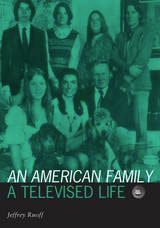
American Family
A Televised LifeJeffrey Ruoff
University of Minnesota Press, 2001
The first in-depth look at this pioneering "reality TV" documentary.
Before 1973, the Loud family of Santa Barbara, California, lived in the privacy of their own home. With the airing of the documentary An American Family, that "privacy" extended to every American home with a television-and there was no going back to the happy land of Beaver, Donna Reed, and Father Knows Best. This book is the first to offer a close, sustained look at An American Family-the documentary that blurred conventions, stirred passions among viewers and reviewers, revised impressions of family life and definitions of private and public, and began the breakdown of distinctions between reality and spectacle that culminated in cultural phenomena from The Oprah Winfrey Show to Survivor.
While placing Craig Gilbert’s innovative series in the context of 1970s nonfiction film and television, Jeffrey Ruoff tells the story behind An American Family from conception to broadcast, from reception to long-term impact. He reintroduces us to the Louds as intimate details of their daily lives, from one child’s dance recital to another’s gay lifestyle to the parents’ divorce proceedings, unfold first before the camera and then before American viewers, challenging audiences to think seriously about family, marital relations, sexuality, affluence, and the American dream. In the documentary’s immediate impact-on both producers and viewers of media-Ruoff uncovers the roots of new nonfiction forms including confessional talk shows like Oprah, first-person documentary films like Ross McElwee’s acclaimed Sherman’s March, and reality TV programs such as The Real World, Survivor, and Big Brother. A comprehensive production and reception study, Ruoff’s work restores An American Family to its rightful, pioneering place in the history of American television.Visible Evidence Series, volume 11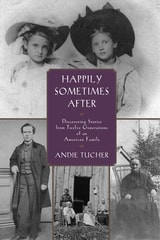
Happily Sometimes After
Discovering Stories from Twelve Generations of an American FamilyAndie Tucher
University of Massachusetts Press, 2014
A 2015 CHOICE Outstanding Academic Title
For more than four hundred years, members of the author's family have been telling stories about their American lives. They have told of impassioned elopements and heart-breaking kidnaps, of hairbreadth escapes and shocking murders, of bigamists, changelings, patriots, Indians, fires, floods, and how the great-grandmother of Chief Justice John Marshall married the pirate Blackbeard by mistake.
In this beautifully written work, Andie Tucher considers family stories as another way to look at history, neither from the top down nor the bottom up but from the inside out. She explores not just what happened—everywhere from Jamestown to Boonesborough, from the bloody field at Chickamauga to the metropolis of the Gilded Age—but also what the storytellers thought or wished or hoped or feared happened. She offers insights into what they valued, what they lost, how they judged their own lives and found meaning in them. The narrative touches on sorrow, recompense, love, pain, and the persistent tension between hope and disappointment in a nation that by making the pursuit of happiness thinkable also made unhappiness regrettable.
Based on extensive research in archives, local history societies, and family-history sources as well as conversations and correspondence, Happily Sometimes After offers an intimate and unusual perspective on how ordinary people used stories to imagine the world they wished for, and what those stories reveal about their relationships with the world they actually had.
Indicators of Change in the American Family
Abbott Lamoyne Ferriss
Russell Sage Foundation, 1970
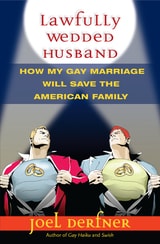
Lawfully Wedded Husband
How My Gay Marriage Will Save the American FamilyJoel Derfner
University of Wisconsin Press, 2013
Add to the mix a reality show whose director forces them to keep signing and notarizing applications for a wedding license until the cameraman gets a shot she likes; a family marriage history that includes adulterers, arms smugglers, and poisoners; and discussions of civil rights, Sophocles, racism, grammar, and homemade Ouija boards—coupled with Derfner's gift for getting in his own way—and what results is a story not just of gay marriage and the American family but of what it means to be human.
Salt Lantern
Traces of an American FamilyWilliam Towner Morgan
University of Iowa Press, 1997
Scapegoat
The Impact of Death-Fear on an American FamilyEric Bermann
University of Michigan Press, 1973
Roscoe A. was eight years old when psychologist Eric Bermann first met him and his family. In kindergarten, Roscoe was considered highly creative, but his teachers also evaluated him as a potentially dangerous and destructive child capable of uncontrolled aggression toward other children. His parents denied the report. To them, Roscoe was a quiet, well-behaved boy.
In the second grade, over the objections and confusion of his parents, Roscoe was finally removed from public school and admitted to a day treatment facility where he could receive psychotherapy. Progress was minimal. After a year of effort, there was still no agreement on "Roscoe's problems." Mental health professionals despaired. They deemed his parents "unworkable" and labeled them "deniers" of their son's destructive behaviors. In turn, the parents blamed the professionals for therapeutic incompetencies and failure to help Roscoe, who, after all, "was never a problem at home."
The only alternative to terminating the therapeutic effort was to obtain new data and fresh insights into the dilemma. It was at this point that Dr. Bermann, a clinical researcher embarked on the study of family interaction, was consulted. He immediately arranged to visit them at home, where he could observe their interactions in situ. He hoped that, with them, he might shed some light on the discrepancy between reports of Roscoe's behavior.
Dr. Bermann visited the family and recorded his observations regularly and in detail throughout the next year. His analysis of these observations has resulted in this startling book--a research account that is both stunning in the originality of its method and searing in its documentation of an American family in crisis.
The Upshaws of County Line
An American FamilyRichard Orton
University of North Texas Press, 2014