Results by title
4 books match the query 'American Icon'

Harker's Barns
Visions of an American IconMichael Harker
University of Iowa Press, 2003
Michael Harker drove past old barns on gravel roads and blacktop highways for years. He generally dismissed them as obsolete outbuildings until November 1993, when he felt compelled to photograph a windmill in Clutier, Iowa. This single photograph launched him on a seven-and-a-half-year mission to document Iowa's barns and all they represent. The result is Harker's Barns: Visions of an American Icon.
Each of the seventy-five black-and-white images featured in Harker's Barns beautifully and heartbreakingly captures the glory and ultimate demise of one of rural America's most enduring icons. From square to round, wood to brick, Dutch to Swedish, occupied or abandoned, the barns documented in this stunning collection are a testament to a passing way of life that was once the lifeblood of Iowa and the Midwest.
Complementing Harker's photographs are vignettes by poet and writer Jim Heynen. Both whimsical and endearing, each vignette treats barns as organic and intelligent entities, reflecting the living history that can be found inside each rural structure.
Iowa's barns are disappearing and with them a way of life; Harker's Barns brilliantly documents their heritage for future generations. As Jim Heynen says, “A good photograph can maintain an old barn through blizzards and hail storms and tornadoes. It is the best support beam and wood preservative an old barn can have.”

Mark Twain in Japan
The Cultural Reception of an American IconTsuyoshi, Ishihara
University of Missouri Press, 2005
Best known for his sharp wit and his portrayals of life along the banks of the Mississippi River, Mark Twain is indeed an American icon, and many scholars have examined how he and his work are perceived in the United States. In Mark Twain in Japan, however, Tsuyoshi Ishihara explores how Twain’s uniquely American work is viewed in a completely different culture.
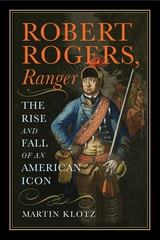
Robert Rogers, Ranger
The Rise and Fall of an American IconMartin Klotz
Westholme Publishing, 2026
Robert Rogers, Ranger: The Rise and Fall of an American Icon by Martin Klotz is a fresh look at the life of this famous, yet highly flawed man. Rogers undeniably had great personal strengths. He was brave nearly to the point of fearlessness. He was physically robust, always the one to cover the retreat, carry the wounded, or go for help when no one else could carry on. He was an intrepid explorer who wrote with eloquence about the splendors of the American frontier. He was bold and unconventional, good at thinking outside the box. He was an outstanding scout and intelligence gatherer who provided invaluable service to a British army inexperienced in woodland warfare. At the same time Rogers had enormous weaknesses that undermined his ability to lead effectively. His boldness was never tempered by judgment, and he was prone to grandiose schemes that came to nothing or, worse, to disaster. His constant self-promotion—including embellishing and lying about his battlefield successes—contributed to his popularity but damaged his reputation with peers and superiors. He succumbed to alcoholism and gambling, was profligate, especially with money—his debts were enormous—and routinely skirted the edges of the law. Rogers never found a comfortable place in America. Instead, his aristocratic patrons in London, who knew him mostly from his own self-description, gave him his most valuable opportunities, including commanding an important military and trading center on the colonial frontier and establishing the Queen’s Rangers to fight alongside Crown forces during the Revolution. But when the British cause failed in America, Rogers became an anathema on both sides of the Atlantic. A fascinating inquiry into an eighteenth-century life, Robert Rogers, Ranger presents this American legend as he lived, crossing the line between fame and misfortune.
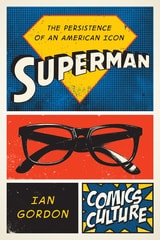
Superman
The Persistence of an American IconGordon, Ian
Rutgers University Press, 2017
Superman: Persistence of an American Icon examines the many iterations of the character in comic books, comic strips, radio series, movie serials, feature films, television shows, animation, toys, and collectibles over the past eight decades. Demonstrating how Superman’s iconic popularity cannot be attributed to any single creator or text, comics expert Ian Gordon embarks on a deeper consideration of cultural mythmaking as a collective and dynamic process. He also outlines the often contentious relationships between the various parties who have contributed to the Superman mythos, including corporate executives, comics writers, artists, nostalgic commentators, and collectors.
Armed with an encyclopedic knowledge of Superman’s appearances in comics and other media, Gordon also digs into comics archives to reveal the prominent role that fans have played in remembering, interpreting, and reimagining Superman’s iconography. Gordon considers how comics, film, and TV producers have taken advantage of fan engagement and nostalgia when selling Superman products. Investigating a character who is equally an icon of American culture, fan culture, and consumer culture, Superman thus offers a provocative analysis of mythmaking in the modern era.