Results by title
399 books match the query 'American fiction' and 46 start with a
A Body of Individuals
The Paradox of Community in Contemporary FictionSue-Im Lee
The Ohio State University Press, 2009
A Companion to the Works of Elizabeth Strout
Katherine Montwieler
Ohio University Press, 2022

A Comprehensive Index to Black Mask, 1920-1951
E. R. Hagemann
University of Wisconsin Press, 1982
A Good Deal
Selected Stories from "The Massachusetts Review"Mary Heath
University of Massachusetts Press, 1988
A Heart Beating Hard
Lauren Foss Goodman
University of Michigan Press, 2014
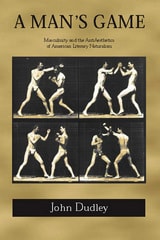
A Man's Game
Masculinity and the Anti-Aesthetics of American Literary NaturalismJohn Dudley
University of Alabama Press, 2004
Demonstrates how concepts of masculinity shaped the aesthetic foundations of literary naturalism
A Man’s Game explores the development of American literary naturalism as it relates to definitions of manhood in many of the movement’s key texts and the aesthetic goals of writers such as Stephen Crane, Jack London, Frank Norris, Edith Wharton, Charles Chestnutt, and James Weldon Johnson. John Dudley argues that in the climate of the late 19th century, when these authors were penning their major works, literary endeavors were widely viewed as frivolous, the work of ladies for ladies, who comprised the vast majority of the dependable reading public. Male writers such as Crane and Norris defined themselves and their work in contrast to this perception of literature. Women like Wharton, on the other hand, wrote out of a skeptical or hostile reaction to the expectations of them as woman writers.
Dudley explores a number of social, historical, and cultural developments that catalyzed the masculine impulse underlying literary naturalism: the rise of spectator sports and masculine athleticism; the professional role of the journalist, adopted by many male writers, allowing them to camouflage their primary role as artist; and post-Darwinian interest in the sexual component of natural selection. A Man’s Game also explores the surprising adoption of a masculine literary naturalism by African American writers at the beginning of the 20th century, a strategy, despite naturalism's emphasis on heredity and genetic determinism, that helped define the black struggle for racial equality
A Narrative Compass
Stories that Guide Women's LivesEdited by Betsy Hearne and Roberta Seelinger Trites
University of Illinois Press, 2008
Each of us has a narrative compass, a story that has guided our lifework. In this extraordinary collection, women scholars from a variety of disciplines identify and examine the stories that have inspired them, haunted them, and shaped their research, from Little House on the Prairie to Little Women, from the fairy tales of Hans Christian Andersen and Alice's Adventures in Wonderland to Nancy Drew, Mary Jane, and even the Chinese memoir Jottings from the Transcendant's Abode at Mt. Youtai. Telling the "story of her story" leads each of the essayists to insights about her own approach to studying narratives and to a deeper, often surprising, understanding of the power of imagination.
Contributors are Deyonne Bryant, Minjie Chen, Cindy L. Christiansen, Beverly Lyon Clark, Karen Coats, Wendy Doniger, Bonnie Glass-Coffin, Betsy Hearne, Joanna Hearne, Ann Hendricks, Rania Huntington, Christine Jenkins, Kimberly Lau, Pamela Riney-Kehrberg, Maria Tatar, Ebony Elizabeth Thomas, Roberta Seelinger Trites, Claudia Quintero Ulloa, and Ofelia Zepeda.
A Passion for Consumption
The Gothic Novel in AmericaAnna Sonser
University of Wisconsin Press, 2001
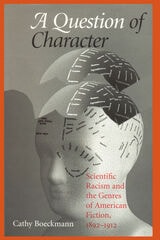
A Question of Character
Scientific Racism and the Genres of American Fiction, 1892-1912Catherine Ann Boeckmann
University of Alabama Press, 2005
Boeckmann links character, literary genre, and science, revealing how major literary works both contributed to and disrupted the construction of race in turn-of-the-century America.
In A Question of Character, Cathy Boeckmann establishes a strong link between racial questions and the development of literary traditions at the end of the 19th century in America. This period saw the rise of "scientific racism," which claimed that the races were distinguished not solely by exterior appearance but also by a set of inherited character traits. As Boeckmann explains, this emphasis on character meant that race was not only a thematic concern in the literature of the period but also a generic or formal one as well.
Boeckmann explores the intersections between race and literary history by tracing the language of character through both scientific and literary writing. Nineteenth-century pseudo-sciences such as phrenology and physiognomy had a vocabulary for discussing racial character that overlapped conceptually with the conventions for portraying race in literature. Through close readings of novels by Thomas Dixon, Mark Twain, William Dean Howells, Charles Chesnutt, and James Weldon Johnson—each of which deals with a black character "passing" as white—Boeckmann shows how this emphasis on character relates to the shift from romantic and sentimental fiction to realism. Because each of these genres had very specific conventions regarding the representation of character, genres often dictated how races could be depicted.
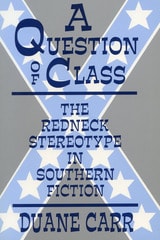
A Question of Class
The Redneck Stereotype in Southern FictionDuane Carr
University of Wisconsin Press, 1997
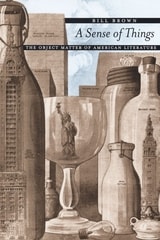
A Sense of Things
The Object Matter of American LiteratureBill Brown
University of Chicago Press, 2003
Brown's captivating new study explores the roots of modern America's fascination with things and the problem that objects posed for American literature at the turn of the century. This was an era when the invention, production, distribution, and consumption of things suddenly came to define a national culture. Brown shows how crucial novels of the time made things not a solution to problems, but problems in their own right. Writers such as Mark Twain, Frank Norris, Sarah Orne Jewett, and Henry James ask why and how we use objects to make meaning, to make or remake ourselves, to organize our anxieties and affections, to sublimate our fears, and to shape our wildest dreams. Offering a remarkably new way to think about materialism, A Sense of Things will be essential reading for anyone interested in American literature and culture.
A User's Guide to Postcolonial and Latino Borderland Fiction
By Frederick Luis Aldama
University of Texas Press, 2009
Why are so many people attracted to narrative fiction? How do authors in this genre reframe experiences, people, and environments anchored to the real world without duplicating "real life"? In which ways does fiction differ from reality? What might fictional narrative and reality have in common—if anything?
By analyzing novels such as Arundhati Roy's The God of Small Things, Amitav Ghosh's The Glass Palace, Zadie Smith's White Teeth, and Hari Kunzru's The Impressionist, along with selected Latino comic books and short fiction, this book explores the peculiarities of the production and reception of postcolonial and Latino borderland fiction. Frederick Luis Aldama uses tools from disciplines such as film studies and cognitive science that allow the reader to establish how a fictional narrative is built, how it functions, and how it defines the boundaries of concepts that appear susceptible to limitless interpretations.
Aldama emphasizes how postcolonial and Latino borderland narrative fiction authors and artists use narrative devices to create their aesthetic blueprints in ways that loosely guide their readers' imagination and emotion. In A User's Guide to Postcolonial and Latino Borderland Fiction, he argues that the study of ethnic-identified narrative fiction must acknowledge its active engagement with world narrative fictional genres, storytelling modes, and techniques, as well as the way such fictions work to move their audiences.
Abandoning the Black Hero
Sympathy and Privacy in the Postwar African American White-Life NovelCharles, John C
Rutgers University Press, 2012
Abandoning the Black Hero is the first book to examine the postwar African American white-life novel—novels with white protagonists written by African Americans. These fascinating works have been understudied despite having been written by such defining figures in the tradition as Richard Wright, Zora Neale Hurston, James Baldwin, Ann Petry, and Chester Himes, as well as lesser known but formerly best-selling authors Willard Motley and Frank Yerby.
John C. Charles argues that these fictions have been overlooked because they deviate from two critical suppositions: that black literature is always about black life and that when it represents whiteness, it must attack white supremacy. The authors are, however, quite sympathetic in the treatment of their white protagonists, which Charles contends should be read not as a failure of racial pride but instead as a strategy for claiming creative freedom, expansive moral authority, and critical agency.
In an era when “Negro writers” were expected to protest, their sympathetic treatment of white suffering grants these authors a degree of racial privacy previously unavailable to them. White writers, after all, have the privilege of racial privacy because they are never pressured to write only about white life. Charles reveals that the freedom to abandon the “Negro problem” encouraged these authors to explore a range of new genres and themes, generating a strikingly diverse body of novels that significantly revise our understanding of mid-twentieth-century black writing.
Aberrations In Black
Toward a Queer of Color CritiqueRoderick A. Ferguson
University of Minnesota Press, 2003
A hard-hitting look at the regulation of sexual difference and its role in circumscribing African American culture
The sociology of race relations in America typically describes an intersection of poverty, race, and economic discrimination. But what is missing from the picture—sexual difference—can be as instructive as what is present. In this ambitious work, Roderick A. Ferguson reveals how the discourses of sexuality are used to articulate theories of racial difference in the field of sociology. He shows how canonical sociology—Gunnar Myrdal, Ernest Burgess, Robert Park, Daniel Patrick Moynihan, and William Julius Wilson—has measured African Americans’s unsuitability for a liberal capitalist order in terms of their adherence to the norms of a heterosexual and patriarchal nuclear family model. In short, to the extent that African Americans’s culture and behavior deviated from those norms, they would not achieve economic and racial equality.
Aberrations in Black tells the story of canonical sociology’s regulation of sexual difference as part of its general regulation of African American culture. Ferguson places this story within other stories—the narrative of capital’s emergence and development, the histories of Marxism and revolutionary nationalism, and the novels that depict the gendered and sexual idiosyncrasies of African American culture—works by Richard Wright, Ralph Ellison, James Baldwin, Audre Lorde, and Toni Morrison. In turn, this book tries to present another story—one in which people who presumably manifest the dysfunctions of capitalism are reconsidered as indictments of the norms of state, capital, and social science. Ferguson includes the first-ever discussion of a new archival discovery—a never-published chapter of Invisible Man that deals with a gay character in a way that complicates and illuminates Ellison’s project.
Unique in the way it situates critiques of race, gender, and sexuality within analyses of cultural, economic, and epistemological formations, Ferguson’s work introduces a new mode of discourse—which Ferguson calls queer of color analysis—that helps to lay bare the mutual distortions of racial, economic, and sexual portrayals within sociology.

Abortion, Choice, and Contemporary Fiction
The Armageddon of the Maternal InstinctJudith Wilt
University of Chicago Press, 1990
In the opening of the book, Wilt discusses real case histories of several women. After studying the ambiguities of their decisions, she turns to their counterpoints depicted in contemporary fiction. Working from a feminist perspective, Wilt traces the theme of maternal choice in works by Margaret Atwood, Margaret Drabble, Joan Didion, Mary Gordon, Alice Walker, Toni Morrison, Gloria Naylor, Marge Piercy, Thomas Keneally, Graham Swift, Ernest Hemingway, William Faulkner, John Barth, John Irving, and others.
Behind the political, medical, and moral debates on abortion, Wilt argues, is a profound psychocultural shock at the recognition that maternity is passing from the domain of instinct to that of conscious choice. Although never wholly instinctual, maternity's potential capture by consciousness raises complex questions. The novels Wilt discusses portray worlds in which principles are endangered by sexual inequality, male power and hidden male fear of abandonment, impotence, female submission, and covert rage, and, in the case of black maternity, the hideous aftermath of slavery.
Wilt provides a resonant new context for debates—whether political or personal—on the issue of abortion and maternal choice. Ultimately she enables us to rethink how we shape our own identities and lives.
Acts of Faith and Imagination
Theological Patterns in Catholic FictionBrent Little
Catholic University of America Press, 2023
African American Satire
The Sacredly Profane NovelDarryl Dickson-Carr
University of Missouri Press, 2001
Satire's real purpose as a literary genre is to criticize through humor, irony, caricature, and parody, and ultimately to defy the status quo. In African American Satire, Darryl Dickson-Carr provides the first book-length study of African American satire and the vital role it has played. In the process he investigates African American literature, American literature, and the history of satire.
Dickson-Carr argues that major works by such authors as Rudolph Fisher, Ishmael Reed, Ralph Ellison, Langston Hughes, and George S. Schuyler should be read primarily as satires in order to avoid misinterpretation and to gain a greater understanding of their specific meanings and the eras in which they were written. He also examines the satirical rhetoric and ideological bases of complex works such as John Oliver Killens's The Cotillion and Cecil Brown's The Life and Loves of Mr. Jiveass Nigger—books that are currently out of print and that have received only scant critical attention since they were first published.
Beginning with the tradition of folk humor that originated in West Africa and was forcibly transplanted to the Americas through chattel slavery, Dickson-Carr focuses in each chapter on a particular period of the twentieth century in which the African American satirical novel flourished. He analyzes the historical contexts surrounding African American literature and culture within discrete crucial movements, starting with the Harlem Renaissance of the 1920s and ending in the present. He also demonstrates how the political, cultural, and literary ethos of each particular moment is manifested and contested in each text.
By examining these texts closely within their historical and ideological contexts, Dickson-Carr shows how African American satirical novels provide the reader of African American literature with a critique of popular ideologies seldom found in nonsatirical works. Providing a better understanding of what satire is and why it is so important for fulfilling many of the goals of African American literature, African American Satire will be an important addition to African American studies.
Afro-Future Females
Black Writers Chart Science Fiction's Newest New-Wave TrajectoryMarleen S. Barr
The Ohio State University Press, 2008
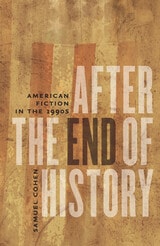
After the End of History
American Fiction in the 1990sCohe, Samuel
University of Iowa Press, 2009
In this bold book, Samuel Cohen asserts the literary and historical importance of the period between the fall of the Berlin wall and that of the Twin Towers in New York. With refreshing clarity, he examines six 1990s novels and two post-9/11 novels that explore the impact of the end of the Cold War: Pynchon's Mason & Dixon, Roth's American Pastoral, Morrison's Paradise, O'Brien's In the Lake of the Woods, Didion's The Last Thing He Wanted, Eugenides's Middlesex, Lethem's Fortress of Solitude, and DeLillo's Underworld. Cohen emphasizes how these works reconnect the past to a present that is ironically keen on denying that connection. Exploring the ways ideas about paradise and pastoral, difference and exclusion, innocence and righteousness, triumph and trauma deform the stories Americans tell themselves about their nation’s past, After the End of History challenges us to reconsider these works in a new light, offering fresh, insightful readings of what are destined to be classic works of literature.
At the same time, Cohen enters into the theoretical discussion about postmodern historical understanding. Throwing his hat in the ring with force and style, he confronts not only Francis Fukuyama’s triumphalist response to the fall of the Soviet Union but also the other literary and political “end of history” claims put forth by such theorists as Fredric Jameson and Walter Benn Michaels. In a straightforward, affecting style, After the End of History offers us a new vision for the capabilities and confines of contemporary fiction.
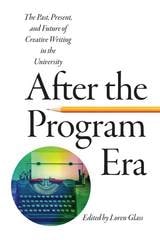
After the Program Era
The Past, Present, and Future of Creative Writing in the UniversityLoren Glass
University of Iowa Press, 2016
After the Program Era explores the consequences and implications, as well as the lacunae and liabilities, of McGurl’s foundational intervention. Glass focuses only on American fiction and the traditional MFA program, and this collection aims to expand and examine its insights in terms of other genres and sites. Postwar poetry, in particular, has until now been neglected as a product of the Program Era, even though it is, arguably, a “purer” example, since poets now depend almost entirely on the patronage of the university. Similarly, this collection looks beyond the traditional MFA writing program to explore the pre-history of writing programs in American universities, as well as alternatives to the traditionally structured program that have emerged along the way.
Taken together, the essays in After the Program Era seek to answer and explore many of these questions and continue the conversations McGurl only began.
CONTRIBUTORS
Seth Abramson, Greg Barnhisel, Eric Bennett, Matthew Blackwell, Kelly Budruweit, Mike Chasar, Simon During, Donal Harris, Michael Hill, Benjamin Kirbach, Sean McCann, Mark McGurl, Marija Rieff, Juliana Spahr, Stephen Voyce, Stephanie Young
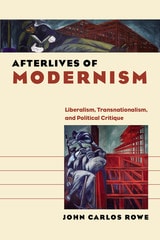
Afterlives of Modernism
Liberalism, Transnationalism, and Political CritiqueJohn Carlos Rowe
Dartmouth College Press, 2015
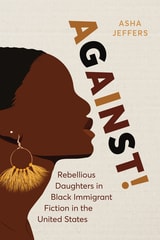
Against!
Rebellious Daughters in Black Immigrant Fiction in the United StatesAsha Jeffers
The Ohio State University Press, 2025
Against! is the first book-length study of Afro-Caribbean and African immigrant and second-generation writing in the United States. In it, Asha Jeffers evaluates the relationship between Blackness and immigranthood in the US as depicted through the recurring theme of rebellious Black immigrant daughters. Considering the work of Paule Marshall, Edwidge Danticat, Chimamanda Ngozi Adichie, and Taiye Selasi, Jeffers untangles how rebellion is informed by race, gender, ethnicity, and migration status.
Immigrant and second-generation writers mobilize often complicated familial relationships to comment on a variety of political, social, and psychic contexts. Jeffers argues that rather than categorizing Black migrants as either immediately fully integrated into an African American experience or seeing them as another category altogether that is unbound by race, Marshall, Danticat, Adichie, and Selasi identify the unstable position of Black migrants within the American racial landscape. By highlighting the diverse ways Black migrants and their children negotiate this position amid the dual demands of the respectability politics imposed on African Americans and the model-minority myth imposed on immigrants, Jeffers reveals the unsteady nature of US racial categories.
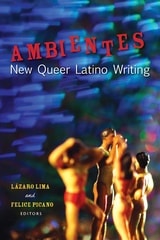
Ambientes
New Queer Latino WritingLázaro Lima and Felice Picano
University of Wisconsin Press, 2011
As the U.S. Latino population grows rapidly, and as the LGBTQ Latino community becomes more visible and a more crucial part of our literary and artistic heritage, there is an increasing demand for literature that successfully highlights these diverse lives. Edited by Lázaro Lima and Felice Picano, Ambientes is a revolutionary collection of fiction featuring stories by established authors as well as emerging voices that present a collective portrait of gay, lesbian, bisexual, and transgender experience in America today. With a preface by Picano and an introduction by Lima that sets the stage for understanding Latino literary and cultural history, this is the first anthology to cross cultural and regional borders by offering a wide variety of urban, rural, East Coast, West Coast, and midwestern perspectives on Latina and Latino queers from different walks of life. Stories range from sensual pieces to comical romances and from inner-city dramas fueled by street language to portraits of gay domesticity, making this a much-needed collection for many different kinds of readers. The stories in this collection reflect a vibrant and creative community and redefine received notions of “gay” and “lesbian.”
Finalist, Over the Rainbow selection, American Library Association
Finalist, LGBT Anthology, Lambda Literary Awards
Best Special Interest Books, selected by the American Association of School Librarians
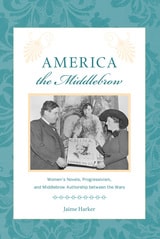
America the Middlebrow
Women's Novels, Progressivism, and Middlebrow Authorship between the WarsJaime Harker
University of Massachusetts Press, 2007
Between the two world wars, American publishing entered a “golden age” characterized by an explosion of new publishers, authors, audiences, distribution strategies, and marketing techniques. The period was distinguished by a diverse literary culture, ranging from modern cultural rebels to working-class laborers, political radicals, and progressive housewives. In America the Middlebrow, Jaime Harker focuses on one neglected mode of authorship in the interwar period—women's middlebrow authorship and its intersection with progressive politics.
With the rise of middlebrow institutions and readers came the need for the creation of the new category of authorship. Harker contends that these new writers appropriated and adapted a larger tradition of women's activism and literary activity to their own needs and practices. Like sentimental women writers and readers of the 1850s, these authors saw fiction as a means of reforming and transforming society. Like their Progressive Era forebears, they replaced religious icons with nationalistic images of progress and pragmatic ideology. In the interwar period, this mode of authorship was informed by Deweyan pragmatist aesthetics, which insisted that art provided vicarious experience that could help create humane, democratic societies.
Drawing on letters from publishers, editors, agents, and authors, America the Middlebrow traces four key moments in this distinctive culture of letters through the careers of Dorothy Canfield, Jessie Fauset, Pearl Buck, and Josephine Herbst. Both an exploration of a virtually invisible culture of letters and a challenge to monolithic paradigms of modernism, the book offers fresh insight into the ongoing tradition of political domestic fiction that flourished between the wars.
America's Gothic Fiction
The Legacy of Magnalia Christi AmericanaDorothy Z. Baker
The Ohio State University Press, 2007
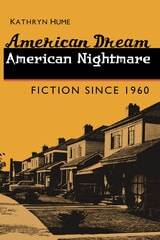
American Dream, American Nightmare
Fiction since 1960Kathryn Hume
University of Illinois Press, 2000
In breaking down the divisions among standard categories of race, religion, ethnicity, and gender, Hume identifies shared core concerns, values, and techniques among seemingly disparate and unconnected writers including T. Coraghessan Boyle, Ralph Ellison, Russell Banks, Gloria Naylor, Tim O'Brien, Maxine Hong Kingston, Walker Percy, N. Scott Momaday, John Updike, Toni Morrison, William Kennedy, Julia Alvarez, Thomas Pynchon, Leslie Marmon Silko, and Don DeLillo.
Hume explores fictional treatments of the slippage in the immigrant experience between America's promise and its reality. She exposes the political link between contemporary stories of lost innocence and liberalism's inadequacies. She also invites us to look at the literary challenge to scientific materialism in various searches for a spiritual dimension in life.
The expansive future promised by the American Dream has been replaced, Hume finds, by a sense of tarnished morality and a melancholy loss of faith in America's exceptionalism. American Dream, American Nightmare examines the differing critiques of America embedded in nearly a hundred novels and points to the source for recovery that appeals to many of the authors.
American Fiction and the Metaphysics of the Grotesque
Dieter Meindl
University of Missouri Press, 1996
By synthesizing Kayser's and Bakhtin's views of the grotesque and Heidegger's philosophy of Being, American Fiction and the Metaphysics of the Grotesque seeks to demonstrate that American fiction from Poe to Pynchon has tried to convey the existential dimension: the pre-individual totality or flow of life, which defines itself against the mind and its linguistic capacity. Dieter Meindl shows how the grotesque, through its self-contradictory nature, has been instrumental in expressing this reality-conception, an antirationalist stance in basic agreement with existential thought. The historical validity of this new metaphysics, which grants precedence to Being--the context of cognition--over the cognizant subject, must be upheld in the face of deconstructive animadversions upon any metaphysics of presence. The notion of decentering the subject, Meindl argues, did not originate with deconstruction.
The existential grotesque confirms the protomodernist character of classic American fiction. Meindl traces its course through a number of well-known texts by Melville, James, Gilman, Anderson, Faulkner, and O'Connor, among others. To convey life conceived as motion, these writers had to capture--that is, immobilize--it in their art: an essentially distortive and, therefore, grotesque device. Melville's "Bartleby," dealing with a mort vivant, is the seminal text in this mode of indirectness. As opposed to the existential grotesque, which grants access to a preverbal realm, the linguistic grotesque of postmodern fiction works on the assumption that all reality is referable to language in a textual universe.
American Fiction and the Metaphysics of the Grotesque will significantly alter our understanding of certain traditions in American literature.
American Fiction in the Cold War
Thomas H. Schaub
University of Wisconsin Press, 1991
In American Fiction in the Cold War Thomas Hill Schaub makes it clear that Trilling’s summary was in itself a mythic reconstruction, a prominent example of the way liberal writers in the late 1940s and 1950s came to terms with their political past. Schaub’s book brilliantly analyzes their efforts to reshape an “old” liberalism alleged to hold naively optimistic views of human nature, scientific reason, and social progress into a “new,” skeptical liberalism that recognized the persistence of human evil, the fragility of reason, and the ambiguity of moral decision.
Most important, as American Fiction in the Cold War demonstrates, these liberal reassessments of history, politics, human nature, and destiny—what Schaub calls the “liberal narrative”—mediated the critical and imaginative production of the literary community after World War II. Schaub shows that the elements of this narrative are visible in a wide spectrum of cultural narratives in American history, political philosophy, and social criticism during the Cold War era. His analysis of the dominant critical communities of the late 1940s—led by critics such as Lionel Trilling and Irving Howe, Cleanth Brooks and Allen Tate—recovers the political meanings embedded within their debates over the nature of literary realism, the definition of the novel, and speculations on its “death.”
In the second part of his study, Schaub turns to Ralph Ellison, Flannery O’Connor, Norman Mailer, and John Barth. His readings of their fiction isolate the political and cultural content of works often faulted for their apparent efforts to transcend social history. Reviewing John Barth’s End of the Road, for example, he shows the politics of culture concealed within what seems to be a philosophical narrative. In novel after novel, he demonstrates, the liberal narrative is operating from within, tuning and steering the direction of the plot and the creation of the character. Schaub’s penetrating exploration of the relationship between U.S. political and social thought and the literary consciousness in the early postwar years will be of interest to intellectual historians and to students of American literary culture.
American Gothic
New Interventions in a National NarrativeRobert K. Martin
University of Iowa Press, 1998
In America as in Britain, the rise of the Gothic represented the other—the fearful shadows cast upon Enlightenment philosophies of common sense, democratic positivism, and optimistic futurity. Many critics have recognized the centrality of these shadows to American culture and self-identification. American Gothic, however, remaps the field by offering a series of revisionist essays associated with a common theme: the range and variety of Gothic manifestations in high and popular art from the roots of American culture to the present.
The thirteen essayists approach the persistence of the Gothic in American culture by providing a composite of interventions that focus on specific issues—the histories of gender and race, the cultures of cities and scandals and sensations—in order to advance distinct theoretical paradigms. Each essay sustains a connection between a particular theoretical field and a central problem in the Gothic tradition.
Drawing widely on contemporary theory—particularly revisionist views of Freud such as those offered by Lacan and Kristeva—this volume ranges from the well-known Gothic horrors of Edgar Allan Poe and Nathaniel Hawthorne to the popular fantasies of Stephen King and the postmodern visions of Kathy Acker. Special attention is paid to the issues of slavery and race in both black and white texts, including those by Ralph Ellison and William Faulkner. In the view of the editors and contributors, the Gothic is not so much a historical category as a mode of thought haunted by history, a part of suburban life and the lifeblood of films such as The Exorcist and Fatal Attraction.
American Homes
Ryan Ridge
University of Michigan Press, 2014
From the nostalgia of front porches to the hidden mysteries of basements, Ridge turns ordinary spaces into insightful meditations on homeownership, personal identity, and cultural expectations. American Homes is as much an architectural guidebook as it is a critique of consumerism, presenting a vivid portrait of how we live and the structures that define us. The result is a thought-provoking, humorous, and occasionally surreal commentary on what it means to call a place "home" in America.
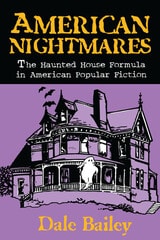
American Nightmares
The Haunted House Formula in American Popular FictionDale Bailey
University of Wisconsin Press, 1999
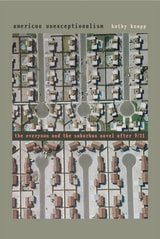
American Unexceptionalism
The Everyman and the Suburban Novel after 9/11Kathy Knapp
University of Iowa Press, 2014
The novels in question all take place in the sprawling terrain that stretches out beyond the Twin Towers—the postwar suburbs that since the end of World War II have served, like the Twin Towers themselves, as a powerful advertisement of dominance to people around the globe, by projecting an image of prosperity and family values. These suburban tales and their everyman protagonists grapple, however indirectly, with the implications of the apparent decline of the economic, geopolitical, and moral authority of the United States. In the context of perceived decay and diminishing influence, these novels actively counteract the narrative of American exceptionalism frequently peddled in the wake of 9/11.
If suburban fiction has historically been faulted for its limited vision, this newest iteration has developed a depth of field that self-consciously folds the personal into the political, encompasses the have-nots along with the haves, and takes in the past when it imagines the future, all in order to forge a community of readers who are now accountable to the larger world. American Unexceptionalism traces the trajectory by which recent suburban fiction overturns the values of individualism, private property ownership, and competition that originally provided its foundation. In doing so, the novels examined here offer readers new and flexible ways to imagine being and belonging in a setting no longer characterized by stasis, but by flux.
And Then There Were Nine. . .
More Women of MysteryUniversity of Wisconsin Press, 1985

Angry Planet
Decolonial Fiction and the American Third WorldAnne Stewart
University of Minnesota Press, 2022
Before the idea of the Anthropocene, there was the angry planet
How might we understand an earthquake as a complaint, or erosion as a form of protest—in short, the Earth as an angry planet? Many novels from the end of the millennium did just that, centering around an Earth that acts, moves, shapes human affairs, and creates dramatic, nonanthropogenic change.
In Angry Planet, Anne Stewart uses this literature to develop a theoretical framework for reading with and through planetary motion. Typified by authors like Colson Whitehead, Octavia Butler, and Leslie Marmon Silko, whose work anticipates contemporary critical concepts of entanglement, withdrawal, delinking, and resurgence, angry planet fiction coalesced in the 1990s and delineated the contours of a decolonial ontology. Stewart shows how this fiction brought Black and Indigenous thought into conversation, offering a fresh account of globalization in the 1990s from the perspective of the American Third World, construing it as the era that first made connections among environmental crises and antiracist and decolonial struggles.
By synthesizing these major intersections of thought production in the final decades of the twentieth century, Stewart offers a recent history of dissent to the young movements of the twenty-first century. As she reveals, this knowledge is crucial to incipient struggles of our contemporary era, as our political imaginaries grapple with the major challenges of white nationalism and climate change denial.
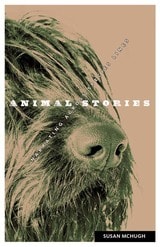
Animal Stories
Narrating across Species LinesSusan McHugh
University of Minnesota Press, 2010
McHugh’s investigations into fictions of people relying on animals in civic and professional life—most obviously those of service animal users and female professional horse riders—showcase distinctly modern and human–animal forms of intersubjectivity. But increasingly graphic violence directed at these figures indicates their ambivalent significance to changing configurations of species.
Reading these developments with narrative adaptations of traditional companion species relations during this period— queer pet memoirs and farm animal fictions—McHugh clarifies the intercorporeal intimacies—the perforations of species boundaries now proliferating in genetic and genomic science—and embeds the representation of animals within biopolitical frameworks.
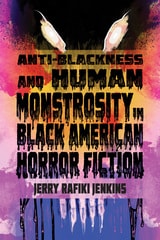
Anti-Blackness and Human Monstrosity in Black American Horror Fiction
Jerry Rafiki Jenkins
The Ohio State University Press, 2024
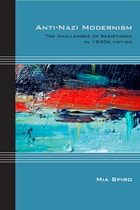
Anti-Nazi Modernism
The Challenges of Resistance in 1930s FictionMia Spiro
Northwestern University Press, 2013

Are Girls Necessary?
Lesbian Writing and Modern HistoriesJulie Abraham
University of Minnesota Press, 2008
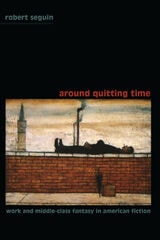
Around Quitting Time
Work and Middle-Class Fantasy in American FictionRobert Seguin
Duke University Press, 2001
Tracing connections between the reconstruction of the labor process and the aesthetic dilemmas of modernism, between the emergence of the modern state and the structure of narrative, Seguin analyzes the work of Nathanael West, Ernest Hemingway, Willa Cather, John Barth, and others. These fictional narratives serve to demonstrate for Seguin the pattern of social sites and cultural phenomenon that have emerged where work and leisure, production and consumption, and activity and passivity coincide. He reveals how, by creating pathways between these seemingly opposed domains, the middle-class imaginary at once captures and suspends the dynamics of social class and opens out onto a political and cultural terrain where class is both omnipresent and invisible.
Around Quitting Time will interest critics and historians of modern U.S. culture, literary scholars, and those who explore the interaction between economic and cultural forms.
Art, Theory, Revolution
The Turn to Generality in Contemporary LiteratureMitchum Huehls
The Ohio State University Press, 2022
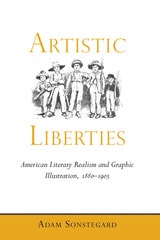
Artistic Liberties
American Literary Realism and Graphic Illustration, 1880-1905Adam Sonstegard
University of Alabama Press, 2013
Though today we commonly read major works of nineteenth-century American literature in unillustrated paperbacks or anthologies, many of them first appeared as magazine serials, accompanied by ample illustrations that sometimes made their way into the serials’ first printings as books. The graphic artists creating these illustrations often visually addressed questions that the authors had left for the reader to interpret, such as the complexions of racially ambiguous characters in Uncle Tom’s Cabin. The artists created illustrations that depicted what outsiders saw in Huck and Jim in Adventures of Huckleberry Finn, rather than what Huck and Jim learned to see in one another. These artists even worked against the texts on occasion—for instance, when the illustrators reinforced the same racial stereotypes that writers such as Paul Laurence Dunbar had intended to subvert in their works.
Authors of American realism commonly submitted their writing to editors who allowed them little control over the aesthetic appearance of their work. In his groundbreaking Artistic Liberties, Adam Sonstegard studies the illustrations from these works in detail and finds that the editors employed illustrators who were often unfamiliar with the authors’ intentions and who themselves selected the literary material they wished to illustrate, thereby taking artistic liberties through the tableaux they created.
Sonstegard examines the key role that the appointed artists played in visually shaping narratives—among them Mark Twain’s Pudd’nhead Wilson, Stephen Crane’s The Monster, and Edith Wharton’s The House of Mirth—as audiences tended to accept their illustrations as guidelines for understanding the texts. In viewing these works as originally published, received, and interpreted, Sonstegard offers a deeper knowledge not only of the works, but also of the realities surrounding publication during this formative period in American literature.
As American as Mom, Baseball, and Apple Pie
Constructing Community in Contemporary American Horror FictionLinda J. Holland-Toll
University of Wisconsin Press, 2001
Ashes Taken for Fire
Aesthetic Modernism and the Critique of IdentityKevin M. Bell
University of Minnesota Press, 2007
At Home in Diaspora
Black International WritingWendy Walters
University of Minnesota Press, 2005
In At Home in Diaspora, Wendy Walters investigates the work of Himes, Cliff, and three other twentieth-century black international writers—Caryl Phillips, Simon Njami, and Richard Wright—who have lived in and written from countries they do not call home. Unlike other authors in exile, those of the African diaspora are doubly displaced, first by the discrimination they faced at home and again by their life abroad. Throughout, Walters suggests that in the absence of a recoverable land of origin, the idea of diaspora comes to represent a home that is not singular or exclusionary. In this way, writing in exile is much more than a literary performance; it is a profound political act.
Wendy W. Walters is assistant professor of literature at Emerson College.
At Home, At War
Domesticity and World War I in American LiteratureJennifer Haytock
The Ohio State University Press, 2003
Autistic Disturbances
Theorizing Autism Poetics from the DSM to Robinson CrusoeJulia Miele Rodas
University of Michigan Press, 2018