Results by title
9 books match the query 'Analytic'
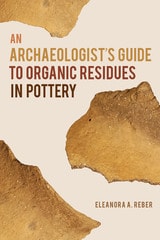
An Archaeologist's Guide to Organic Residues in Pottery
Eleanora A. Reber
University of Alabama Press, 2022
Unlock the chemical secrets of ancient pottery in this guide for mastering organic residue pottery analysis.
Pottery analysis is a crucial component of excavating an archaeological site. Organic residues in pottery are made up of chemicals that absorb into pots over their lifetime. These residues can reveal what people ate, whether different types of vessels were used for different cooking or foodstuffs preparation, and whether “elite” vessels were in use.
Organic residue analysis is a technical specialty that blends an unusual type of instrumental organic chemistry and archaeology. Because it is considered an obscure technique, archaeologists of all degrees of experience tend to struggle with how to apply the technology to archaeological questions and how to sample effectively in the field to answer these questions.
Eleanora A. Reber’s An Archaeologist’s Guide to Organic Residues in Pottery is a user-friendly resource for all archaeologists. Composed of case studies gleaned from Reber’s more than twenty years of archaeological research, this guide covers the range of residues encountered in the field and explains the methods and application of organic residue analysis.
Reber illustrates the useful aspects of residue analysis, such as compound-specific isotope analysis for the identification of traces of maize and marine resources, conifer resins, and the psychoactive alkaloid biomarkers caffeine and nicotine. Special attention is paid to sampling and construction of meaning as well as research questions to help field archaeologists integrate residue analysis seamlessly into their projects

Human Identity
Claude Romano, Samuel R. Webb
Northwestern University Press, 2027
Examining philosophical views of human identity and calling for a shift in how we discuss this essential concept
The problem of identity is one of the most debated contemporary issues in philosophy and the social sciences. Human Identity does not approach this question from a sociological or political position but rather seeks to take a step away from the dominant approach in metaphysics and analytical philosophy, putting forward a dialogical concept of identity inspired mainly by the phenomenological-hermeneutic tradition. Claude Romano argues that the question of identity can only be satisfactorily formulated from the point of view of an intrinsically social understanding of the human being: The identity that matters in our lives is the one we can assume before others in truthful conduct and thus the one for which we can bear responsibility in the first person.
Romano carefully examines the full historical sweep of the philosophy of identity, referencing not only classic thinkers, including Descartes, Locke, Kant, and Husserl, but also contemporary interlocutors, such as Richard Moran and Charles Larmore. He engages in a sustained dialogue with these fellow philosophers, historical and current, while arguing for a complete paradigm shift in our approach to identity. Romano contends that we need to move on from the question Who?, as used by a prosecutor or judge to identify a guilty party, and instead look to the question used by Montaigne to define himself: Who am I?
Imagining Otherwise
Metapsychology and the Analytic A PosterioriAndrew Cutrofello
Northwestern University Press, 1997
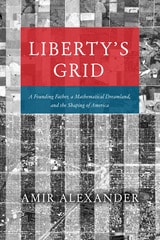
Liberty's Grid
A Founding Father, a Mathematical Dreamland, and the Shaping of AmericaAmir Alexander
University of Chicago Press, 2024
Seen from an airplane, much of the United States appears to be a gridded land of startling uniformity. Perpendicular streets and rectangular fields, all precisely measured and perfectly aligned, turn both urban and rural America into a checkerboard landscape that stretches from horizon to horizon. In evidence throughout the country, but especially the West, the pattern is a hallmark of American life. One might consider it an administrative convenience—an easy way to divide land and lay down streets—but it is not. The colossal grid carved into the North American continent, argues historian and writer Amir Alexander, is a plan redolent with philosophical and political meaning.
In 1784 Thomas Jefferson presented Congress with an audacious scheme to reshape the territory of the young United States. All western lands, he proposed, would be inscribed with a single rectilinear grid, transforming the natural landscape into a mathematical one. Following Isaac Newton and John Locke, he viewed mathematical space as a blank slate on which anything is possible and where new Americans, acting freely, could find liberty. And if the real America, with its diverse landscapes and rich human history, did not match his vision, then it must be made to match it.
From the halls of Congress to the open prairies, and from the fight against George III to the Trail of Tears, Liberty’s Grid tells the story of the battle between grid makers and their opponents. When Congress endorsed Jefferson’s plan, it set off a struggle over American space that has not subsided. Transcendentalists, urban reformers, and conservationists saw the grid not as a place of possibility but as an artificial imposition that crushed the human spirit. Today, the ideas Jefferson associated with the grid still echo through political rhetoric about the country’s founding, and competing visions for the nation are visible from Manhattan avenues and Kansan pastures to Yosemite’s cliffs and suburbia’s cul-de-sacs. An engrossing read, Liberty’s Grid offers a powerful look at the ideological conflict written on the landscape.

Nature as Event
The Lure of the PossibleDidier Debaise
Duke University Press, 2017
Philosophical Topics 27.2
The Intersection of Analytic and Continental PhilosophyHubert L. Dreyfus
University of Arkansas Press, 1999
Reflections on Frege's Philosophy
Reinhardt Grossmann
Northwestern University Press, 1969
Self-Awareness and Alterity
A Phenomenological InvestigationDan Zahavi
Northwestern University Press, 2020
As a contribution to the current philosophical debate concerning self-awareness, the book presents a comprehensive reconstruction of Husserl’s theory of pre-reflective self-awareness, thereby criticizing a number of prevalent interpretations. In addition, Zahavi also offers a systematic discussion of a number of phenomenological insights related to the issue of self-awareness, including analyses of the temporal, intentional, reflexive, bodily, and social nature of the self.
The new edition of this prize-winning book has been updated and revised, and all quotations have been translated into English. It also contains a new preface in which Zahavi traces the developments of the debates around self-awareness over the last twenty years and situates this book in the context of his subsequent work.
The Philosophical Structure of Historical Explanation
Paul A. Roth
Northwestern University Press, 2019
In The Philosophical Structure of Historical Explanation, Paul A. Roth resolves disputes persisting since the nineteenth century about the scientific status of history. He does this by showing why historical explanations must take the form of a narrative, making their logic explicit, and revealing how the rational evaluation of narrative explanation becomes possible. Roth situates narrative explanations within a naturalistic framework and develops a nonrealist (irrealist) metaphysics and epistemology of history—arguing that there exists no one fixed past, but many pasts. The book includes a novel reading of Thomas S. Kuhn’s The Structure of Scientific Revolutions, showing how it offers a narrative explanation of theory change in science. This book will be of interest to researchers in historiography, philosophy of history, philosophy of science, philosophy of social science, and epistemology.