Results by title
2 books match the query 'Anarchist'
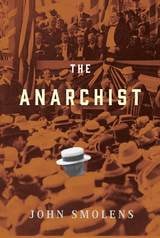
The Anarchist
John Smolens
Michigan State University Press, 2018
On a stifling afternoon in September 1901, a young anarchist, Leon Czolgosz, waits in line to meet President William McKinley at the Pan-American Exposition in Buffalo. Czolgosz’s right hand is wrapped in a handkerchief and held across his chest as though it were in a sling. But the handkerchief conceals a .32-caliber revolver. When the president greets him, Czolgosz fires two shots. The nation quickly plummets into fear and anger. A week later, a rioting mob attempts to lynch McKinley’s assassin, and across the country, political dissidents such as the notorious Emma Goldman are arrested. Driven by a sense of duty and his love for a beautiful Russian prostitute, Czolgosz’s confidant, Moses Hyde, infiltrates an anarchist group as it sets in motion a deadly scheme designed to push the country into a state of terror. The Anarchist brilliantly renders a haunting and belligerent twentieth-century landscape teeming with corrupt politicians, dissidents, and immigrants eager for a fresh start in an America where every allegiance is questioned, and every hope and aspiration comes at a price.
[more]
The Communal Experience
Anarchist and Mystical Communities in Twentieth Century AmericaLaurence R. Veysey
University of Chicago Press, 1978
The original impulse for groups to separate from society and establish communities of their own was religious. Though the religious side of this drive toward separation remains strong, the last two centuries have seen the appearance of secular communities with a socialist or anarchist orientation. In The Communal Experience, nominated for a National Book Award in 1973, Laurence Veysey explores the close resemblances between the secular and religious forms of cultural radicalism through intensive observation of four little-known communities.
Veysey compares the history of secular communities such as the early Ferrer Colony and Modern School, of Shelton, New Jersey, with contemporary anarchist communities in New York, Vermont, and New Mexico. Religious communes—"Communities of Discipline"—such as the Vedanta monasteries of the early twentieth century are compared with contemporary mystical communities in New Mexico. Distinctions between the anarchist and the mystical groups are most obvious from their approach to communal life. As Veysey shows, anarchist communities are loose, unstructured, voluntaristic; the mystics establish more rigid life-styles, focus on spiritual leaders, and hold community a secondary goal to self-realization. In a new preface written for this Phoenix Edition, he describes his return to a New Mexican mystical community and the changes that have occurred in the six years since his last visit.
Veysey compares the history of secular communities such as the early Ferrer Colony and Modern School, of Shelton, New Jersey, with contemporary anarchist communities in New York, Vermont, and New Mexico. Religious communes—"Communities of Discipline"—such as the Vedanta monasteries of the early twentieth century are compared with contemporary mystical communities in New Mexico. Distinctions between the anarchist and the mystical groups are most obvious from their approach to communal life. As Veysey shows, anarchist communities are loose, unstructured, voluntaristic; the mystics establish more rigid life-styles, focus on spiritual leaders, and hold community a secondary goal to self-realization. In a new preface written for this Phoenix Edition, he describes his return to a New Mexican mystical community and the changes that have occurred in the six years since his last visit.
[more]