Results by title
4 books match the query 'Ancient Mediterranean'
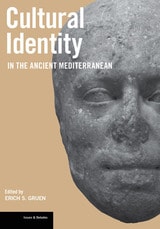
Cultural Identity in the Ancient Mediterranean
Erich S. Gruen
J. Paul Getty Trust, The, 2010
Cultural identity is a slippery and elusive concept. When applied to the collective self-consciousness among peoples or nations, it becomes all the more difficult to define or grasp. In recent decades scholars have focused on the “other”—the alien, the unfamiliar, the different, perceived or conceived as the opposite—to highlight the virtues and advantages of the self. While this influential idea continues to hold sway, the time has come for a more nuanced and complex understanding of how the various societies of the ancient Mediterranean shaped their sense of identity.
The twenty-four essays in this volume examine the subject from a variety of angles. They encompass a broad range of cultures—Greek, Persian, Jewish, Phoenician, Egyptian, Roman, Gallic, and German—and an impressive array of topics. The essays attest to a diversity of attitudes toward other peoples that underscore distinctiveness or discover connectiveness or sometimes both. They show, above all, that the twists and turns that accompanied the development of a collective consciousness found no smooth path.
Ethnic Relations in the Ancient Mediterranean
Social Life Under EmpirePhilip A. Harland
University of Chicago Press, 2026
With this book, Philip A. Harland presents a large-scale rereading of social and cultural life in the eastern part of the ancient Mediterranean in particular, examining social interactions among peoples, from culturally dominant groups to minority populations. Harland assesses literary and archaeological evidence to yield fresh insights into the dynamics of ethnic relations in the region and to explore how the population navigated questions of identification, differentiation, categorization, stratification, criminalization, and population production.
Harland considers encounters between peoples as well as their representations of one another, reframing the social landscape of the ancient world by focusing on the influence and ubiquity of the ethnographic imagination between the fifth century BCE and the third century CE. Drawing insights from anthropology, sociology, and postcolonial studies, Harland offers close readings of papyri, inscriptions, monuments, sculptures, and other materials that reflect interactions between different populations at all levels of society. He gives careful attention to the perspectives of enslaved, immigrant, and subject peoples, including Egyptians, Babylonians, Syrians, and Judeans under Persian, Hellenistic, or Roman rule.
Offering an innovative reading of social and cultural life from the ground up, this book reveals the extent to which ethnographic thinking structured the sociocultural landscape of the ancient world.
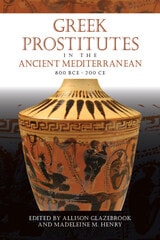
Greek Prostitutes in the Ancient Mediterranean, 800 BCE–200 CE
Allison Glazebrook
University of Wisconsin Press, 2011
Greek Prostitutes in the Ancient Mediterranean, 800 BCE–200 CE challenges the often-romanticized view of the prostitute as an urbane and liberated courtesan by examining the social and economic realities of the sex industry in Greco-Roman culture. Departing from the conventional focus on elite society, these essays consider the Greek prostitute as displaced foreigner, slave, and member of an urban underclass.
The contributors draw on a wide range of material and textual evidence to discuss portrayals of prostitutes on painted vases and in the literary tradition, their roles at symposia (Greek drinking parties), and their place in the everyday life of the polis. Reassessing many assumptions about the people who provided and purchased sexual services, this volume yields a new look at gender, sexuality, urbanism, and economy in the ancient Mediterranean world.
Perfumed
The Story of Fragrance in the Ancient MediterraneanAnnette Giesecke
J. Paul Getty Trust, The, 0
A heady look at the fascinating world of perfumes, incense, and other aromatics in the ancient Mediterranean and their vibrant and sometimes violent history.
Perfumed invites you to breathe deeply and inhale the incense burning on the altars of the Greeks, perfumes sprinkled on spectators in Roman amphitheaters or wafting from the robes of Persian kings, and unguents filling Egyptian tombs. Though we don’t know who first burned a fragrant branch to perfume their dwelling or rubbed an aromatic petal against their skin, evidence demonstrates that such practices were ubiquitous by the Bronze Age.
- Opens with a richly illustrated overview of aromatics in Mesopotamia, Persia, Egypt, Greece, and Roman Italy.
- Explores the role fragrance played in all aspects of daily life and details major ingredients, including balsam, frankincense, rose, myrrh, saffron, and more.
- Features vivid passages from ancient sources, including perfume recipes and intriguing anecdotes such as the historian Herodotus’s account of winged serpents guarding frankincense trees in Arabia or Pliny the Elder’s claim that the emperor Nero burned a year’s harvest of frankincense for his wife’s funeral (after likely murdering her).
- Contains over 80 images drawn from a diverse range of ancient sources and archaeological evidence.
Experience the ancient world through its most evocative sense. Best-selling author Annette Giesecke’s Perfumed is essential reading for anyone with an interest in plants, perfumes, and other aromatics, as well as the rich, interrelated cultures of the Mediterranean.