Results by title
6 books match the query 'Ancient Times'

Japanese Demon Lore
Oni from Ancient Times to the PresentNoriko Reider
Utah State University Press, 2010
Oni, ubiquitous supernatural figures in Japanese literature, lore, art, and religion, usually appear as demons or ogres. Characteristically threatening, monstrous creatures with ugly features and fearful habits, including cannibalism, they also can be harbingers of prosperity, beautiful and sexual, and especially in modern contexts, even cute and lovable. There has been much ambiguity in their character and identity over their long history. Usually male, their female manifestations convey distinctivly gendered social and cultural meanings.
Oni appear frequently in various arts and media, from Noh theater and picture scrolls to modern fiction and political propaganda, They remain common figures in popular Japanese anime, manga, and film and are becoming embedded in American and international popular culture through such media. Noriko Reiderýs book is the first in English devoted to oni. Reider fully examines their cultural history, multifaceted roles, and complex significance as "others" to the Japanese.

Man’s Quest for Political Knowledge
The Study and Teaching of Politics in Ancient TimesWilliam Anderson
University of Minnesota Press, 1964
Man's Quest for Political Knowledge was first published in 1964. Minnesota Archive Editions uses digital technology to make long-unavailable books once again accessible, and are published unaltered from the original University of Minnesota Press editions.
Considering the importance of political science as an academic subject in our time, it is surprising that more attention has not been given, until now, to the history of political study and teaching. As Professor Anderson's book makes clear, an understanding of this history throws light on questions significantly related to basic problems of contemporary political science.
By placing in their historical context pertinent developments in ancient times, Professor Anderson shows how the study and teaching of politics may flourish under certain conditions and falter or fail under others. Throughout the book he demonstrates the truth of what Aristotle said about the study of politics: "In this subject as in others the best method of investigation is to study things in the process of development from the beginning."
In early chapters the author examines three literate societies of the ancient Near East—Mesopotamia, Egypt, and Israel. He then discusses, in the major section of the book, the accomplishments of the Greeks, who, with their many self-governing city-states and their secular attitude toward politics, opened up the study of politics in a realistic way. Here he gives Aristotle the most prominent role and finds Plato less important than most scholars might expect. Finally, he traces the decline of the political study and teaching in the Hellenistic period and in the time of the Roman Empire.
The volume will be of particular interest not only to political scientists but to historians, philosophers, and classical scholars.

The Book of Looms
A History of the Handloom from Ancient Times to the PresentEric Broudy
University Press of New England, 1993
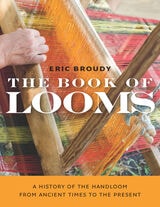
The Book of Looms
A History of the Handloom from Ancient Times to the PresentEric Broudy
Brandeis University Press, 2021
The handloom—often no more than a bundle of sticks and a few lengths of cordage—has been known to almost all cultures for thousands of years. Eric Broudy places the wide variety of handlooms in their historical context. What influenced their development? How did they travel from one geographic area to another? Were they invented independently by different cultures? How have modern cultures improved on ancient weaving skills and methods? Broudy shows how virtually every culture has woven on handlooms. He highlights the incredible technical achievement of early cultures that created magnificent textiles with the crudest of tools and demonstrates that modern technology has done nothing to surpass their skill or inventiveness.
The Problem with Personalization
How Advertisers Learned to Make and Break Us from Ancient Times to the AI AgeJoseph Turow
University of Chicago Press, 2026
A respected voice on technology shows how seemingly simple ads help dismantle democracy and public discourse.
Whether you’re intentionally shopping or casually browsing social media, something is following you: ads. Their creators seem to know your income bracket, politics, age, location, medical conditions, and tastes in clothing, food, and romantic partners. As advertising firms use predictive AI to discover your hot buttons and generative AI to push them, your online world becomes an increasingly bespoke—and isolated—place. The fervid competition around personalization in digital marketing has given rise to an ecosystem of advertisers, media outlets, tech companies, and retailers who monetize your data while threatening the health of our media, discourse, and sense of community. In this urgent book, award-winning author Joseph Turow shows how we got here, and how to change direction.
The Problem with Personalization shatters common beliefs about advertising history by showing that individualized ads are not new. Today’s AI-enabled advertisers draw on past aspirations and assumptions about personalization while weaponizing data in unprecedented ways that drive social fragmentation and the disappearance of shared social reality. Informed by interviews with marketing insiders and covering the latest technology advances, Turow accessibly explains how artificial intelligence sifts through our data to tag and target us wherever we go with personalized videos, pictorial billboards, audio messages, and more. A logical next step for advertiser support is tailored entertainment and news, a shift that further destroys the common ground necessary for a functioning democracy.
A must-read for all who care about the future of public discourse, The Problem with Personalization reveals how targeted advertising has altered how we’re seen and what we see in return.
The Problem with Personalization
How Advertisers Learned to Make and Break Us from Ancient Times to the AI AgeJoseph Turow
University of Chicago Press, 2026
A respected voice on technology shows how seemingly simple ads help dismantle democracy and public discourse.
Whether you’re intentionally shopping or casually browsing social media, something is following you: ads. Their creators seem to know your income bracket, your tastes in clothing, food, location, politics, age, medical conditions, and romantic partners. As predictive AI tells firms what your hot buttons are and generative AI produces messages tailored to those buttons, your online world becomes an increasingly comfortable—and isolated—place. The fervid competition around personalization in digital marketing, now ubiquitous, has given rise to an ecosystem of advertisers, media outlets, tech companies, and retailers who monetize your data, while threatening the health of our media, our discourse, and our sense of community. In this urgent book, award-winning author Joseph Turow shows how we got here, and how to change direction.
The Problem with Personalization shatters common beliefs about advertising history by showing that individualizing ads is not new. Today’s high-velocity AI versions draw on past aspirations and assumptions about personalization while weaponizing it in unprecedented ways that drive social fragmentation and the disappearance of shared social reality. Informed by interviews with marketing insiders and covering the latest technology advances, Turow accessibly explains how artificial intelligence sifts our data to tag and target us wherever we go with personalized videos, pictorial billboards, audio messages, and more. A logical next step for advertiser support is tailored entertainment and news, a shift that further destroys the common ground necessary for a functioning democracy.
A must-read for all who care about the future of public discourse, The Problem with Personalization reveals how targeted advertising has altered how we’re seen and what we see in return.