Results by title
8 books match the query 'Andalusia'

BULLFIGHT
Garry Marvin
University of Illinois Press, 1994
public celebration, describing and analyzing the corrida in a way not previously attempted in English.
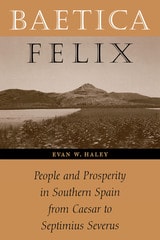
Baetica Felix
People and Prosperity in Southern Spain from Caesar to Septimius SeverusBy Evan W. Haley
University of Texas Press, 2003
Baetica, the present-day region of Andalusia in southern Spain, was the wealthiest province of the Roman Empire. Its society was dynamic and marked by upward social and economic mobility, as the imperial peace allowed the emergence of a substantial middle social and economic stratum. Indeed, so mutually beneficial was the imposition of Roman rule on the local population of Baetica that it demands a new understanding of the relationship between Imperial Rome and its provinces.
Baetica Felix builds a new model of Roman-provincial relations through a socio-economic history of the province from Julius Caesar to the end of the second century A.D. Describing and analyzing the impact of Roman rule on a core province, Evan Haley addresses two broad questions: what effect did Roman rule have on patterns of settlement and production in Baetica, and how did it contribute to wealth generation and social mobility? His findings conclusively demonstrate that meeting the multiple demands of the Roman state created a substantial freeborn and ex-slave "middle stratum" of the population that outnumbered both the super-rich elite and the destitute poor.
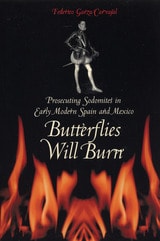
Butterflies Will Burn
Prosecuting Sodomites in Early Modern Spain and MexicoBy Federico Garza Carvajal
University of Texas Press, 2003
As Spain consolidated its Empire in the sixteenth and seventeenth centuries, discourses about the perfect Spanish man or "Vir" went hand-in-hand with discourses about another kind of man, one who engaged in the "abominable crime and sin against nature"—sodomy. In both Spain and Mexico, sodomy came to rank second only to heresy as a cause for prosecution, and hundreds of sodomites were tortured, garroted, or burned alive for violating Spanish ideals of manliness. Yet in reality, as Federico Garza Carvajal argues in this groundbreaking book, the prosecution of sodomites had little to do with issues of gender and was much more a concomitant of empire building and the need to justify political and economic domination of subject peoples.
Drawing on previously unpublished records of some three hundred sodomy trials conducted in Spain and Mexico between 1561 and 1699, Garza Carvajal examines the sodomy discourses that emerged in Andalucía, seat of Spain's colonial apparatus, and in the viceroyalty of New Spain (Mexico), its first and largest American colony. From these discourses, he convincingly demonstrates that the concept of sodomy (more than the actual practice) was crucial to the Iberian colonizing program. Because sodomy opposed the ideal of "Vir" and the Spanish nationhood with which it was intimately associated, the prosecution of sodomy justified Spain's domination of foreigners (many of whom were represented as sodomites) in the peninsula and of "Indios" in Mexico, a totally subject people depicted as effeminate and prone to sodomitical acts, cannibalism, and inebriation.
Jamón and Halal
Lessons in Tolerance from Rural AndalucíaChristina Civantos
Amherst College Press, 2022
“This is a book that is both a personal account and a rigorous academic study. It is a model for the kind of engaged humanistic work we are now beginning to see as a hallmark of the post-theory moment, and one that remembers the hard lessons of ethnographic fieldwork as well as the challenging foundational work from philosophically-tinged theory.” —Debra A. Castillo, Cornell University
“Filled with rich descriptions and interwoven personal anecdotes of both Civantos and her interlocuters that complement scholarly analysis.” —Jessica R. Boll, Carroll University
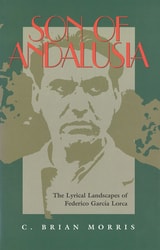
Son of Andalusia
The Lyrical Landscapes of Federico Garcia LorcaC. Brian Morris
Vanderbilt University Press, 1997
Andalusia was the central feature and influence in the life and writings of the twentieth-century author, musician, and artist, Federico Garcia Lorca. Rooted in his native region, which both captivated and shaped him, Lorca maintained that "The better a writer learns how to interpret the landscape, the greater the artist he will be." Blessed with an acute historical sense of a region where the past is both present and enduring, Lorca proved himself sensitive and articulate enough to interpret "the emotion of the landscape" in all of his creative work.
For Lorca, Andalusia was a landscape not only of place but of people. Through exhaustive research and painstaking readings in a wide range of anthologies of Andalusian folk culture and collections of popular verse, author C. Brian Morris reveals how Lorca transformed and veiled real people and real places in his poetry and drama. Exploring subjects ranging from medieval ballads to flower and plant lore, he further investigates the relationship between Lorca and the writings of other Andalusian-born authors, as well as traditional Andalusian poetry and song. Juxtaposing this material with well-chosen quotations from Lorca's works, Morris provides myriad examples of analogy and reminiscence that will inform and enlighten both general readers and Lorca specialists.
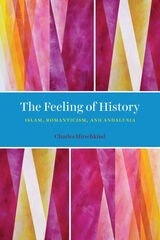
The Feeling of History
Islam, Romanticism, and AndalusiaCharles Hirschkind
University of Chicago Press, 2021
Against this xenophobic tendency, The Feeling of History examines the idea of Andalucismo—a modern tradition founded on the principle that contemporary Andalusia is connected in vitally important ways with medieval Islamic Iberia. Charles Hirschkind explores the works and lives of writers, thinkers, poets, artists, and activists, and he shows how, taken together, they constitute an Andalusian sensorium. Hirschkind also carefully traces the various itineraries of Andalucismo, from colonial and anticolonial efforts to contemporary movements supporting immigrant rights. The Feeling of History offers a nuanced view into the way people experience their own past, while also bearing witness to a philosophy of engaging the Middle East that experiments with alternative futures.
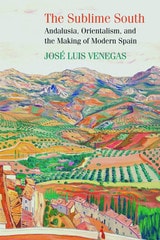
The Sublime South
Andalusia, Orientalism, and the Making of Modern SpainJose Luis Venegas
Northwestern University Press, 2018
The Sublime South: Andalusia, Orientalism, and the Making of Modern Spain is the first systematic study on cultural images of Andalusia as Spain’s “Orient” and the impact they have had on nation-building and modernization since the late nineteenth century. While a wealth of studies have examined how northern Europeans from the Romantic period viewed Spain and Andalusia as Europe’s Orient, little attention has been paid to how contemporary Spanish artists and intellectuals assimilated Romantic legacies to engage in an internal form of orientalism.
José Luis Venegas deftly explores Spain’s shifting engagements with oriental identity and otherness by looking, not just beyond national, ethnic, and racial borders, but at a territory that is institutionally embedded in the nation-state while symbolically placed between inclusion and abjection. The Sublime South shifts the focus and scale of Edward Said’s notion of orientalism by examining how it evolves and manifests transnationally, as the result of European colonialism in Africa and Asia, and intra-nationally, in a European yet orientalized country. Finally, Venegas challenges ethnocentric notions of Iberian cultures and fosters an understanding of the encounters between Western and Muslim cultures beyond opposing, and often mutually negating, essentialisms.

White Gypsies
Race and Stardom in Spanish MusicalsEva Woods Peiró
University of Minnesota Press, 2012
Little has been written about the Spanish film musical, a genre usually associated with the early Franco dictatorship and dismissed by critics as reactionary, escapist fare. A timely and valuable corrective, White Gypsies shows how the Spanish folkloric musical films of the 1940s and ’50s are inextricably tied to anxious concerns about race—especially, but not only, Gypsiness.
Focusing on the processes of identity formation in twentieth-century Spain—with multifaceted readings of the cinematic construction of class, gender, and sexuality—Eva Woods Peiró explores how these popular films allowed audiences to negotiate and imaginatively, at times problematically, resolve complex social contradictions. The intricate interweaving of race and modernity is particularly evident in her scrutiny of a striking popular phenomenon: how the musicals progressively whitened their stars, even as their story lines became increasingly Andalusianized and Gypsified.
White Gypsies reveals how these imaginary individuals constituted a veritable cultural barometer of how racial thinking was projected and understood across a broad swath of popular Spanish cinema.