Results by title
266 books match the query 'Anecdotes' and 26 start with a
A Beautiful Sickness
Reflections on the Sweet ScienceThomas Hauser
University of Arkansas Press, 2001
A Boyhood Dream Realized
Half a Century of Texas Culture, One Newspaper Column at a TimeBurle Pettit
University of North Texas Press, 2019
A Braided Heart
Essays on Writing and FormBrenda Miller
University of Michigan Press, 2021
A Braided Heart provides a friendly, personal, and smart guide to the writing life. It also offers clear and original instruction on craft elements at the forefront of today’s emerging forms in creative nonfiction: from the short-short, to the braided form, to the hermit crab essay. An acknowledged expert in these forms, Brenda Miller gives writers practical advice on how to sustain and invigorate their writing practice, while also encouraging readers to explore their own writing lives.
A Generous Nature
Lives Transformed by OregonMarcy Cottrell Houle
Oregon State University Press, 2019
A Generous Nature: Lives Transformed by Oregon offers profiles of twenty-one conservationists and activists who have made enduring contributions to the preservation of Oregon’s wild and natural places and high quality of life. These stories speak to their courage, foresight, and actions—at times against great odds— to enact legislation and motivate others to cherish and protect the places that make Oregon unique.
Taken from personal interviews conducted by the author over a decade, these stories will help readers understand the histories of Oregon’s exceptional places, innovative planning efforts, and laws. They provide insight into the principles and values that motivated individuals to preserve the beauty and natural resources of Oregon, craft legislation to further protect them, and educate others about their value. Houle features locations as diverse as the Columbia River Gorge Natural Scenic Area, the wild and scenic Sandy River, and Tryon Creek State Park, along with background on critical laws and organizations such as the Beach Bill, Diack Act, Senate Bill 100, SOLVE, and the High Desert Partnership.
These stories do more than educate. They will inspire readers and demonstrate that individually we can make a difference. A Generous Nature is a crucial reminder of our responsibility to stand for and defend the places, ideals, and laws that make Oregon a progressive model for the rest of the nation.
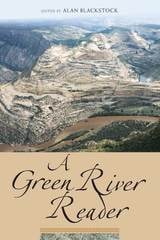
A Green River Reader
Alan Blackstock
University of Utah Press, 2005
"There is something ominous about a swift river, and something thrilling about a river of any kind."—from Beyond the Hundredth Meridian by Wallace Stegner
Beginning above Flaming Gorge Dam in southwestern Wyoming, the Green River traverses the complete variety of terrain on the Colorado Plateau before joining the Colorado River above Cataract Canyon in southeastern Utah. Like its more famous cousin, the Colorado, the Green has captivated, capsized, and cajoled all types of characters with challenges and beauty to match its geologic variety.
In A Green River Reader editor Alan Blackstock brings this mysterious, magnificent, thrilling river to the reader with an interpretive guide that will inform both river novices and river veterans. Assembled here is every significant written testament to this "awesome ditch," from Domínguez-Escalante to Kit Carson and John C. Frémont; to contemporary American naturalists and writers including Wallace Stegner, Bernard DeVoto, David Brower, Ann Zwinger, Ellen Melloy, and Edward Abbey. Those with a story to tell—those who trapped the Green’s beavers, endured its wild rapids, were humbled by its imposing canyon walls, fought for its beautiful landscapes, or whose "pulse was hurried" by the "lofty chasms, walled in by precipices of red rock"—are collected here.
If you’re headed down the Green, make sure that your dry bag or ammo can has room for just one more thing, your copy of A Green River Reader.
A Grouse Hunter’s Almanac
The Other Kind of HuntingMark Parman
University of Wisconsin Press, 2017
"Notable and quotable. Parman stakes out original territory and provides a vivid snapshot of the Northwoods."—John Motoviloff, author of Wisconsin Wildfoods: 100 Recipes for Badger State Bounties
"Extremely rich and detailed. Parman puts forth original and genuine experiences."—Richard Yatzeck, author of Hunting the Edges
A Place All Our Own
Lives Entwined in a Desert GardenMary Irish
University of Arizona Press, 2012
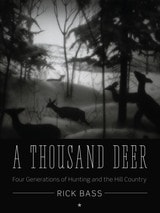
A Thousand Deer
Four Generations of Hunting and the Hill CountryBy Rick Bass
University of Texas Press, 2012
In November, countless families across Texas head out for the annual deer hunt, a ritual that spans generations, ethnicities, socioeconomics, and gender as perhaps no other cultural experience in the state. Rick Bass’s family has returned to the same hardscrabble piece of land in the Hill Country—“the Deer Pasture”—for more than seventy-five years. In A Thousand Deer, Bass walks the Deer Pasture again in memory and stories, tallying up what hunting there has taught him about our need for wildness and wilderness, about cycles in nature and in the life of a family, and particularly about how important it is for children to live in the natural world.
The arc of A Thousand Deer spans from Bass’s boyhood in the suburbs of Houston, where he searched for anything rank or fecund in the little oxbow swamps and pockets of woods along Buffalo Bayou, to his commitment to providing his children in Montana the same opportunity—a life afield—that his parents gave him in Texas. Inevitably this brings him back to the Deer Pasture and the passing of seasons and generations he has experienced there. Bass lyrically describes his own passage from young manhood, when the urge to hunt was something primal, to mature adulthood and the waning of the urge to take an animal, his commitment to the hunt evolving into a commitment to family and to the last wild places.
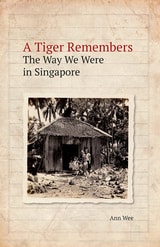
A Tiger Remembers
The Way We Were in SingaporeAnn Wee
National University of Singapore Press, 2017
Wee’s talent is for remembering and paying homage to the things history books often deem insignificant—things that can contain some of the most illuminating details about the day to day inner workings of families from many backgrounds, such as terms of endearment; the emotional nuance in social relations; questions of hygiene; the stories of convicts; tales of ghost wives and changeling babies; anecdotes from rural clan settlements and migrant dormitories; and the migration of families from squatter settlements into public housing. Affectionately observed and wittily narrated, with a deep appreciation of how far Singapore has come, this book brings to life generations of social change through a focus on the institution of the family.

A Wrestling Life 2
More Inspiring Stories of Dan GableDan Gable and Kyle Klingman
University of Iowa Press, 2018
Through stories funny, heartfelt, intense, and always engaging, Gable shares more about the life he has lead and what can be learned from those experiences. He goes on to detail what have come to be known as the Gable Trained principles that he follows to keep his life full of “wins,” the revelations about how to cultivate success at the highest levels, and the reasons behind these steps for living well.
A Wrestling Life spent two months on the New York Times sports bestseller list, and has become an instant classic of sports memoirs. A Wrestling Life 2 is sure to add to Gable’s ever-growing legacy and entertain and inspire wrestling fans everywhere.
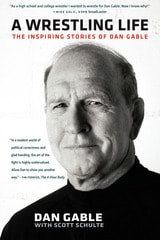
A Wrestling Life
The Inspiring Stories of Dan GableDan Gable and Scott Schulte
University of Iowa Press, 2016
Whether we are athletes or not, we all dream of extreme success and are all looking to make our future the best it can be, but along the way we will undoubtedly need time to recover and rejuvenate. Let these stories inspire you to find your path to strength and achievement along whatever path you take.
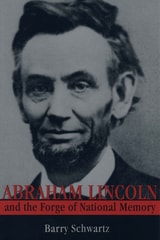
Abraham Lincoln and the Forge of National Memory
Barry Schwartz
University of Chicago Press, 2000
Schwartz draws on a wide array of materials—painting and sculpture, popular magazines and school textbooks, newspapers and oratory—to examine the role that Lincoln's memory has played in American life. He explains, for example, how dramatic funeral rites elevated Lincoln's reputation even while funeral eulogists questioned his presidential actions, and how his reputation diminished and grew over the next four decades. Schwartz links transformations of Lincoln's image to changes in the society. Commemorating Lincoln helped Americans to think about their country's development from a rural republic to an industrial democracy and to articulate the way economic and political reform, military power, ethnic and race relations, and nationalism enhanced their conception of themselves as one people.
Lincoln's memory assumed a double aspect of "mirror" and "lamp," acting at once as a reflection of the nation's concerns and an illumination of its ideals, and Schwartz offers a fascinating view of these two functions as they were realized in the commemorative symbols of an ever-widening circle of ethnic, religious, political, and regional communities. The first part of a study that will continue through the present, Abraham Lincoln and the Forge of National Memory is the story of how America has shaped its past selectively and imaginatively around images rooted in a real person whose character and achievements helped shape his country's future.
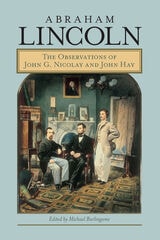
Abraham Lincoln
The Observations of John G. Nicolay and John HayEdited by Michael Burlingame
Southern Illinois University Press, 2007
Editor Michael Burlingame sifted through the original forty-seven-hundred-page work and selected only the personal observations of the secretaries during the Lincoln presidency, placing ten excerpts in chronological order in Abraham Lincoln: The Observations of John G. Nicolay and John Hay. The result is an important collection of Nicolay and Hay’s interpretations of Lincoln’s character, actions, and reputation, framed by Burlingame’s compelling preface, introduction, chapter introductions, and notes. The volume provides vivid descriptions of such events as Election Day in 1860, the crisis at Fort Sumter, the first major battle of the war at Bull Run, and Lincoln’s relationship with Edwin Stanton and George McClellan.
In this clear and captivating new work, Burlingame has made key portions of Nicolay and Hay’s immense biography available to a wide audience of today’s readers.

Across The Red Line
Stories From The Surgical LifeRichard C. Karl
Temple University Press, 2003
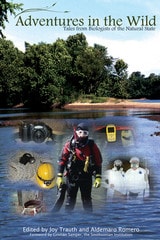
Adventures in the Wild
Tales from Biologists of the Natural StateJoy Trauth
University of Arkansas Press, 2008
Alabama Afternoons
Profiles and ConversationsRoy Hoffman
University of Alabama Press, 2011
Alabama Afternoons is a collection of portraits of many notable Alabamians, famous and obscure, profiled by award-winning journalist and novelist Roy Hoffman. Written as Sunday feature stories for the Mobile Press-Register with additional pieces from the New York Times, Preservation, and Garden & Gun, these profiles preserve the individual stories—and the individual voices within the stories—that help to define one of the most distinctive states in the union.
Hoffman recounts his personal visits with writer Mary Ward Brown in her library in Hamburg, with photographer William Christenberry in a field in Newbern, and with storyteller Kathryn Tucker Windham and folk artist Charlie “Tin Man” Lucas at their neighboring houses in Selma. Also highlighted are the lives of numerous alumni of The University of Alabama—among them Mel Allen, the “Voice of the Yankees” from 1939 to 1964; Forrest Gump author Winston Groom; and Vivian Malone and James Hood, the two students who entered the schoolhouse door in 1963. Hoffman profiles distinguished Auburn University alumni as well, including Eugene Sledge, renowned World War II veteran and memoirist, and Neil Davis, the outspoken, nationally visible editor of the Lee County Bulletin.
Hoffman also profiles major and minor players in the civil rights movement, from Johnnie Carr, raised in segregated Montgomery and later president of the Montgomery Improvement Association; and George Wallace Jr., son of the four-time governor; to Theresa Burroughs, a Greensboro beautician trampled in the march over the Edmund Pettus Bridge; and Diane McWhorter, whose award- winning book explores the trouble- filled Birmingham civil rights experience. Juxtaposed with these are accounts of lesser-known individuals, such as Sarah Hamm, who attempts to preserve the fading Jewish culture in Eufaula; Edward Carl, who was butler and chauffeur to Bellingrath Gardens founder Walter Bellingrath in Theodore; and cousins William Bolton and Herbert Henson, caretakers of the coon dog cemetery in Russellville.
Hoffman’s compilation of life stories creates an engaging and compelling look into what it means to be from, and shaped by, Alabama. “Alabama Afternoons,” he writes in the introduction, “is a small part of the even bigger question of what it means to be an American.”
Read an article about domestic lives by Roy Hoffman in the New York Times here: http://www.nytimes.com/2010/11/25/garden/25Domestic.html
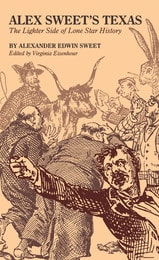
Alex Sweet's Texas
The Lighter Side of Lone Star HistoryBy Alexander Edwin Sweet
University of Texas Press, 1986
Alexander Edwin Sweet (1841-1901) is Texas's own "Sifter," whose humorous columns appeared in the Galveston Daily News in the late 1870s and early 1880s. In his wickedly funny, tongue-in-cheek sketches, readers learned of an astonishing variety of frontier phenomena, some familiar, others downright odd. For example, there was the typical nineteenth-century custom of New Year's Day receptions for bachelor guests only, with refreshments consisting largely of strong drink and equally strong fruitcake. Imbibing a bit more cheer at each stop, according to Sweet, the bachelors brought the last prospective sweethearts they visited New Year's greetings as incoherent as they were heartfelt.
At times Sweet parodied the Yankee image of the typical Texan, whom he described as "half alligator, half human," eating raw buffalo and toting an arsenal of weaponry like a "perambulating gun-rack." But he also did as much as any writer to establish and enlarge upon the national image of Texas and Texans. Even the irascible red ant and the other "critters" in Sweet's column were Texas big and Texas-fabulous!
In 1881 Sweet co-founded Texas Siftings, a humor magazine that moved from Austin to New York to become one of the most popular periodicals of its kind in the United States. From Texas Siftings, from Sweet's two published books (one called by John Jenkins in Basic Texas Books the "best volume of 19th century Texas humor"), and from many never-before-collected newspaper columns, editor Virginia Eisenhour has assembled an Alex Sweet sampler that presents the very best of the timeless humorist's work. The result—Alex Sweet's Texas—clearly demonstrates why the New York Journal pronounced Sweet "second to no living writer in freshness, originality, sparkling wit, and refined humor." A century later, that wit still sparkles and is guaranteed to delight Texans present as it once did Texans past.
Always Leading, Forever Valiant
Stories of the University of Michigan, 1817–2017Edited by Kim Clarke
University of Michigan Press, 2017
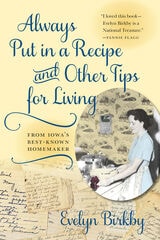
Always Put in a Recipe and Other Tips for Living from Iowa's Best-Known Homemaker
Evelyn Birkby
University of Iowa Press, 2012
Tales of separating cream on the back porch at Cottonwood Farm, raising a teddy bear of a puppy in addition to a menagerie of other animals, surviving an endless procession of Cub and Boy Scouts, appreciating a little boy’s need to take his toy tractor to church, blowing out eggs to make an Easter egg tree, shopping for bargains on the day before Christmas, camping in a converted Model T “house car,” and adjusting to the fact of one’s tenth decade of existence all merge to form a world composed of kindness and wisdom with just enough humor to keep it grounded. Recipes for such fare as Evelyn’s signature Hay Hand Rolls prove that the young woman who was daunted by her editor’s advice to “put in a recipe every week” became a talented cook. Each of the more than eighty columns in this warmhearted collection celebrates not a bygone era tinged with sentimentality but a continuing tradition of neighborliness, Midwest-nice and Midwest-sensible.

America's Boardwalks
From Coney Island to CaliforniaLilliefors, James
Rutgers University Press, 2006
In America's Boardwalks, James Lilliefors takes us on a journey along the edges of the country to twelve of its most famous beach towns. Starting in the Northeast with Coney Island, Asbury Park, Atlantic City, Wildwood, and Cape May, we continue south to Rehoboth Beach; Ocean City, Maryland; Virginia Beach; Myrtle Beach; and Daytona Beach. In California, we explore the exotic scenes at Venice Beach and Santa Cruz. Lilliefors traces each town's history from the building of a boardwalk to what are frequently ambitious plans to revitalize and redevelop today. In every case, he shows how the boardwalk has been integral to the area's economic growth, status, and appeal.
This richly documented and illustrated tale, however, tells more than the story of the birth and development of boardwalks. Weaving together observations and conversations with business owners, planners, and strollers themselves, Lilliefors reveals the vitality of the boardwalk as an idea, rather than just as a place. Boardwalks, he argues, are living monuments to American enterprise, a young country's founding dreams, and its unwavering optimism.
Born at a time when the country was busy rebuilding and reinventing itself as an industrial and economic power, these lively seaside destinations seemed to herald a new life of relaxation, recreation, and middle-class prosperity. On the nation's first boardwalk in Atlantic City, you could find everything from a "home of the future," to diving horses, kangaroo boxing, and the world's largest typewriter. With no admission gate, boardwalks were also a thoroughly democratic idea, inviting visitors from all social and economic groups to join the same parade.
Even today, these glittering coastal hubs, with their always unique blends of people, sea spray, shops, inventions, and oddities remain a last frontier-a testament to the power of individuality in an increasingly homogenized world. From Thrasher's French fries in Ocean City to Mack's Pizza in Wildwood and Nathan's hot dogs in Coney Island, people still visit these resorts for products and pleasures that break the otherwise mundane stream of chain restaurants and retailers. Evoking the spirit, tastes, smells, and sounds that have become a beloved part of our nostalgia and that continue to lure new generations, this book is a deserved tribute to America's iconic seaside wonders.

American Paper Mills, 1690–1832
A Directory of the Paper Trade with Notes on Products, Watermarks, Distribution Methods, and Manufacturing TechniquesJohn Bidwell
Dartmouth College Press, 2013
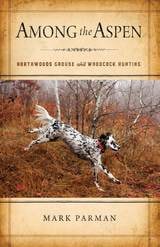
Among the Aspen
Northwoods Grouse and Woodcock HuntingMark Parman
University of Wisconsin Press, 2018
Among the Aspen interweaves tales of companionable dogs, lucky hunts, and favorite coverts where quarry lurks with ruminations on the demise of hunting traditions, the sale of public lands and the privatization of places to hunt, the growing indifference to science, and the loss of wilderness on a planet increasingly transformed by the sprawl of humanity.
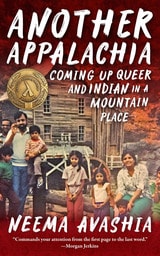
Another Appalachia
Coming Up Queer and Indian in a Mountain PlaceNeema Avashia
West Virginia University Press, 2022
When Neema Avashia tells people where she’s from, their response is nearly always a disbelieving “There are Indian people in West Virginia?” A queer Asian American teacher and writer, Avashia fits few Appalachian stereotypes. But the lessons she learned in childhood about race and class, gender and sexuality continue to inform the way she moves through the world today: how she loves, how she teaches, how she advocates, how she struggles.
Another Appalachia examines both the roots and the resonance of Avashia’s identity as a queer desi Appalachian woman, while encouraging readers to envision more complex versions of both Appalachia and the nation as a whole. With lyric and narrative explorations of foodways, religion, sports, standards of beauty, social media, gun culture, and more, Another Appalachia mixes nostalgia and humor, sadness and sweetness, personal reflection and universal questions.
Another Way the River Has
Taut True Tales from the NorthwestRobin Cody
Oregon State University Press, 2010
Another Way the River Has collects Robin Cody’s finest nonfiction writings, many appearing for the first time in print. Cody’s prose rings with a sense of place. He is a native speaker who probes the streams and woods and salmon that run to the heart of what it means to live and love, to work and play, in Oregon.
His characters—from loggers to fishers to cowboys to the kids on his school bus—are smart and curious, often off-beat, always vivid. Cody brings the ear of a novelist and the eye of a reporter to the people and places that make the Northwest, and Northwest literature, distinctive.
“A rock, you know, will sink like a stone in water. But a flat rock, slung spinningly near the water surface and at an angel parallel to it, will go skipping across the water in defiance of gravity and common sense. How cool is that?! The first time a boy pulls this off ranks just short of first-time sex on the scale of things he will want to do over and over whenever he can and as long as he lives.”
-from “The Clackamas River”
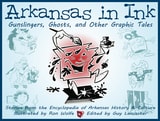
Arkansas in Ink
Gunslingers, Ghosts, and Other Graphic TalesGuy Lancaster
Butler Center for Arkansas Studies, 2014
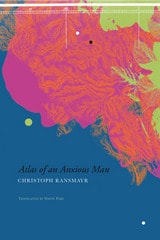
Atlas of an Anxious Man
Christoph Ransmayr
Seagull Books, 2015
Translated by Simon Pare, this unique account follows Ransmayr across the globe: from the shadow of Java’s volcanoes to the rapids of the Mekong and Danube Rivers, from the drift ice of the Arctic Circle to Himalayan passes, and on to the disenchanted islands of the South Pacific. Ransmayr begins again and again with, “I saw. . .” recounting to the reader the stories of continents, eras, and landscapes of the soul. Like maps, the episodes come together to become a book of the world—one that charts the life and death, happiness and fate of people bound up in images of breathtaking beauty.
“One of the German language’s most gifted young novelists.”—Library Journal, on The Terrors of Ice and Darkness