Results by title
23 books match the query 'Animal behavior'

A Foray into the Worlds of Animals and Humans
with A Theory of MeaningJakob von Uexküll
University of Minnesota Press, 2010
A key document in the genealogy of posthumanist thought, A Foray into the Worlds of Animals and Humans advances Uexküll's revolutionary belief that nonhuman perceptions must be accounted for in any biology worth its name; it also contains his arguments against natural selection as an adequate explanation for the present orientation of a species' morphology and behavior. A Theory of Meaning extends his thinking on the umwelt, while also identifying an overarching and perceptible unity in nature. Those coming to Uexküll's work for the first time will find that his concept of the umwelt holds out new possibilities for the terms of animality, life, and the whole framework of biopolitics itself.

A Naturalist in Alaska
Adolph Murie
University of Arizona Press, 1990
"A fascinating study of the life cycles of the animals of Alaska and their inter-relationships. One venturing to capture something of the true beauty of Alaska and its fauna will probably find it in this book."—Journal of the West
"This book should be considerable aid to those who wish to preserve some of the great natural treasures still remaining in Alaska in the face of the inevitable pressures of a growing population. The writing is absolutely first rate. Highly recommended."—Library Journal
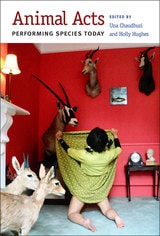
Animal Acts
Performing Species TodayEdited by Una Chaudhuri and Holly Hughes
University of Michigan Press, 2014
We all have an animal story—the pet we loved, the wild animal that captured our childhood imagination, the deer the neighbor hit while driving. While scientific breakthroughs in animal cognition, the effects of global climate change and dwindling animal habitats, and the exploding interdisciplinary field of animal studies have complicated things, such stories remain a part of how we tell the story of being human. Animal Acts collects eleven exciting, provocative, and moving stories by solo performers, accompanied by commentary that places the works in a broader context.
Work by leading theater artists Holly Hughes, Rachel Rosenthal, Deke Weaver, Carmelita Tropicana, and others joins commentary by major scholars including Donna Haraway, Jane Desmond, Jill Dolan, and Nigel Rothfels. Una Chaudhuri’s introduction provides a vital foundation for understanding and appreciating the intersection of animal studies and performance. The anthology foregrounds questions of race, gender, sexuality, class, nation, and other issues central to the human project within the discourse of the “post human,” and will appeal to readers interested in solo performance, animal studies, gender studies, performance studies, and environmental studies.

Animal Minds
Donald R. Griffin
University of Chicago Press, 1992
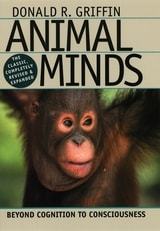
Animal Minds
Beyond Cognition to ConsciousnessDonald R. Griffin
University of Chicago Press, 2001
With this new edition of his classic book, which he has completely revised and updated, Griffin moves beyond considerations of animal cognition to argue that scientists can and should investigate questions of animal consciousness. Using examples from studies of species ranging from chimpanzees and dolphins to birds and honeybees, he demonstrates how communication among animals can serve as a "window" into what animals think and feel, just as human speech and nonverbal communication tell us most of what we know about the thoughts and feelings of other people. Even when they don't communicate about it, animals respond with sometimes surprising versatility to new situations for which neither their genes nor their previous experiences have prepared them, and Griffin discusses what these behaviors can tell us about animal minds. He also reviews the latest research in cognitive neuroscience, which has revealed startling similarities in the neural mechanisms underlying brain functioning in both humans and other animals. Finally, in four chapters greatly expanded for this edition, Griffin considers the latest scientific research on animal consciousness, pro and con, and explores its profound philosophical and ethical implications.
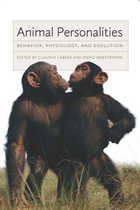
Animal Personalities
Behavior, Physiology, and EvolutionEdited by Claudio Carere and Dario Maestripieri
University of Chicago Press, 2013
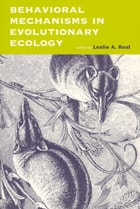
Behavioral Mechanisms in Evolutionary Ecology
Leslie A. Real
University of Chicago Press, 1994
With studies of species ranging from insects to primates, the contributors examine how various animals identify and use environmental resources and deal with ecological constraints, as well as the roles of learning, communication, and cognitive aspects of social interaction in behavioral evolution. Taken together, the chapters demonstrate how the study of internal mechanistic foundations of behavior in relation to their ecological and evolutionary contexts and outcomes provides valuable insight into such behaviors as predation, mating, and dispersal.
Behavioral Mechanisms in Evolutionary Ecology shows how a mechanistic approach unites various levels of biological organization to provide a broader understanding of the biological bases of behavioral evolution.
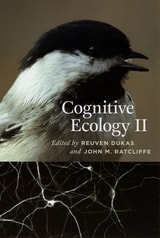
Cognitive Ecology II
Edited by Reuven Dukas and John M. Ratcliffe
University of Chicago Press, 2009
Merging evolutionary ecology and cognitive science, cognitive ecology investigates how animal interactions with natural habitats shape cognitive systems, and how constraints on nervous systems limit or bias animal behavior. Research in cognitive ecology has expanded rapidly in the past decade, and this second volume builds on the foundations laid out in the first, published in 1998.
Cognitive Ecology II integrates numerous scientific disciplines to analyze the ecology and evolution of animal cognition. The contributors cover the mechanisms, ecology, and evolution of learning and memory, including detailed analyses of bee neurobiology, bird song, and spatial learning. They also explore decision making, with mechanistic analyses of reproductive behavior in voles, escape hatching by frog embryos, and predation in the auditory domain of bats and eared insects. Finally, they consider social cognition, focusing on alarm calls and the factors determining social learning strategies of corvids, fish, and mammals.
With cognitive ecology ascending to its rightful place in behavioral and evolutionary research, this volume captures the promise that has been realized in the past decade and looks forward to new research prospects.
Cognitive Ecology
The Evolutionary Ecology of Information Processing and Decision MakingEdited by Reuven Dukas
University of Chicago Press, 1998
Individual chapters consider such issues as the evolution of learning and its influence on behavior; the effects of cognitive mechanisms on the evolution of signaling behavior; how neurobiological and evolutionary processes have shaped navigational activities; functional and mechanical explanations for altered behaviors in response to changing environments; how foragers make decisions and how these decisions are influenced by the risks of predation; and how cognitive mechanisms affect partner choice.
Cognitive Ecology will encourage biologists to consider how animal cognition affects behavior, and will also interest comparative psychologists and cognitive scientists.
Food Hoarding in Animals
Stephen B. Vander Wall
University of Chicago Press, 1990
Drawings, photographs, and appendixes document complex and intrinsically interesting food-hoarding behaviors, and the bibliography of nearly 1,500 sources is itself an invaluable and unique reference.
Foundations of Animal Behavior
Classic Papers with CommentariesEdited by Lynne D. Houck and Lee C. Drickamer
University of Chicago Press, 1996
The papers are divided into six sections, each introduced by prominent researchers. Sections one and two cover the origins and history of the field and the emergence of basic methods and approaches. They provide a background for sections three through six, which focus on development and learning; neural and hormonal mechanisms of behavior; sensory processes, orientation, and communication; and the evolution of behavior.
This outstanding collection will serve as the basis for undergraduate and graduate seminars and as a reference for researchers in animal behavior, whether they focus on ethology, behavioral ecology, comparative psychology, or anthropology.
Published in association with the Animal Behavior Society
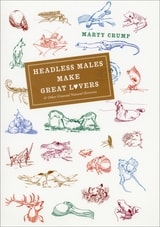
Headless Males Make Great Lovers
And Other Unusual Natural HistoriesMarty Crump
University of Chicago Press, 2005
Headless Males Make Great Lovers and Other Unusual Natural Histories celebrates the extraordinary world of animals with essays on curious creatures and their amazing behaviors. In five thematic chapters, Marty Crump—a tropical field biologist well known for her work with the reproductive behavior of amphibians—examines the bizarre conduct of animals as they mate, parent, feed, defend themselves, and communicate. Crump's enthusiasm for the unusual behaviors she describes-from sex change and free love in sponges to aphrodisiac concoctions in bats-is visible on every page, thanks to her skilled storytelling, which makes even sea slugs, dung beetles, ticks, and tapeworms fascinating and appealing. Steeped in biology, Headless Males Make Great Lovers points out that diverse and unrelated animals often share seemingly bizarre behaviors—evidence, Crump argues, that these natural histories, though outwardly weird, are successful ways of living.
Illustrated throughout, and filled with vignettes of personal and scientific interest, Headless Males Make Great Lovers will enchant the general reader with its tales of blood-squirting horned lizards and intestine-ejecting sea cucumbers—all in the service of a greater appreciation of the diversity of the natural histories of animals.
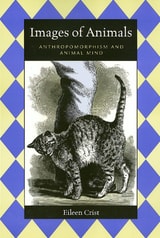
Images Of Animals
Eileen Crist
Temple University Press, 2000
Images of Animals examines the literature of behavioral science, revealing how works with the common aim of documenting animal lives, habits, and instincts describe "realities that are worlds apart." Whether the writer affirms the Cartesian verdict of an unbridgeable chasm between animals and humans or the Darwinian panorama of evolutionary continuity, the question of animal mind is ever present and problematic in behavioral thought. Comparing the naturalist writings of Charles Darwin, Jean Henri Fabre, and George and Elizabeth Peckham to works of classical ethology by Konrad Lorenz and Nikolaas Tinbergen and of contemporary sociobiology, Crist demonstrates how words matter. She does not attempt to defend any of these constructions as a faithful representation of animal existence, but to show how each internally coherent view molds the reader's understanding of animals. Rejecting the notion that "a neutral language exists, or can be constructed, which yields incontestably objective accounts of animal behavior," Crist argues that "language is not instrumental in the depiction of animals and, in particular, it is never impartial with respect to the question of animal mind."
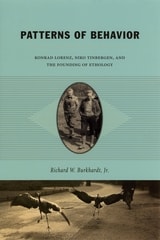
Patterns of Behavior
Konrad Lorenz, Niko Tinbergen, and the Founding of EthologyRichard W. Burkhardt, Jr.
University of Chicago Press, 2005
In Patterns of Behavior, Richard W. Burkhardt Jr. traces the scientific theories, practices, subjects, and settings integral to the construction of a discipline pivotal to our understanding of the diversity of life. Central to this tale are Konrad Lorenz and Niko Tinbergen, 1973 Nobel laureates whose research helped legitimize the field of ethology and bring international attention to the culture of behavioral research. Demonstrating how matters of practice, politics, and place all shaped "ethology's ecologies," Burkhardt's book offers a sensitive reading of the complex interplay of the field's celebrated pioneers and a richly textured reconstruction of ethology's transformation from a quiet backwater of natural history to the forefront of the biological sciences.
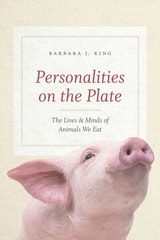
Personalities on the Plate
The Lives and Minds of Animals We EatBarbara J. King
University of Chicago Press, 2017
Yet that realization hasn’t yet made its presence felt to any great degree in our most intimate relationship with animals: at the dinner table. Sure, there are vegetarians and vegans all over, but at the same time, meat consumption is up, and meat remains a central part of the culinary and dining experience for the majority of people in the developed world.
With Personalities on the Plate, Barbara King asks us to think hard about our meat eating--and how we might reduce it. But this isn’t a polemic intended to convert readers to veganism. What she is interested in is why we’ve not drawn food animals into our concern and just what we do know about the minds and lives of chickens, cows, octopuses, fish, and more. Rooted in the latest science, and built on a mix of firsthand experience (including entomophagy, which, yes, is what you think it is) and close engagement with the work of scientists, farmers, vets, and chefs, Personalities on the Plate is an unforgettable journey through the world of animals we eat. Knowing what we know--and what we may yet learn--what is the proper ethical stance toward eating meat? What are the consequences for the planet? How can we life an ethically and ecologically sound life through our food choices?
We could have no better guide to these fascinatingly thorny questions than King, whose deep empathy embraces human and animal alike. Readers will be moved, provoked, and changed by this powerful book.
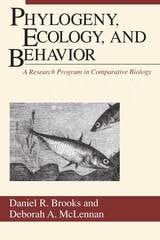
Phylogeny, Ecology, and Behavior
A Research Program in Comparative BiologyDaniel R. Brooks and Deborah A. McLennan
University of Chicago Press, 1991
"[Phylogeny, Ecology, and Behavior] presents its arguments forcefully and cogently, with ample . . .support. Brooks and McLennan conclude as they began, with the comment that evolution is a result, not a process, and that it is the result of an interaction of a variety of processes, environmental and historical. Evolutionary explanations must consider all these components, else they are incomplete. As Darwin's explanations of descent with modification integrated genealogical and ecological information, so must workers now incorporate historical and nonhistorical, and biological and nonbiological, processes in their evolutionary perspective."—Marvalee H. Wake, Bioscience
"This book is well-written and thought-provoking, and should be read by those of us who do not routinely turn to phylogenetic analysis when investigating adaptation, evolutionary ecology and co-evolution."—Mark R. MacNair, Journal of Natural History
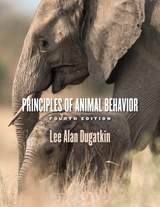
Principles of Animal Behavior, 4th Edition
Lee Alan Dugatkin
University of Chicago Press, 2020
As Principles of Animal Behavior makes clear, the tapestry of animal behavior is created from weaving all of these components into a beautiful whole. With Dugatkin’s exquisitely illustrated, comprehensive, and up-to-date fourth edition, we are able to admire that beauty anew.
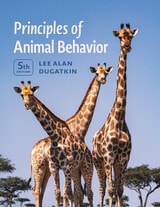
Principles of Animal Behavior, 5th Edition
Lee Alan Dugatkin
University of Chicago Press, 2025
So much has happened in the field of animal behavior since the last edition of this definitive textbook was published in 2020. In this fifth edition, Lee Alan Dugatkin continues to draw on cutting-edge new research not only to update and expand on the studies presented but also to reinforce the previous editions’ focus on ultimate and proximate causation as well as the book’s unique emphasis on natural selection, learning, and cultural transmission in nonhuman animals. The result is an essential update to the leading textbook on animal behavior that explains underlying concepts accessibly and with scientific rigor.
Completely new features include:
- Anthropogenic Connection Boxes. Humans are changing the planet. We are clearing forests, polluting the oceans, irrigating deserts, poisoning the soils, and driving a dramatic increase in global temperatures. All of these changes alter both the habitats where animals live and the species themselves as they evolve in response to our impact on their surroundings. Students will dig deep into how anthropogenic evolution affects animal behavior.
- Social Network Connection Boxes. Researchers have discovered that social networks play a critical role in almost every aspect of animal life: what they eat, how they protect themselves, who they mate with, the dynamics of parent-offspring relations, aggression, navigation, communication, play, cooperation, culture, and more. Students will discover how social network studies enrich our understanding of the wondrous complexity of animal behavior.
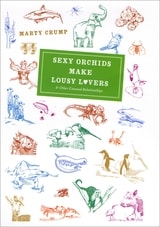
Sexy Orchids Make Lousy Lovers
& Other Unusual RelationshipsMarty Crump
University of Chicago Press, 2009
Vampire bats that regurgitate blood for roosting buddies. Mosquitoes that filch honeydew droplets from ants. Reptiles that enforce chastity on their lovers with copulatory plugs. Capuchin monkeys that use millipede secretions as mosquito repellent. The natural world is full of unusual relationships, and negotiation between life-forms striving to survive is evolution at its most diverse, entertaining, and awe-inspiring.
Picking up where her highly popular Headless Males Make Great Lovers left off, tropical field biologist Marty Crump takes us on another voyage of discovery into the world of unusual natural histories, this time focusing on extraordinary interactions involving animals, plants, fungi, and bacteria. Sexy Orchids Make Lousy Lovers& Other Unusual Relationships illuminates the ceaseless give-and-take between species. Occasionally, both interacting parties benefit, like when hornbills and dwarf mongooses hunt together for food. Other times, like when mites ride in hummingbirds’ nostrils to reach their next meal of nectar, one individual benefits and the other is neither helped nor harmed. But sometimes one individual benefits at the expense of the other; you need only recall your last sinus infection to understand how that works.
Throughout, Crump brings her trademark spunk and zest to these stories of intimate exchange. She introduces readers to penguins that babysit, pseudoscorpions that ride and mate under the wings of giant harlequin beetles, and parasitic fungi that bend insects to their will. A lively companion to Crump’s earlier work, Sexy Orchids Make Lousy Lovers& Other Unusual Relationships captures the bizarre and befuddling aspects of the behavior of animals, plants, and microbes. After this entertaining romp through the world of natural relationships, you’ll never look at an orchid the same way again.
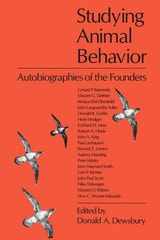
Studying Animal Behavior
Autobiographies of the FoundersEdited by Donald A. Dewsbury
University of Chicago Press, 1989
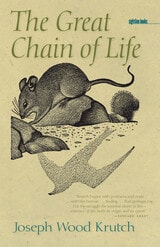
The Great Chain of Life
Krutch, Joseph Wood
University of Iowa Press, 1956
Whether anticipating the arguments of biologists who now ascribe high levels of cognition to the so-called lower animals, recognizing the importance of nature for a well-lived life, or seeing nature as an elaborately interconnected, interdependent network, Krutch’s seminal work contains lessons just as resonant today as they were when the book was first written.
Lavishly illustrated with thirteen beautiful woodcuts by Paul Landacre, an all-but-lost yet important Los Angeles artist whom Rockwell Kent called “the best American wood engraver working,” The Great Chain of Life will be cherished by new generations of readers.
The Well-Connected Animal
Social Networks and the Wondrous Complexity of Animal SocietiesLee Alan Dugatkin
University of Chicago Press, 2024
An engaging exploration of the wondrous social webs that permeate life in animal societies around the world.
It’s all about who you know. Whether vampire bats sharing blood meals for survival, field crickets remembering champion fighters, macaque monkeys forming grooming pacts after a deadly hurricane, or great tit birds learning the best way to steal milk—it pays to be well connected.
In this tour of the animal kingdom, evolutionary biologist Lee Alan Dugatkin reveals a new field of study, uncovering social networks that existed long before the dawn of human social media. He accessibly describes the latest findings from animal behavior, evolution, computer science, psychology, anthropology, genetics, and neurobiology, and incorporates interviews and insights from researchers he finds swimming with manta rays, avoiding pigeon poop, and stopping monkeys from stealing iPads. With Dugatkin as our guide, we investigate social networks in giraffes, elephants, kangaroos, Tasmanian devils, whales, bats, and more. From animal networks in Australia and Asia to Africa, Europe, and the Americas, The Well-Connected Animal is an eye-opening exposé of wild friends, enemies, and everything in between.
Wild Justice
The Moral Lives of AnimalsMarc Bekoff and Jessica Pierce
University of Chicago Press, 2009
Scientists have long counseled against interpreting animal behavior in terms of human emotions, warning that such anthropomorphizing limits our ability to understand animals as they really are. Yet what are we to make of a female gorilla in a German zoo who spent days mourning the death of her baby? Or a wild female elephant who cared for a younger one after she was injured by a rambunctious teenage male? Or a rat who refused to push a lever for food when he saw that doing so caused another rat to be shocked? Aren’t these clear signs that animals have recognizable emotions and moral intelligence? With Wild Justice Marc Bekoff and Jessica Pierce unequivocally answer yes.
Marrying years of behavioral and cognitive research with compelling and moving anecdotes, Bekoff and Pierce reveal that animals exhibit a broad repertoire of moral behaviors, including fairness, empathy, trust, and reciprocity. Underlying these behaviors is a complex and nuanced range of emotions, backed by a high degree of intelligence and surprising behavioral flexibility. Animals, in short, are incredibly adept social beings, relying on rules of conduct to navigate intricate social networks that are essential to their survival. Ultimately, Bekoff and Pierce draw the astonishing conclusion that there is no moral gap between humans and other species: morality is an evolved trait that we unquestionably share with other social mammals.
Sure to be controversial, Wild Justice offers not just cutting-edge science, but a provocative call to rethink our relationship with—and our responsibilities toward—our fellow animals.