Results by title
4 books match the query 'Animals, Fossil'
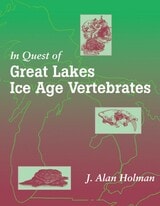
In Quest of Great Lakes Ice Age Vertebrates
J. Alan Holman
Michigan State University Press, 2001
The first book of its kind, In Quest of Great Lakes Ice Age Vertebrates details the Ice Age fishes, amphibians, reptiles, birds and mammals in the provinces and states surrounding the Great Lakes. Holman's work begins with definitions of concepts and terms for the general audience and a general discussion of how the last ice age, the Pleistocene Epoch, affected our physical and biological world. Methods employed and tools used in the collection of vertebrate fossils, as well as ethics and protocol in the maintenance of a useful collection follow, coupled with details of each animal's structure, habits, habitats, and ecological importance. The heart of the book is a species-by-species account of the Pleistocene vertebrates of the region, followed by an examination of the compelling problems of the Pleistocene relative to faunal interpretations, including overall ecological makeup of the region's fauna, vertebrate range adjustment that occurred in the region, Pleistocene extinction effects on the animals of the region, the aftermath of the Ice Age, and a look at what the future may hold for the region.
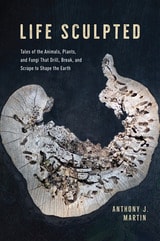
Life Sculpted
Tales of the Animals, Plants, and Fungi That Drill, Break, and Scrape to Shape the EarthAnthony J. Martin
University of Chicago Press, 2023
Meet the menagerie of lifeforms that dig, crunch, bore, and otherwise reshape our planet.
Did you know elephants dig ballroom-sized caves alongside volcanoes? Or that parrotfish chew coral reefs and poop sandy beaches? Or that our planet once hosted a five-ton dinosaur-crunching alligator cousin? In fact, almost since its fascinating start, life was boring. Billions of years ago bacteria, algae, and fungi began breaking down rocks in oceans, a role they still perform today. About a half-billion years ago, animal ancestors began drilling, scraping, gnawing, or breaking rocky seascapes. In turn, their descendants crunched through the materials of life itself—shells, wood, and bones. Today, such “bioeroders” continue to shape our planet—from the bacteria that devour our teeth to the mighty moon snail, always hunting for food, as evidenced by tiny snail-made boreholes in clams and other moon snails.
There is no better guide to these lifeforms than Anthony J. Martin, a popular science author, paleontologist, and co-discoverer of the first known burrowing dinosaur. Following the crumbs of lichens, sponges, worms, clams, snails, octopi, barnacles, sea urchins, termites, beetles, fishes, dinosaurs, crocodilians, birds, elephants, and (of course) humans, Life Sculpted reveals how bioerosion expanded with the tree of life, becoming an essential part of how ecosystems function while reshaping the face of our planet. With vast knowledge and no small amount of whimsy, Martin uses paleontology, biology, and geology to reveal the awesome power of life’s chewing force. He provokes us to think deeply about the past and present of bioerosion, while also considering how knowledge of this history might aid us in mitigating and adapting to climate change in the future. Yes, Martin concedes, sometimes life can be hard—but life also makes everything less hard every day.
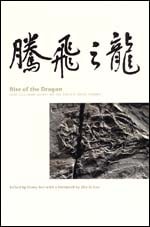
Rise of the Dragon
Readings from Nature on the Chinese Fossil RecordEdited by Henry Gee
University of Chicago Press, 2002
Perhaps the best known of these new Chinese fossils are the famous feathered dinosaurs from Liaoning Province, which may help end one of the most intense debates in paleontology—whether birds evolved from dinosaurs. But other finds have been just as spectacular, such as the minutely preserved (to the cellular level) animal embryos of the 670 million-year-old Duoshantuo phosphorites, or the world's oldest known fish, from the Chengjiang formation in southwestern Yunnan Province.
Rise of the Dragon makes descriptions and detailed discussions of these important finds available in one convenient volume for paleontologists and serious fossil fans.
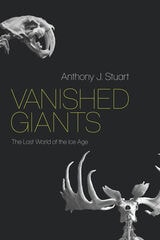
Vanished Giants
The Lost World of the Ice AgeAnthony J. Stuart
University of Chicago Press, 2021
Long after the extinction of dinosaurs, when humans were still in the Stone Age, woolly rhinos, mammoths, mastodons, sabertooth cats, giant ground sloths, and many other spectacular large animals that are no longer with us roamed the Earth. These animals are regarded as “Pleistocene megafauna,” named for the geological era in which they lived—also known as the Ice Age.
In Vanished Giants: The Lost World of the Ice Age, paleontologist Anthony J. Stuart explores the lives and environments of these animals, moving between six continents and several key islands. Stuart examines the animals themselves via what we’ve learned from fossil remains, and he describes the landscapes, climates, vegetation, ecological interactions, and other aspects of the animals’ existence. Illustrated throughout, Vanished Giants also offers a picture of the world as it was tens of thousands of years ago when these giants still existed. Unlike the case of the dinosaurs, there was no asteroid strike to blame for the end of their world. Instead, it appears that the giants of the Ice Age were driven to extinction by climate change, human activities—especially hunting—or both. Drawing on the latest evidence provided by radiocarbon dating, Stuart discusses these possibilities. The extinction of Ice Age megafauna can be seen as the beginning of the so-called Sixth Extinction, which is happening right now. This has important implications for understanding the likely fate of present-day animals in the face of contemporary climate change and vastly increasing human populations.