Results by title

12 books match the query 'Animation (Cinematography)'
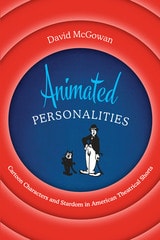
cover of Animated Personalities: Cartoon Characters and Stardom in American Theatrical Shorts

Animated Personalities

Cartoon Characters and Stardom in American Theatrical Shorts

By David McGowan

University of Texas Press, 2019

A CHOICE Outstanding Academic Title, 2019

Mickey Mouse, Betty Boop, Donald Duck, Bugs Bunny, Felix the Cat, and other beloved cartoon characters have entertained media audiences for almost a century, outliving the human stars who were once their contemporaries in studio-era Hollywood. In Animated Personalities, David McGowan asserts that iconic American theatrical short cartoon characters should be legitimately regarded as stars, equal to their live-action counterparts, not only because they have enjoyed long careers, but also because their star personas have been created and marketed in ways also used for cinematic celebrities.

Drawing on detailed archival research, McGowan analyzes how Hollywood studios constructed and manipulated the star personas of the animated characters they owned. He shows how cartoon actors frequently kept pace with their human counterparts, granting “interviews,” allowing “candid” photographs, endorsing products, and generally behaving as actual actors did—for example, Donald Duck served his country during World War II, and Mickey Mouse was even embroiled in scandal. Challenging the notion that studios needed actors with physical bodies and real off-screen lives to create stars, McGowan demonstrates that media texts have successfully articulated an off-screen existence for animated characters. Following cartoon stars from silent movies to contemporary film and television, this groundbreaking book broadens the scope of star studies to include animation, concluding with provocative questions about the nature of stardom in an age of digitally enhanced filmmaking technologies.
[more]
cover of Animating Film Theory

Animating Film Theory

Karen Beckman, ed.

Duke University Press, 2014

Animating Film Theory provides an enriched understanding of the relationship between two of the most unwieldy and unstable organizing concepts in cinema and media studies: animation and film theory. For the most part, animation has been excluded from the purview of film theory. The contributors to this collection consider the reasons for this marginalization while also bringing attention to key historical contributions across a wide range of animation practices, geographic and linguistic terrains, and historical periods. They delve deep into questions of how animation might best be understood, as well as how it relates to concepts such as the still, the moving image, the frame, animism, and utopia. The contributors take on the kinds of theoretical questions that have remained underexplored because, as Karen Beckman argues, scholars of cinema and media studies have allowed themselves to be constrained by too narrow a sense of what cinema is. This collection reanimates and expands film studies by taking the concept of animation seriously.

Contributors. Karen Beckman, Suzanne Buchan, Scott Bukatman, Alan Cholodenko, Yuriko Furuhata, Alexander R. Galloway, Oliver Gaycken, Bishnupriya Ghosh, Tom Gunning, Andrew R. Johnston, Hervé Joubert-Laurencin, Gertrud Koch, Thomas LaMarre, Christopher P. Lehman, Esther Leslie, John MacKay, Mihaela Mihailova, Marc Steinberg, Tess Takahashi
 
[more]
cover of Animation

Animation

Curtis, Scott

Rutgers University Press, 2019

From the earliest motion pictures and cartoons of the 1900s, to the latest 3D animated feature and CGI blockbuster, animation has always been a part of the cinematic experience. While the boundaries between animation and live-action have often been carefully tended, the ubiquity of contemporary computer imaging certainly blurs those lines, thereby confirming the importance of animation for the history of American cinema. The last installment of the acclaimed Behind the Silver Screen series, Animation explores the variety of technologies and modes of production throughout the history of American animation: the artisanal, solitary labors of early animators such as Winsor McCay, or of independent animators such as Mary Ellen Bute; the industrial assembly lines of Hollywood studio-unit animation; the parsimonious production houses of the post-studio, post-war era; the collaborative approach of boutique animation and special-effect houses. Drawing on archival sources, this volume provides not only an overview of American animation history, but also, by focusing on the relationship between production and style, a unique approach to understanding animation in general. 
[more]
cover of Anime's Knowledge Cultures: Geek, Otaku, Zhai

Anime's Knowledge Cultures

Geek, Otaku, Zhai

Jinying Li

University of Minnesota Press, 2024

Unlocking the technosocial implications of global geek cultures

Why has anime, a “low-tech” medium from last century, suddenly become the cultural “new cool” in the information age? Through the lens of anime and its transnational fandom, Jinying Li explores the meanings and logics of “geekdom” as one of the most significant sociocultural groups of our time. In Anime’s Knowledge Cultures, Li shifts the center of global geography in knowledge culture from the computer boys in Silicon Valley to the anime fandom in East Asia. 


Drawing from film studies, animation studies, media theories, fan studies, and area studies, she provides broad cultural and theoretical explanations of anime’s appeal to a new body of tech-savvy knowledge workers and consumers commonly known as geeks, otaku, or zhai. Examining the forms, techniques, and aesthetics of anime, as well as the organization, practices, and sensibilities of its fandom, Anime’s Knowledge Cultures is at once a theorization of anime as a media environment as well as a historical and cultural study of transnational geekdom as a knowledge culture. Li analyzes anime culture beyond the national and subcultural frameworks of Japan or Japanese otaku, instead theorizing anime’s transnational, transmedial network as the epitome of the postindustrial knowledge culture of global geekdom.


By interrogating the connection between the anime boom and global geekdom, Li reshapes how we understand the meanings and significance of anime culture in relation to changing social and technological environments.
[more]
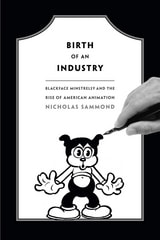
cover of Birth of an Industry: Blackface Minstrelsy and the Rise of American Animation

Birth of an Industry

Blackface Minstrelsy and the Rise of American Animation

Nicholas Sammond

Duke University Press, 2015
In Birth of an Industry, Nicholas Sammond describes how popular early American cartoon characters were derived from blackface minstrelsy. He charts the industrialization of animation in the early twentieth century, its representation in the cartoons themselves, and how important blackface minstrels were to that performance, standing in for the frustrations of animation workers. Cherished cartoon characters, such as Mickey Mouse and Felix the Cat, were conceived and developed using blackface minstrelsy's visual and performative conventions: these characters are not like minstrels; they are minstrels. They play out the social, cultural, political, and racial anxieties and desires that link race to the laboring body, just as live minstrel show performers did. Carefully examining how early animation helped to naturalize virulent racial formations, Sammond explores how cartoons used laughter and sentimentality to make those stereotypes seem not only less cruel, but actually pleasurable. Although the visible links between cartoon characters and the minstrel stage faded long ago, Sammond shows how important those links are to thinking about animation then and now, and about how cartoons continue to help to illuminate the central place of race in American cultural and social life.
[more]
cover of Drawing the Iron Curtain: Jews and the Golden Age of Soviet Animation

Drawing the Iron Curtain

Jews and the Golden Age of Soviet Animation

Maya Balakirsky Katz

Rutgers University Press, 2016
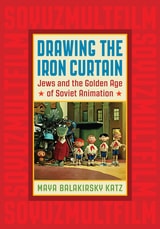
In the American imagination, the Soviet Union was a drab cultural wasteland, a place where playful creative work and individualism was heavily regulated and censored. Yet despite state control, some cultural industries flourished in the Soviet era, including animation. Drawing the Iron Curtain tells the story of the golden age of Soviet animation and the Jewish artists who enabled it to thrive. 
 
Art historian Maya Balakirsky Katz reveals how the state-run animation studio Soyuzmultfilm brought together Jewish creative personnel from every corner of the Soviet Union and served as an unlikely haven for dissidents who were banned from working in other industries. Surveying a wide range of Soviet animation produced between 1919 and 1989, from cutting-edge art films like Tale of Tales to cartoons featuring “Soviet Mickey Mouse” Cheburashka, she finds that these works played a key role in articulating a cosmopolitan sensibility and a multicultural vision for the Soviet Union. Furthermore, she considers how Jewish filmmakers used animation to depict distinctive elements of their heritage and ethnic identity, whether producing films about the Holocaust or using fellow Jews as models for character drawings.  
 
Providing a copiously illustrated introduction to many of Soyuzmultfilm’s key artistic achievements, while revealing the tumultuous social and political conditions in which these films were produced, Drawing the Iron Curtain has something to offer animation fans and students of Cold War history alike. 
 
[more]
cover of On the Animation of the Inorganic: Art, Architecture, and the Extension of Life

On the Animation of the Inorganic

Art, Architecture, and the Extension of Life

Spyros Papapetros

University of Chicago Press, 2012

Throughout human history, people have imagined inanimate objects to have intelligence, language, and even souls. In our secular societies today, we still willingly believe that nonliving objects have lives of their own as we find ourselves interacting with computers and other equipment. In On the Animation of the Inorganic, Spyros Papapetros examines ideas about simulated movement and inorganic life during and after the turn of the twentieth century—a period of great technical innovation whose effects continue to reverberate today.

Exploring key works of art historians such as Aby Warburg, Wilhelm Worringer, and Alois Riegl, as well as architects and artists like Fernand Léger, Mies van der Rohe, and Salvador Dalí, Papapetros tracks the evolution of the problem of animation from the fin de siècle through the twentieth century. He argues that empathy—the ability to identify with objects of the external world—was repressed by twentieth-century modernist culture, but it returned, projected onto inorganic objects such as machines, automobiles, and crystalline skyscrapers. These modern artifacts, he demonstrates, vibrated with energy, life, and desire of their own and had profound effects on people. Subtle and insightful, this book will change how we view modernist art, architecture, and their histories.

[more]
cover of Pulses of Abstraction

Pulses of Abstraction

Andrew R. Johnston

University of Minnesota Press, 2020
[more]
cover of Spectacular Digital Effects: CGI and Contemporary Cinema

Spectacular Digital Effects

CGI and Contemporary Cinema

Kristen Whissel

Duke University Press, 2014
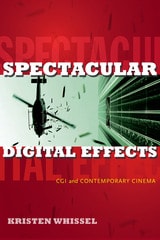
By developing the concept of the "digital effects emblem," Kristen Whissel contributes a new analytic rubric to cinema studies. An "effects emblem" is a spectacular, computer-generated visual effect that gives stunning expression to a film's key themes. Although they elicit feelings of astonishment and wonder, effects emblems do not interrupt narrative, but are continuous with story and characterization and highlight the narrative stakes of a film. Focusing on spectacular digital visual effects in live-action films made between 1989 and 2011, Whissel identifies and examines four effects emblems: the illusion of gravity-defying vertical movement, massive digital multitudes or "swarms," photorealistic digital creatures, and morphing "plasmatic" figures. Across films such as Avatar, The Matrix, the Lord of the Rings trilogy, Jurassic Park, Titanic, and Crouching Tiger, Hidden Dragon, these effects emblems heighten the narrative drama by contrasting power with powerlessness, life with death, freedom with constraint, and the individual with the collective.
 
[more]
cover of The Disney Animation Renaissance: Behind the Glass at the Florida Studio

The Disney Animation Renaissance

Behind the Glass at the Florida Studio

Mary E. Lescher

University of Illinois Press, 2023

Walt Disney Feature Animation Florida opened in Orlando at the dawn of the Disney Renaissance. As a member of the crew, Mary E. Lescher witnessed the small studio’s rise and fall during a transformative era in company and movie history. Her in-depth interviews with fellow artists, administrators, and support personnel reveal the human dimension of a technological revolution: the dramatic shift from hand-drawn cel animation to the digital format that eclipsed it in less than a decade. She also traces the Florida Studio’s parallel existence as a part of The Magic of Disney Animation, a living theme park attraction where Lescher and her colleagues worked in full view of Walt Disney World guests eager to experience the magic of the company’s legendary animation process.

A ground-level look at the entertainment giant, The Disney Animation Renaissance profiles the people and purpose behind a little-known studio during a historic era.
[more]
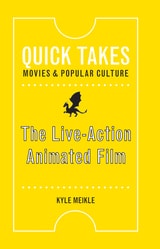
cover of The Live-Action Animated Film

The Live-Action Animated Film

Kyle Meikle

Rutgers University Press, 2026
Since cinema’s beginning, live actors and cartoon characters have traded places and invaded each other’s spaces, with real people getting animated and animated character getting real. The Live-Action Animated Film looks at the long history of movies that combine live action with 2D, stop-motion, and 3D animation to hallucinogenic effect. This survey suggests that the experimental and idiosyncratic mixed pics of the twentieth century set the template for the mainstream blockbusters of the twenty-first. Covering everything from Technicolor musicals and creature features to contemporary remakes and reboots, The Live-Action Animated Film brings this significant, boundary-blurring genre into sharper focus. In retrospect, the introduction of cartoons into live action looks as central to film history as the coming of sound or color.
[more]
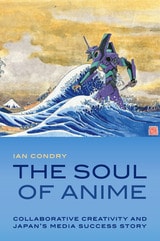
cover of The Soul of Anime: Collaborative Creativity and Japan's Media Success Story

The Soul of Anime

Collaborative Creativity and Japan's Media Success Story

Ian Condry

Duke University Press, 2013

In The Soul of Anime, Ian Condry explores the emergence of anime, Japanese animated film and television, as a global cultural phenomenon. Drawing on ethnographic research, including interviews with artists at some of Tokyo's leading animation studios—such as Madhouse, Gonzo, Aniplex, and Studio Ghibli—Condry discusses how anime's fictional characters and worlds become platforms for collaborative creativity. He argues that the global success of Japanese animation has grown out of a collective social energy that operates across industries—including those that produce film, television, manga (comic books), and toys and other licensed merchandise—and connects fans to the creators of anime. For Condry, this collective social energy is the soul of anime.
[more]