Results by title
15 books match the query 'Antebellum America'
A New Type of Womanhood
Discursive Politics and Social Change in Antebellum AmericaNatasha Kirsten Kraus
Duke University Press, 2008
Enabling Kraus’s retelling of the 1850s woman’s rights movement is her theory of “structural aporias,” which takes the institutional structures of any particular society as fully imbricated with the force of language. Kraus reads the antebellum relations of womanhood, contract, property, the economy, and the nation as a fruitful site for analysis of the interconnected power of language, culture, and the law. She combines poststructural theory, particularly deconstructive approaches to discourse analysis; the political economic history of the antebellum era; and the interpretation of archival documents, including woman’s rights speeches, petitions, pamphlets, and convention proceedings, as well as state legislative debates, reports, and constitutional convention proceedings. Arguing that her method provides critical insight not only into social movements and cultural changes of the past but also of the present and future, Kraus concludes A New Type of Womanhood by considering the implications of her theory for contemporary feminist and queer politics.
Anglophilia
Deference, Devotion, and Antebellum AmericaElisa Tamarkin
University of Chicago Press, 2008
Antirevialism in Antebellum America
A Collection of Religious VoicesBratt, James D
Rutgers University Press, 2005
But revivalism has always generated opposition, too, even in its century of glory. In Anti-Revivalism in Antebellum America, James D. Bratt offers extensive introductions to primary anti-revivalist documents. These works range from the Philadelphia Methodist John F. Watson's protests against camp meetings in 1819, to Elizabeth Cady Stanton's "Eighty Years and More," written in 1898, in which she recalls her youthful encounter with revival preaching and her rebound into political activism and religious agnosticism. Through the recovered voices of antebellum religious critics, Bratt shows how American culture was already being reshaped a generation before the Civil War and how evangelical religion stood at the center of a "culture war."
If revivals typified the era when Americans launched and defined their new nation, then objections to these revivals embodied the growing discontent at what the nation had become. An important and long overdue collection, this book urges an understanding of anti-revival literature both in the context of the era when it emerged as well as in terms of the broader dynamic of American life.
Includes selections from Orestes Brownson, Horace Bushnell, Calvin Colton, Orville Dewey, Albert Baldwin Dod, George Elley, Charles G. Finney, John Williamson Nevin, Stephen Olin, Phoebe Palmer, Daniel Alexander Payne, Ephraim Perkins, Elizabeth Cady Stanton, Joseph Smith, Harriet Beecher Stowe, La Roy Sunderland, John Fanning Watson, Ellen G. White, and Friedrich C. D. Wyneken.
By the Sweat of the Brow
Literature and Labor in Antebellum AmericaNicholas K. Bromell
University of Chicago Press, 1993
In chapters on Thoreau, Melville, Hawthorne, Rebecca Harding Davis, Susan Warner, Harriet Beecher Stowe, and Frederick Douglass, Nicholas Bromell argues that American writers generally sensed a deep affinity between the mental labor of writing and such bodily labors as blacksmithing, house building, housework, mothering, and farming. Combining literary and social history, canonical and noncanonical texts, primary source material, and contemporary theory, Bromell establishes work as an important subject of cultural criticism.
Heartless Immensity
Literature, Culture, and Geography in Antebellum AmericaAnne Baker
University of Michigan Press, 2010
Building on extensive archival research as well as insights from cultural geographers and theorists of nationhood, Heartless Immensity demonstrates that national expansion had a far more complicated, multifaceted impact on antebellum American culture than has previously been recognized. Baker shows that Americans developed a variety of linguistic strategies for imagining the form of the United States and its position in relation to other geopolitical entities. Comparisons
to European empires, biblical allusions, body politic metaphors, and metaphors derived from science all reflected—and often attempted to assuage—fears that the nation was becoming either monstrously large or else misshapen in ways that threatened cherished beliefs and national self-images.
Heartless Immensity argues that, in order to understand the nation’s shift from republic to empire and to understand American culture in a global context, it is first necessary to pay close attention to the processes by which the physical entity known as the United States came into being. This impressively thorough study will make a valuable contribution to the fields of American studies and literary studies.
Anne Baker is Assistant Professor of English at North Carolina State University.
Isaiah Rogers
Architectural Practice in Antebellum AmericaJames F. O'Gorman
University of Massachusetts Press, 2015
When Isaiah Rogers died in 1869, the Cincinnati Daily Times noted that “in his profession he was, perhaps, better known than any other person in the country.” Yet until now there has been no study that fully examines his remarkable, influential, and instructive career. Based largely on Rogers's own diary, this book tells his story and adds much to our understanding of architectural practice in the United States before the Civil War.
In 1944 the distinguished historian Talbot Hamlin wrote of New York's Merchant Exchange (1836–42) that the building had “been so grandly conceived, so simply and directly planned, and so beautifully detailed . . . [that] the whole was welded inextricably into one powerful organic conception that shows Rogers as a great architect in the fullest sense of the word.” Rogers's Tremont House in Boston has been called the world's first modern hotel; it spawned many progeny, from his first Astor House in New York to his Burnet House in Cincinnati and beyond.
Rogers designed buildings from Maine to Georgia and from Boston to Chicago to New Orleans, supervising their construction while traveling widely to procure materials and workmen for the job. He finished his career as Architect of the Treasury Department during the Civil War. In this richly illustrated volume, James F. O'Gorman offers a deft portrait of an energetic practitioner at a key time in architectural history, the period before the founding of the American Institute of Architects in 1857.
Literature and Criminal Justice in Antebellum America
Carl Ostrowski
University of Massachusetts Press, 2016
Drawing on an eclectic range of sources including newspaper arrest reports, prison reform periodicals, popular literary magazines, transatlantic travel narratives, popular crime novels, anthologies of prison poetry, and the memoirs of prison chaplains, Ostrowski analyzes how authors as canonical as Nathaniel Hawthorne and as obscure as counterfeiter/poet/prison inmate Christian Meadows adapted, manipulated, or rejected prevailing narratives about criminality to serve their artistic and rhetorical ends. These narratives led to the creation of new literary subgenres while also ushering in psychological interiority as an important criterion by which serious fiction was judged. Ostrowski joins and extends recent scholarly conversations on subjects including African American civic agency, literary sentimentalism, outsider authorship, and the racial politics of antebellum prison reform.
Moral Enterprise
Literature and Education in Antebellum AmericaDerek Pacheco
The Ohio State University Press, 2013
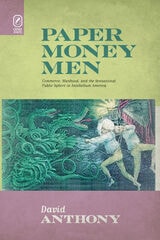
Paper Money Men
Commerce, Manhood, and the Sensational Public Sphere in Antebellum AmericaDavid Anthony
The Ohio State University Press, 2009
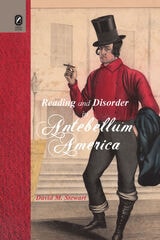
Reading and Disorder in Antebellum America
David M. Stewart
The Ohio State University Press, 2011
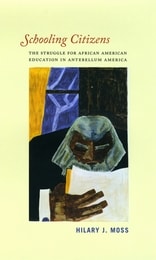
Schooling Citizens
The Struggle for African American Education in Antebellum AmericaHilary J. Moss
University of Chicago Press, 2009
While white residents of antebellum Boston and New Haven forcefully opposed the education of black residents, their counterparts in slaveholding Baltimore did little to resist the establishment of African American schools. Such discrepancies, Hilary Moss argues, suggest that white opposition to black education was not a foregone conclusion. Through the comparative lenses of these three cities, she shows why opposition erupted where it did across the United States during the same period that gave rise to public education.
As common schooling emerged in the 1830s, providing white children of all classes and ethnicities with the opportunity to become full-fledged citizens, it redefined citizenship as synonymous with whiteness. This link between school and American identity, Moss argues, increased white hostility to black education at the same time that it spurred African Americans to demand public schooling as a means of securing status as full and equal members of society. Shedding new light on the efforts of black Americans to learn independently in the face of white attempts to withhold opportunity, Schooling Citizens narrates a previously untold chapter in the thorny history of America’s educational inequality.
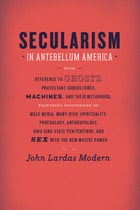
Secularism in Antebellum America
John Lardas Modern
University of Chicago Press, 2011
Ghosts. Railroads. Sing Sing. Sex machines. These are just a few of the phenomena that appear in John Lardas Modern’s pioneering account of religion and society in nineteenth-century America. This book uncovers surprising connections between secular ideology and the rise of technologies that opened up new ways of being religious. Exploring the eruptions of religion in New York’s penny presses, the budding fields of anthropology and phrenology, and Moby-Dick, Modern challenges the strict separation between the religious and the secular that remains integral to discussions about religion today.
Modern frames his study around the dread, wonder, paranoia, and manic confidence of being haunted, arguing that experiences and explanations of enchantment fueled secularism’s emergence. The awareness of spectral energies coincided with attempts to tame the unruly fruits of secularism—in the cultivation of a spiritual self among Unitarians, for instance, or in John Murray Spear’s erotic longings for a perpetual motion machine. Combining rigorous theoretical inquiry with beguiling historical arcana, Modern unsettles long-held views of religion and the methods of narrating its past.
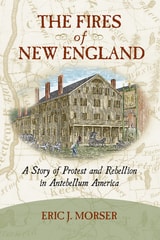
The Fires of New England
A Story of Protest and Rebellion in Antebellum AmericaEric J. Morser
University of Massachusetts Press, 2017
Few people embraced the manifesto and its radical message. Nonetheless, as Eric J. Morser illustrates in this eloquently written and deeply researched book, the address matters because it reveals how commercial, cultural, political, and social changes were remaking the lives of the men who drafted and shared it in the 1830s. Using an imaginative range of sources, Morser artfully reconstructs their moving personal tales and locates them in a grander historical context. By doing so, he demonstrates that even seemingly small stories from antebellum America can help us understand the rich complexities of the era.
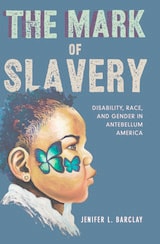
The Mark of Slavery
Disability, Race, and Gender in Antebellum AmericaJenifer L. Barclay
University of Illinois Press, 2021
Time and again, antebellum Americans justified slavery and white supremacy by linking blackness to disability, defectiveness, and dependency. Jenifer L. Barclay examines the ubiquitous narratives that depicted black people with disabilities as pitiable, monstrous, or comical, narratives used not only to defend slavery but argue against it. As she shows, this relationship between ableism and racism impacted racial identities during the antebellum period and played an overlooked role in shaping American history afterward. Barclay also illuminates the everyday lives of the ten percent of enslaved people who lived with disabilities. Devalued by slaveholders as unsound and therefore worthless, these individuals nonetheless carved out an unusual autonomy. Their roles as caregivers, healers, and keepers of memory made them esteemed within their own communities and celebrated figures in song and folklore.
Prescient in its analysis and rich in detail, The Mark of Slavery is a powerful addition to the intertwined histories of disability, slavery, and race.

The Tutor'd Mind
Indian Missionary-Writers in Antebellum AmericaBernd C. Peyer
University of Massachusetts Press, 1997
In the view of the English colonists and their descendants, Indian converts to Christianity were expected to repudiate native traditions and affirm the superiority of European civilization, to serve as role models, and to spread the gospel far into the wilderness. Yet as Bernd C. Peyer shows, Indian missionaries did not always fulfill the expectations of those who trained them. Once the Indians recognized that conversion alone did not guarantee protection from discrimination, they devised a variety of strategies, theological as well as practical, to resist assimilation into the dominant white culture. Making effective use of their literacy and education, they called attention to the discrepancy between the Protestant ideals they had been taught and the Anglo-American practices to which native people were subjected.
By uncovering this subtext of dissent and resistance, Peyer at once alters and enriches our understanding of the evolution of the American Indian literary tradition.